Azerbaijani President Aliyev on Peace with Armenia
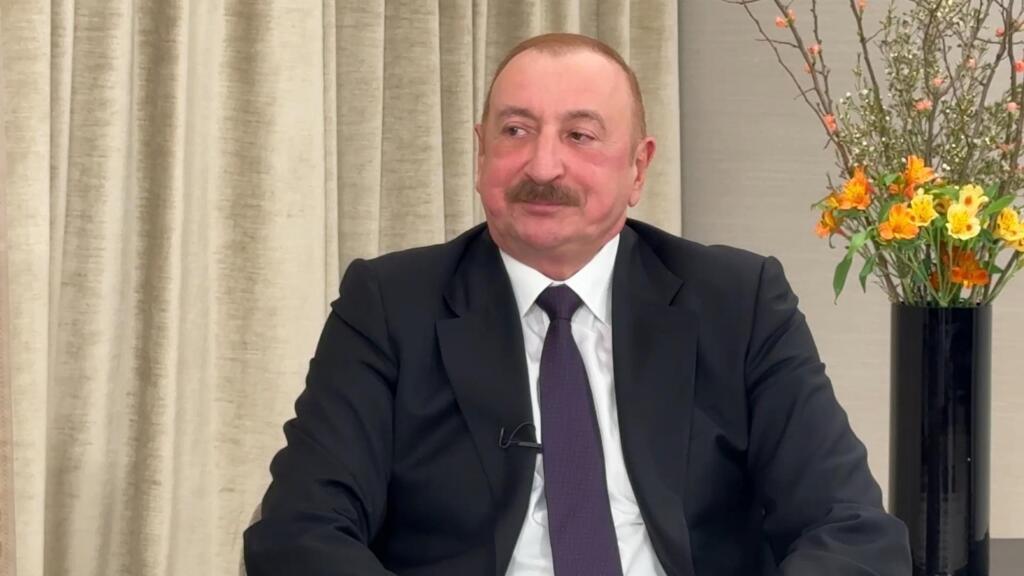
In a recent interview with FRANCE 24, Azerbaijani President Ilham Aliyev stated that "peace is achieved" between Azerbaijan and Armenia, following a significant summit held at the White House in August. This statement reflects Aliyev's optimistic view regarding the normalization of relations between the two countries that have a long history of conflict, particularly over the disputed region of Nagorno-Karabakh. Aliyev's assertion that "for me, it is done" signals his belief that any efforts towards resolving outstanding issues have been effectively concluded, at least from his perspective as the president.
Despite his optimistic outlook on peace, President Aliyev has firmly ruled out granting clemency to imprisoned leaders of the Nagorno-Karabakh separatists. This refusal was made clear during a meeting he had this week with U.S. Vice President JD Vance, where the issue of clemency for these leaders was raised. The separatist leaders had previously played prominent roles in the Armenian administration of Nagorno-Karabakh, a region that has been the focal point of decades-long military and political tensions between Armenia and Azerbaijan.
The backdrop to Aliyev's statements is the ongoing stabilization efforts in the South Caucasus region, which have garnered international attention, especially from powers like the United States, looking to promote peace and stability following recent conflicts. The August meeting levelled at the White House was considered a landmark in diplomatic interactions, illustrating a shift towards more peaceful negotiations but also underlining the complexities that persist within bilateral relations.
President Aliyev's position on not granting clemency reflects a tough stance amid the complicated political landscape. While peace talks have advanced, the matter of accountability and reconciliation regarding past conflicts remains a sticking point. The Armenian leadership and various international observers have expressed concerns over the treatment of those associated with the separatist movements, and Aliyev's response could have implications for future discussions and relations.
The response from the international community, including figures like Vice President JD Vance during their recent interactions, highlights the precarious balance that exists. Vance's engagement emphasizes the U.S. interest in ensuring that any peace achieved is sustainable and inclusive, taking subnational and minority sentiments into account, particularly in relation to the Armenian population of Nagorno-Karabakh.
As it stands, President Aliyev's declarations of peace may be seen as an encouraging development in the narrative of reconciliation between Azerbaijan and Armenia. Yet, the rigid stance on issues of clemency for former separatist leaders complicates the ability of both nations to move forward collectively. The historical context of this conflict emphasizes the need for nuanced approaches to diplomacy and reconciliation efforts, especially with the lingering feelings of distrust and animosity that characterize the two sides.
In the coming months, the actions and responses from both Azerbaijani and Armenian officials will likely dictate the trajectory of this newly proclaimed peace. Continued dialogue and negotiations will be crucial as both nations navigate these sensitive issues, weighing the need for national security against the calls for clemency, compromise, and ultimately, lasting peace in the region. The international community's role, particularly that of the United States, will be instrumental in mediating these discussions and fostering a conducive environment for lasting resolution.