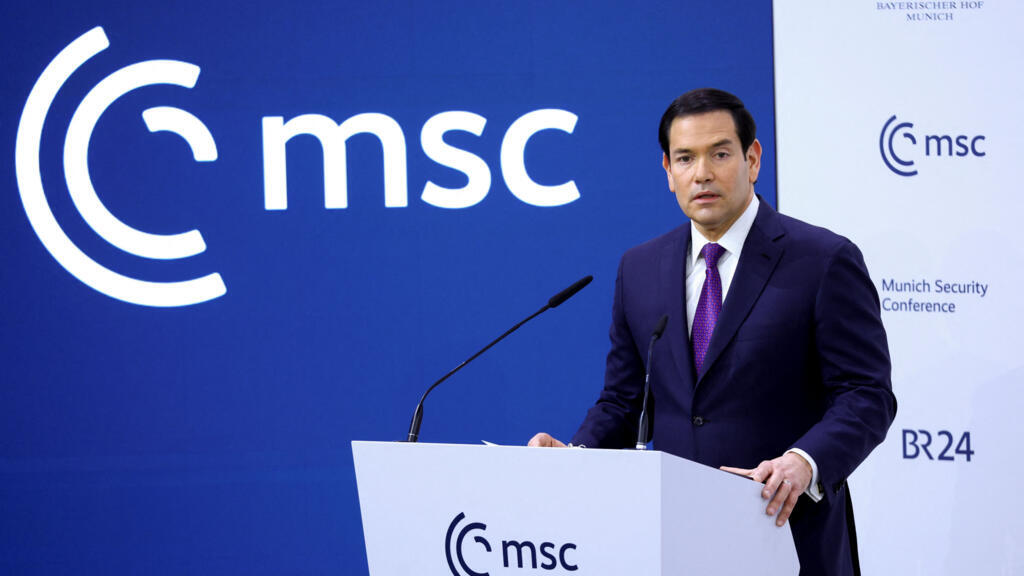
Marco Rubio Addresses Munich Security Conference
On Saturday, US Secretary of State Marco Rubio took the stage at the annual Munich Security Conference, aiming to reassure anxious European allies amid growing geopolitical tensions. He emphasized the enduring partnership between Europe and the United States, stating that both regions "belong together." This sentiment of unity comes at a critical time, as various global challenges threaten the stability and security of both continents.
Rubio's message focused on revitalizing the transatlantic alliance, which has faced strains in recent years due to differing foreign policy approaches and internal political dynamics within member states. He articulated Washington's commitment to enhancing cooperation with European nations, particularly in the face of shared threats, such as terrorism, cyber threats, and the assertive actions of nations like Russia and China.
As he spoke to a diverse audience comprised of politicians, military leaders, and security experts, Rubio underscored the significance of collective defense and mutual support. He reiterated that the United States views its relationships with European nations as essential not just for regional security but for global stability. According to Rubio, strengthening ties will not only help address immediate challenges but also lay the groundwork for future cooperation.
Moreover, Rubio acknowledged that the challenges facing Europe and the U.S. are multifaceted, involving both military and diplomatic efforts. He encouraged European allies to engage in more proactive defense measures and to increase their military spending to meet NATO obligations. This is particularly crucial as NATO faces evolving threats that require a united and well-prepared front.
In light of the recent developments regarding Russian aggression and the ongoing conflict in Ukraine, Rubio reassured his European counterparts of America's unwavering support. He emphasized that solidarity among allies must be unequivocal and that the U.S. remains dedicated to upholding international norms and supporting democratic values worldwide. This commitment extends beyond military support; it encompasses economic partnerships and collaborative efforts to promote stability in regions vulnerable to conflicts.
Furthermore, Rubio pointed to ongoing initiatives aimed at enhancing economic ties between the U.S. and Europe, suggesting that a strong economic partnership is vital to the overall security framework. He discussed the importance of trade agreements and economic cooperation as tools for reinforcing the transatlantic alliance and ensuring mutual prosperity.
The Munich Security Conference, attended by a wide array of influential figures from across the globe, serves as a platform for crucial discussions on pressing security issues. Rubio's address was welcomed by many as a reaffirmation of U.S. commitment to Europe, particularly in contrast to previous administrations that had at times questioned the significance of NATO and European partnerships.
As the conference wrapped up, many attendees expressed cautious optimism about Rubio's message of revitalizing the transatlantic alliance. The discussions held in Munich will likely influence the future direction of U.S.-European relations as they navigate a complex global landscape filled with both opportunities and challenges in the years ahead.