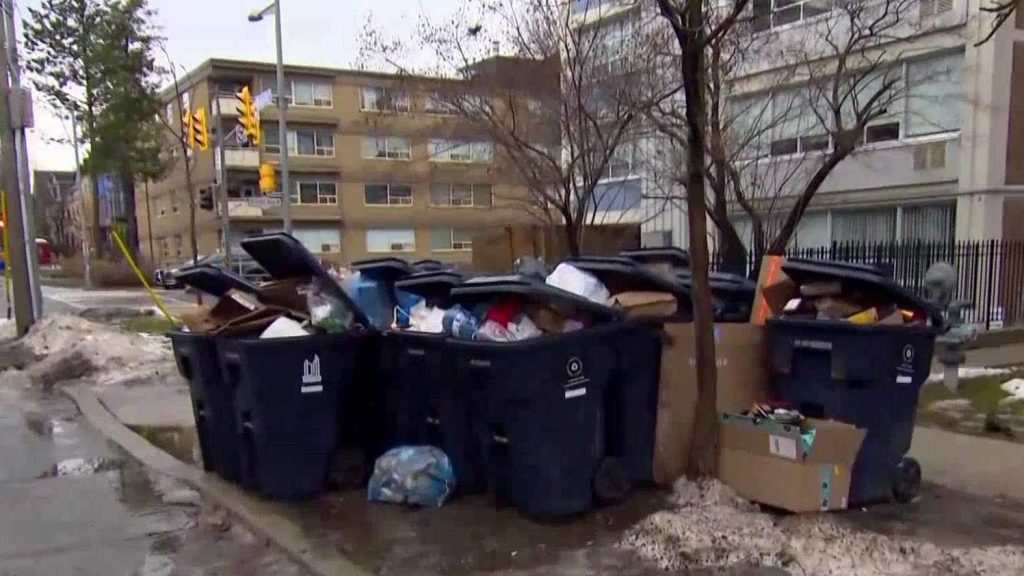
As of January 1st, the City of Toronto has transitioned its residential recycling program to a private operator, Circular Materials, following new provincial legislation. While city officials claim the shift has largely gone smoothly, some city councillors, particularly Coun. Josh Matlow, have voiced strong dissent regarding the assessments of this transition.
According to Coun. Matlow, many streets and entire neighborhoods experienced missed recycling pickups over the New Year period. He states that despite promises from Circular Materials for prompt cleanup, residents faced delays that extended for weeks rather than the expected quick resolution. Matlow emphasized that the failures were particularly evident when Circular Materials did not meet the timelines promised, leading to frustration among residents.
Since the beginning of the year, the City has noted that over 10,000 calls to their 311 service line have been redirected to Circular Materials. However, concerns have been raised by councillors about the availability of Circular Materials' support services, as the company’s phone line is closed overnight. Coun. Dianne Saxe criticized this arrangement, describing it as an “stupid” method of managing a vital public service, and noted that the company had ample time—over a year and a half—to prepare for this transition.
While Coun. Matlow has stated that Circular Materials is not legally obligated to share basic information regarding their operations, he indicated that the city would be demanding more transparency and detailed data in the future to ensure residents receive the services they need.
Meanwhile, councillors have also been discussing the City’s first report following the provincial rollback of automated speed enforcement cameras. City staff have indicated that, while the province may offer some funding support, replacing the cameras with physical traffic calming measures, such as speed bumps and roundabouts, could take several years to implement—ranging from a minimum of 13 years on the low end. Coun. Rachel Chernos Lin expressed concerns regarding public safety, asserting that her residents feel less secure without the presence of speed cameras. She highlighted the previous effectiveness of these cameras in modifying driver behavior, which contributed to improved safety on the roads.
Challenges have also arisen in certain areas, particularly along major corridors like Spadina Avenue, where the installation of traffic calming measures is complicated by the presence of streetcars and high traffic volumes. Coun. Paula Fletcher noted that alternative methods such as additional signage indicating community safety zones might be deployed, but she stressed the need to keep pressing the provincial government to restore the automated speed enforcement systems.
Furthermore, Coun. Saxe underscored the urgency of the issue by sharing her resolve to advocate for measures that prevent child fatalities in school zones, expressing a desire to maintain safe environments for children. As of now, there is no clear timeline for the replacement of speed cameras, and installations have yet to commence.