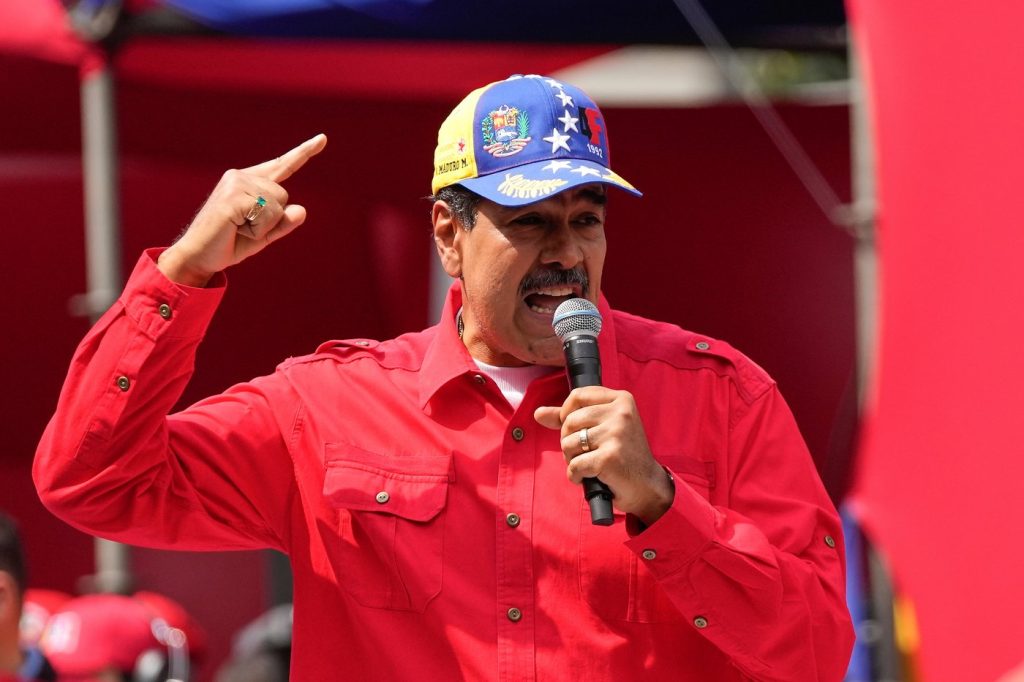
NEW YORK (AP) - The attorney representing deposed Venezuelan President Nicolas Maduro has requested that a judge dismiss the indictment against him, arguing that the United States has violated his rights by blocking access to Venezuelan funds necessary for his legal defense. The motion was filed by attorney Barry Pollack in Manhattan federal court on Thursday.
Pollack contends that the U.S. government is infringing upon Maduro's due process rights by preventing the Venezuelan government from providing the funds needed for his legal representation. In court documents, Pollack emphasized that "Mr. Maduro, as Venezuela's head of state, has both a right and an expectation to have legal fees associated with these charges funded by the government of Venezuela."
Included in the court submission was a declaration from Maduro himself, where he expressed his understanding of Venezuelan laws and practices that entitle him to have the government cover his legal defense costs. "I have relied on this expectation and cannot afford to pay for my own legal defense," Maduro stated in his declaration, which was formally signed as "President Nicolas Maduro Moros."
Since early January, Maduro and his wife have been in custody in New York after being captured from their Venezuelan residence during a covert U.S. military operation. Both have pleaded not guilty to the charges leveled against them.
The 25-page indictment alleges that Maduro collaborated with drug cartels and military members to facilitate the shipment of thousands of tons of cocaine into the United States. If found guilty, both Maduro and his wife could face life sentences. The indictment also contains claims that Maduro and his wife ordered acts of violence, including kidnappings, beatings, and murders related to drug money debts, which purportedly included the assassination of a local drug lord in Caracas.
In a recent email to a Manhattan judge, Pollack noted that the U.S. Treasury Department had blocked the authorization of legal fees that the Venezuelan government is legally obligated to pay for Maduro's defense, although it has allowed payments for the defense of first lady Cilia Flores. Pollack explained that on January 9, the Treasury Department's Office of Foreign Assets Control had initially approved the payment of these legal fees but rescinded the authorization without any explanation just hours later.
Pollack argued in his court filings that the actions of the U.S. government not only compromise Maduro's rights but also undermine the court's responsibility to ensure a fair trial for all defendants, as guaranteed by the U.S. Constitution. He wrote, "Any trial that proceeds under these circumstances will be constitutionally defective and cannot yield a verdict that will withstand later challenge." Pollack also stated that should the judge choose to retain the charges against Maduro, he would prefer to resign and allow the court to appoint alternative counsel.
This ongoing dispute over Maduro's legal fees is intrinsically connected to U.S. foreign policy. The Trump administration severed ties with Maduro in 2019, recognizing the opposition leader of the National Assembly as Venezuela's legitimate ruler. The Biden administration has largely maintained this same stance.
In summary, as the legal proceedings unfold, the matter of funding Maduro's defense highlights broader implications regarding U.S. relations with Venezuela and raises critical questions about the rights of defendants in high-profile cases.