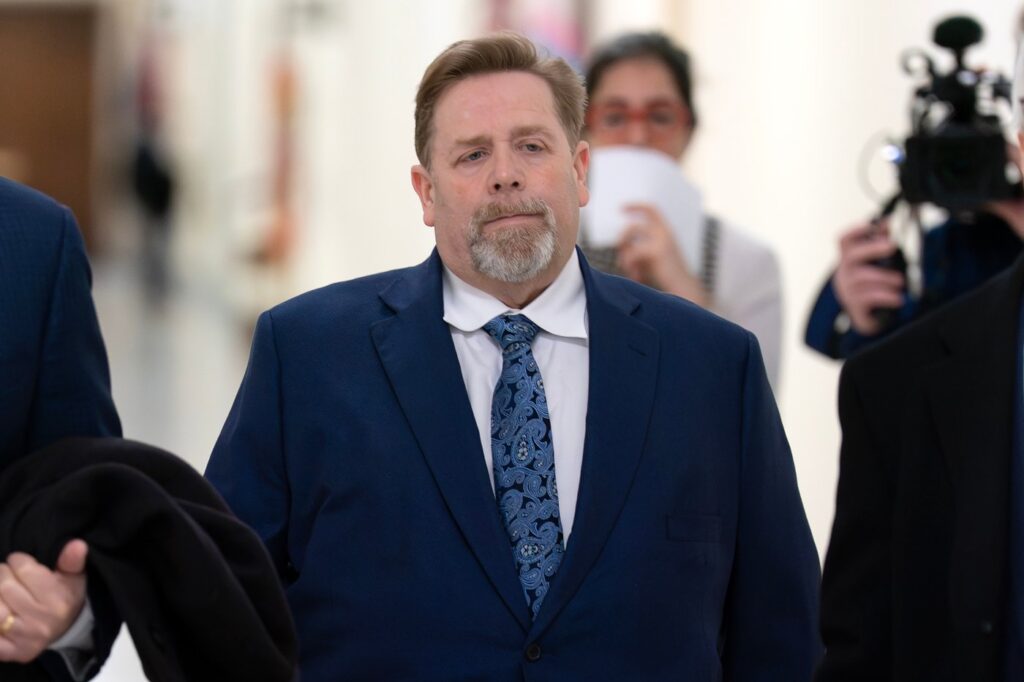
On Thursday, March 19, 2026, Darren Indyke, Jeffrey Epstein's longtime personal attorney, testified before the House Oversight Committee. During his deposition, Indyke asserted that he was unaware of Epstein's sexual abuse of underage girls at the time it was occurring, a stance that has been echoed by several individuals connected to Epstein. Working as Epstein's attorney for approximately two decades, Indyke claimed he had "no knowledge whatsoever" of Epstein's abuse. He stated that he would have ceased his association with Epstein had he been aware of the trafficking activities involving women and minors.
Several other notable figures associated with Epstein, including former accountant Richard Kahn, billionaire Les Wexner, and former President Bill Clinton, have similarly testified under oath before the committee, maintaining that they were oblivious to Epstein's abusive behavior. Frustration among Democratic committee members was evident during a break in Indyke's deposition, with lawmakers expressing disappointment in what they perceived as a "defensive" approach to questioning.
Both Indyke and Kahn function as executors of Epstein's estate, and lawmakers had anticipated that their testimonies would shed light on Epstein's misconduct and facilitate accountability. However, the committee has faced challenges in extracting substantial information regarding Epstein's associates, particularly after Epstein died in 2019 while incarcerated on sex trafficking charges. House Oversight Committee chairman Rep. James Comer, a Republican from Kentucky, pointed out that all witnesses so far have claimed ignorance about Epstein's inappropriate actions with young women prior to media reports on the subject.
During the testimony, Comer pressed Indyke regarding his continued work with Epstein following Epstein's 2008 guilty plea for soliciting prostitution from a minor. Indyke replied that Epstein had convinced him it was a singular mistake and expressed remorse. Yet, Democrats accused Indyke and Kahn of attempting to conceal Epstein's wrongdoing. California Democrat Rep. Dave Min remarked that it was becoming increasingly evident that these witnesses were consistently misrepresenting their knowledge of Epstein's actions.
In early settlement negotiations, Indyke and Kahn agreed to pay up to \$35 million as part of a settlement in a class-action lawsuit filed against them by Epstein's abuse survivors. They denied any wrongdoing in the settlement. Meanwhile, Democratic lawmakers are advocating for the release of additional documents from Epstein's estate, with Indyke indicating that they were waiting for instructions from the Republican-led committee regarding further documentation related to lawsuits against Ghislaine Maxwell, Epstein’s former confidant, and other businesses associated with Epstein.
Comer countered the request by stating that similar documents had already been procured from other entities, suggesting that obtaining them from Epstein's estate would yield overlapping information. Additionally, the committee examined an uncorroborated accusation made against former President Donald Trump in 2019 concerning his alleged involvement with Epstein, but Indyke did not confirm nor deny whether the accuser had entered any agreements with Epstein's estate. After the deposition, Rep. Robert Garcia, the leading Democrat on the Oversight panel, revealed that Indyke acknowledged the existence of hard drives held by private investigators hired by Epstein, stating that these drives were of significant interest for their ongoing investigation.
Garcia emphasized the necessity of transparency for the survivors and victims of Epstein's crimes, asserting that the Oversight Democrats would persist until the truth was revealed. Despite Trump’s repeated denials of any wrongdoing linked to Epstein, Comer contended that the testimonies given by Democrats seem fixated on implicating Trump without substantiating evidence. As the House investigation into Epstein began with a level of bipartisan cooperation, it has evolved into a contentious political struggle, marked by incidents such as Democrats walking out of a briefing with Attorney General Pam Bondi. Comer described this event as a "low point" in the investigation, criticizing Democratic members for their conduct.
Going forward, Democratic lawmakers plan to convene a public hearing featuring survivors of Epstein's abuse and others knowledgeable about his crimes, regardless of Republican participation.