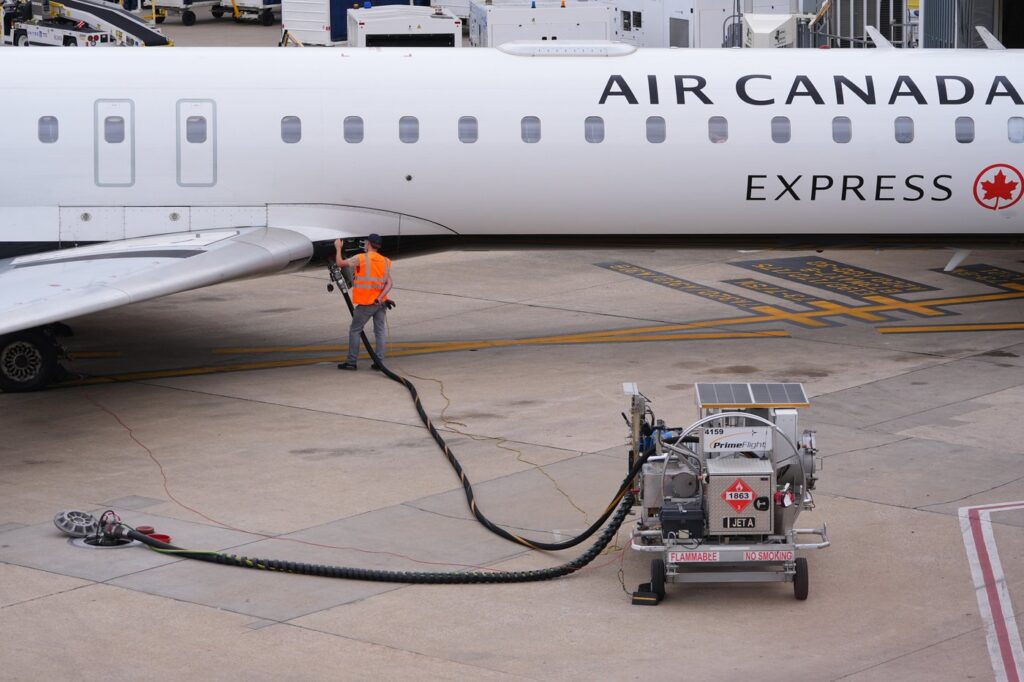
Air Canada has decided to suspend its full-year guidance for the fiscal year due to unpredictable jet fuel prices, which have been influenced by ongoing conflict in the Middle East. Chief Executive Officer Michael Rousseau indicated during the company’s earnings call on Thursday that these rising fuel costs, coupled with the geopolitical situation, have created significant challenges for the aviation industry.
Rousseau highlighted that the rapid increase in jet fuel prices is testing the demand resilience within commercial aviation. He stated, “This is not unique to Air Canada; it is an industry-wide challenge that affects how airlines think about capacity, pricing, and risk.” In light of these challenges, the airline is focusing on maintaining flexibility and making strategic decisions to prioritize returns, conserve cash flow, and strengthen its balance sheet.
Although the full-year guidance has been suspended, Air Canada has issued an outlook for the second quarter. Rousseau noted that the airline expects to offset between 50 and 60 percent of the additional fuel costs through various commercial strategies and cost control measures. Adjusted earnings before deductions for the second quarter are projected to be between $575 million and $725 million, reflecting ongoing strong demand across their network despite rising prices.
In the first quarter of the year, Air Canada reported a net income of $48 million, a significant turnaround from a net loss of $102 million during the same quarter last year. This translates to diluted earnings per share of 16 cents, compared to a diluted loss of 40 cents per share from the previous year. The airline achieved a record first-quarter operating revenue of $5.8 billion, up 11 percent from $5.2 billion year-over-year.
Rousseau underscored the airline's commitment to financial discipline, stating, “We are committed to maintaining a strong financial footing while delivering long-term shareholder value." During the quarter, Air Canada generated $1.8 billion in cash from operating activities and $1.6 billion in free cash flow, in addition to repurchasing over $140 million of its shares. This performance highlights Air Canada’s careful approach to capital allocation and balance sheet management, enabling investment in the business while managing debt and returning capital to shareholders.
Due to the recent geopolitical tensions, especially concerning tanker traffic in the Strait of Hormuz—where a significant portion of the world's crude supply typically passes—the supply constraints have resulted in heightened crude oil prices and subsequent increases in jet fuel costs. This predicament poses a risk of further driving airfare costs upward. Earlier this month, Air Canada increased its baggage fees from $35 to $45 for the first checked bag on domestic, U.S., and sun destination flights as a response to the shifting economic landscape.
Mark Galardo, Air Canada’s Chief Commercial Officer, highlighted the proactive measures taken by the airline in response to the crisis, stating that Air Canada was among the first airlines to implement fare increases. Additionally, the airline confirmed it would suspend flights, including services from Toronto and Montreal to New York City’s JFK airport between June 1 and October 25.
Globally, airlines have been adjusting their flight schedules in response to soaring fuel costs, which are making certain routes financially unviable. While North American carriers, relying mainly on refineries in Canada and the U.S., are somewhat insulated from these fuel shortages, reliance on international connections may diminish as foreign carriers reduce less profitable routes.
Furthermore, in March, the airline announced that CEO Michael Rousseau would step down later in the year, following criticism regarding his lack of communication after a tragic plane crash at New York’s LaGuardia Airport that resulted in the deaths of two Air Canada Express pilots. Rousseau has indicated that he will remain at the helm of Canada’s largest airline and serve on its board until a formal transition occurs.