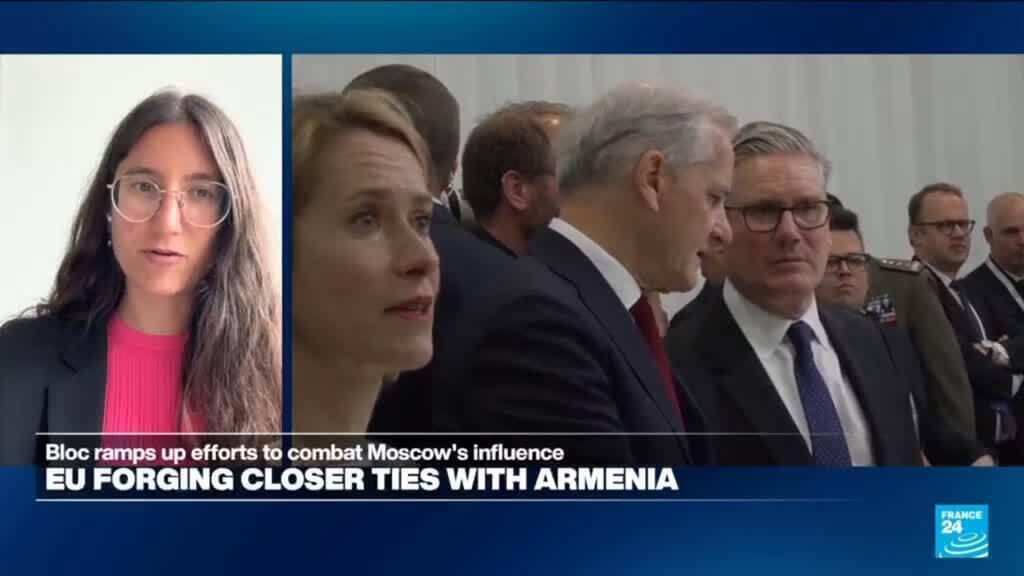
As 50 world leaders from Europe and Canada gather in Yerevan, Armenia, for the inaugural summit of the European Political Community, the atmosphere brims with both optimism and skepticism. This momentous event, hailed as Armenia's first-ever EU summit, serves as a platform not only for high-level discussions but also for addressing the evolving geopolitical landscape.
Genie Godula welcomes Dr. Gesine Weber, a Senior Researcher at the Center for Security Studies, who provides insights into the significance of the summit. Dr. Weber describes the European Political Community summit as symbolically important yet structurally constrained. This duality highlights the complexities of the current geopolitical environment, where the traditional structures of international dialogue are being challenged by new dynamics.
In her assessment, Dr. Weber points to transatlantic tensions and shifting U.S. engagement as critical factors influencing the summit's discussions. The changing role of the United States in global politics is particularly striking, raising questions about the future of transatlantic relationships. In this context, the emergence of Canada as a prominent player is noteworthy; it underscores how power dynamics are in flux and that traditional power structures may be giving way to a more multipolar world.
Dr. Weber perceives the summit as an informal platform that allows leaders to articulate shared concerns and explore a diverse range of solutions. This flexibility could prove crucial in addressing pressing issues that require cooperative approaches. The gathering of diverse leaders offers an opportunity to foster dialogue and explore innovative strategies rather than being confined to rigid agendas typically seen in formal summits.
Furthermore, Dr. Weber refrains from asserting that the current geopolitical dynamics signify a "new world order." Instead, she emphasizes the importance of understanding the nuance in international relations today. The idea of a shifting balance of power does not necessarily lead to an outright replacement of existing structures; rather, it reflects an adaptation process within the international system to accommodate rising powers and evolving interests.
The Yerevan summit thus stands as a critical juncture in European and transatlantic discourse. Leaders will be prompted to consider collaborative strategies to tackle a myriad of challenges, including security concerns, economic stability, and climate change. The informal nature of the discussions could facilitate a more open exchange of ideas, allowing countries to bridge divides that have emerged in recent years.
In conclusion, while the European Political Community summit in Armenia signifies a strategic space for dialogue among influential leaders from Europe and Canada, it exists within a framework that is still adapting to contemporary realities. The evolving global landscape, characterized by transatlantic tensions and the rise of new players, suggests that flexible and innovative approaches to diplomacy will be essential in navigating future challenges.