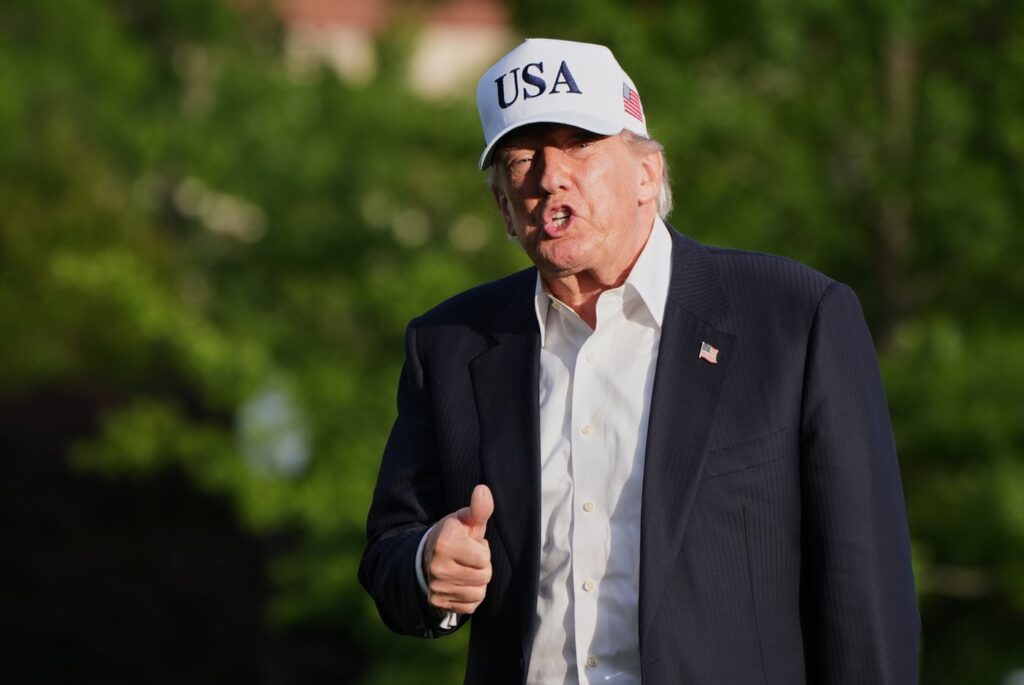
WASHINGTON (AP) – President Donald Trump announced on social media that he has decided to postpone a military strike on Iran that had been scheduled for Tuesday. This decision comes amidst ongoing negotiations which Trump described as "serious." He indicated that these diplomatic efforts might be able to avert a military confrontation, at least for the time being.
The president's communication on Monday revealed a tense stance towards Iran, highlighting the precarious nature of the situation. Trump stated that while he has put the planned attack on hold, he has also instructed the U.S. military to remain on high alert. He emphasized that they should be ready to execute a "full, large-scale assault on Iran" at a moment's notice if negotiations fail to yield an acceptable deal.
This recent declaration aligns with Trump's previous threats regarding Iran, where he has warned that the fragile ceasefire established in mid-April could dissolve if Tehran does not agree to a new deal. The parameters for what constitutes an acceptable agreement seem to be fluid, shifting over the weeks as Trump continues to press Iran for a resolution.
The backdrop of these developments is rooted in heightened tensions between the two nations. The ongoing negotiations are critical for both sides as they navigate a complex web of diplomatic and military considerations. Trump’s administration has been vocal about presenting a united front against Iranian provocations, which they claim threaten both regional stability and broader geopolitical interests.
As discussions progress, the possibility of renewed conflict looms large. Trump’s military preparations signify not only a readiness to engage but also serve as leverage in the negotiations, reflecting the administration's strategy of employing military might as a means of diplomacy. This delicate balance between diplomacy and military readiness underscores the uncertainties inherent in U.S.-Iran relations.
In conclusion, the situation remains fluid as both the U.S. and Iran grapple with their respective national interests. The outcome of these "serious negotiations" could determine the trajectory of peace or conflict in the region. The global community watches closely as the stakes continue to rise and a resolution remains elusive.