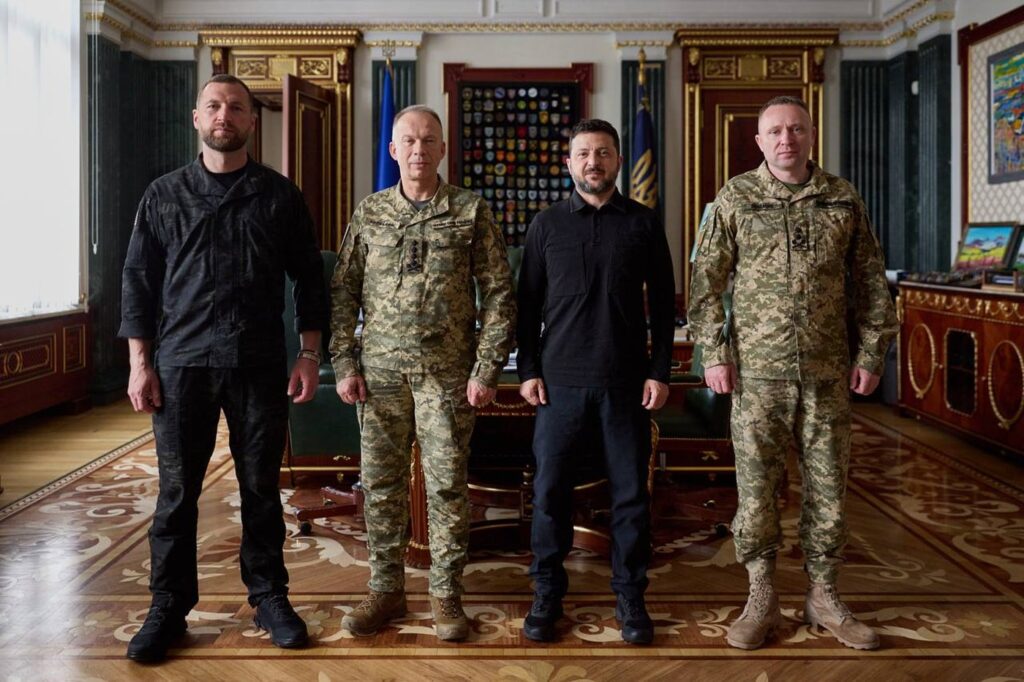
KYIV, Ukraine (AP) — In a dramatic week for Ukraine, the dismissal of Defense Minister Mykhailo Fedorov initiated significant changes within the armed forces, marking a shift from the traditional military leadership to a new generation. President Volodymyr Zelenskyy’s decision to fire the popular Fedorov instigated public protests that quickly targeted the country's commander-in-chief, Oleksandr Syrskyi, intensifying the already evident rift regarding the future of Ukraine’s military.
The protesters expressed solidarity with Fedorov, who had emerged as a crucial figure advocating for military reform during wartime. His dismissal was the culmination of a prolonged conflict between him and Syrskyi, which had grown increasingly bitter over several months. Demonstrators demanded Fedorov’s reinstatement, highlighting the public's desire for transformative leadership in military matters.
Zelenskyy’s actions reflected a broader struggle within his administration, as this was not the first time his decisions led to public discontent. Just a year prior, he faced similar backlash after attempting to curtail the powers of anti-corruption agencies. In response to the mounting political pressure, Zelenskyy swiftly dismissed Syrskyi and appointed Mykhailo Drapatyi as the new commander-in-chief. Drapatyi, recognized for his discipline and battlefield experience following Russia's initial invasion of Ukraine in 2014, represents a shift towards a more modern and reformative approach in the military.
Drapatyi’s leadership is seen as a potential bridge between the conflicting strategies of Fedorov and Syrskyi. While Fedorov had been a proponent of contemporary, technology-driven warfare, Syrskyi adhered to traditional methods rooted in Soviet military doctrine. Analysts suggest that Drapatyi’s respect among troops and his embrace of reform could reinforce morale within the military, which had been strained under Syrskyi's command and the weight of public dissatisfaction.
The discontent aimed at Syrskyi stemmed from accumulated frustrations within the military concerning entrenched bureaucratic practices and ineffective command styles. Significant criticism of Syrskyi was also fueled by the notoriety of the 425th Separate Assault Regiment, known as Skelia, which was criticized for alleged abuses and heavy casualties. This scandal exacerbated existing concerns about military leadership and command culture, prompting public calls for reform.
Despite the turmoil, this episode is viewed as an indication of democratic engagement in Ukraine, showcasing the public's ability to influence high-level military appointments even under martial law. However, some lawmakers warned that allowing public sentiment to dictate military leadership poses risks to institutional decision-making processes.
The widespread protests did not merely reflect support for Fedorov; they encapsulated a broader public endorsement for the reforms he had championed, which aimed at improving military efficiency and reducing unnecessary casualties. Citizens felt a renewed sense of hope as Fedorov’s initiatives began to yield tangible results in the ongoing war against Russia.
Yet, the political drama is far from over. Fedorov announced he would not accept any government position other than defense minister after rejecting Zelenskyy’s proposal to become deputy prime minister for military innovation. This stance underscores his determination to remain central in shaping Ukraine's military direction, especially as he looks towards a future laden with political implications following his elevated public profile.
Fedorov's short tenure as defense minister was marked by ambitious efforts to transform Ukraine's military capabilities, redirecting funds towards advanced technology and enhancing soldier welfare, including improved pay and service contracts. His contributions resonated deeply with the troops, further solidifying his status as a significant figure in Ukraine's defense landscape.