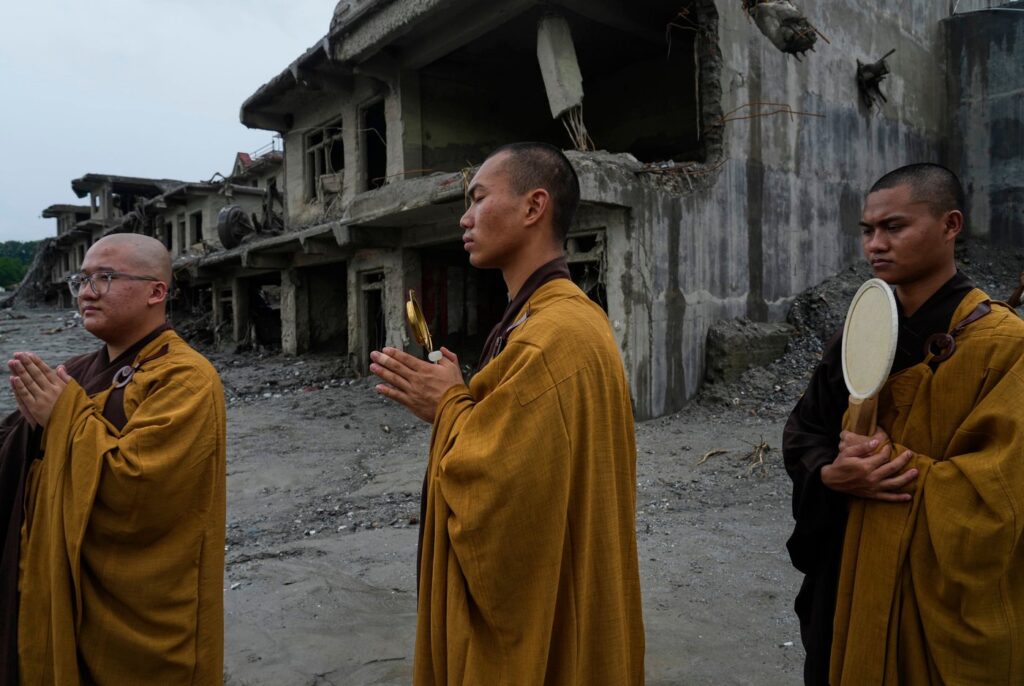
KATHMANDU, Nepal (AP) – On Monday, Nepal observed a day of mourning to honor the victims of the devastating floods that occurred on August 26. The calamity claimed the lives of over 1,300 individuals in Nepal and Tibet, leaving approximately 5,000 others missing, including foreign nationals. Government offices across the country displayed flags at half-staff as families engaged in traditional mourning rituals.
In the predominantly Hindu nation of Nepal, mourning periods typically last for 13 days. During this time, immediate family members stay at home while relatives and friends visit to pay their respects. The rituals culminate on the final day, when prayers are offered for the souls of the deceased.
Numerous families whose loved ones are still missing held symbolic funerals, reflecting the deep-rooted customs of Hinduism where cremation is regarded as a significant final rite. This ceremony offers some sense of spiritual release to the bereaved, even in the absence of bodies to honor.
The Nepali government declared Monday an official day of mourning, emphasizing the gravity of the situation. While the government ordered flags at all government offices to be lowered, search and rescue operations continued for those still unaccounted for. However, protests erupted as many individuals felt that efforts were insufficient.
In Kathmandu, distressed relatives gathered near the offices of the Prime Minister and several key ministries, demanding that the government expedite search and rescue initiatives for those missing. Many of these missing persons were workers at hydropower plants, swept away by the raging Bhotekhoshi River or entombed under debris.
Relatives shared their heart-wrenching stories. Sumana Shrestha, surrounded by family members, held up a poster featuring her 55-year-old husband, who has been unreachable since the flood. He was working as a consulting geologist and was last known to be at the project office for the Trishuli hydropower plant on that fateful day. The office building was ultimately buried beneath the rubble.
“We are here because we have not heard of any rescue attempts at this project, and it has already been 13 days,” she stated, expressing the desperation felt by many. “All we can do now is pray to God and hope for a miracle.”
Mahesh Prasad Shrestha, another protestor, carried a photograph of his brother, Niraj Shrestha, a 52-year-old engineer who also vanished during the incident. He criticized the authorities for their slow response, mentioning that a small excavator was only sent to the disaster site by helicopter six or seven days post-calamity. He remarked, “They should have ordered larger helicopters from places like China or India to assist with the rescue equipment.”
Candlelight vigils were held throughout Kathmandu in memory of those who lost their lives during the flooding, showcasing the community's solidarity in grief.
Currently, rescue operations have focused on 12 hydropower projects where about 900 workers remain unaccounted for, with an estimated 500 believed to be trapped in various tunnels. Specialized rescue teams from countries including India, China, South Korea, and the United States have been tirelessly searching through debris and damaged structures.
On a hopeful note, two Nepalese workers were rescued from one of the plants last Friday, and a Chinese national was extricated safely on Saturday amidst the ongoing efforts to locate survivors.