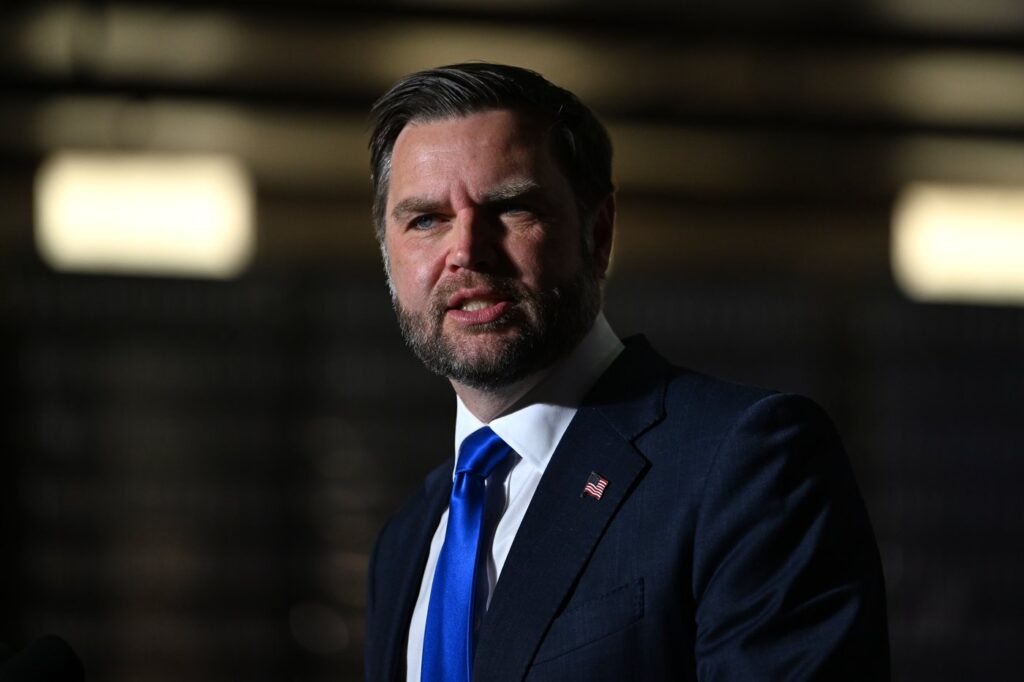
Vice President JD Vance made headlines on Monday by opting not to endorse Israeli President Benjamin Netanyahu for reelection, just a day after former President Donald Trump expressed his support for the embattled leader. This decision is noteworthy given the current political climate and the sensitivities surrounding Jewish American concerns and U.S.-Israel relations.
During an interview with journalist Mark Halperin, Vance acknowledged the significance of Trump's endorsement, stating, "The president has the most influential endorsement in American or international political history." However, he emphasized his focus on domestic political matters, saying, "I endorse American candidates, and that’s where I’m focused on the midterms," while campaigning for Republican Senate nominee Michael Whatley in North Carolina. Vance's decision to refrain from involving himself in Israeli elections further illustrates his commitment to prioritizing American issues.
Despite previously campaigning for foreign leaders, including then-Hungarian Prime Minister Viktor Orban in spring 2022, Vance's current stance is more cautious. Orban's party faced a significant loss in Hungary's parliamentary election following Vance's support. This current refusal to engage in foreign endorsements contrasts with his earlier willingness to endorse foreign heads of government.
The timing of Vance's remarks is particularly sensitive, as antisemitism has emerged as a pressing concern across the political spectrum, especially with the midterm elections on the horizon. Republicans have sought to label Democrats, particularly Michigan Democratic Senate nominee Abdul El-Sayed, as less friendly toward Jews and Israel. Meanwhile, they grapple with their own internal discord regarding the issue.
Vance has experienced skepticism from Jewish Republicans regarding his commitment to the Jewish American community and the U.S.-Israel alliance. This comes in the wake of his private discussions last month in Las Vegas with the Republican Jewish Coalition, a significant GOP group focused on a robust U.S. relationship with Israel and combating antisemitism. His interactions there reportedly left a positive impression on attendees, although Vance did not clearly distance himself from influential conservative podcast host Tucker Carlson, who has faced criticism for past associations with individuals promoting antisemitic views.
In light of his complex relationship with the Israeli government, Vance has been vocal about criticism directed at their approach to U.S. negotiations regarding Iran. In June, he publicly denounced members of Israel's government for their resistance toward Trump's peace efforts with Iran. Subsequently, in July, he accused certain Israeli officials of attempting to manipulate American public opinion to prolong conflict, suggesting that their actions were aimed at maintaining a state of warfare indefinitely.
Vance's navigation through this delicate political landscape poses challenges as he balances the expectations of his constituents and the broader GOP agenda. As the midterm elections approach, the implications of his remarks and stances could affect not only his political future but also the dynamics of U.S.-Israel relations and the Republican Party's stance on issues of antisemitism.