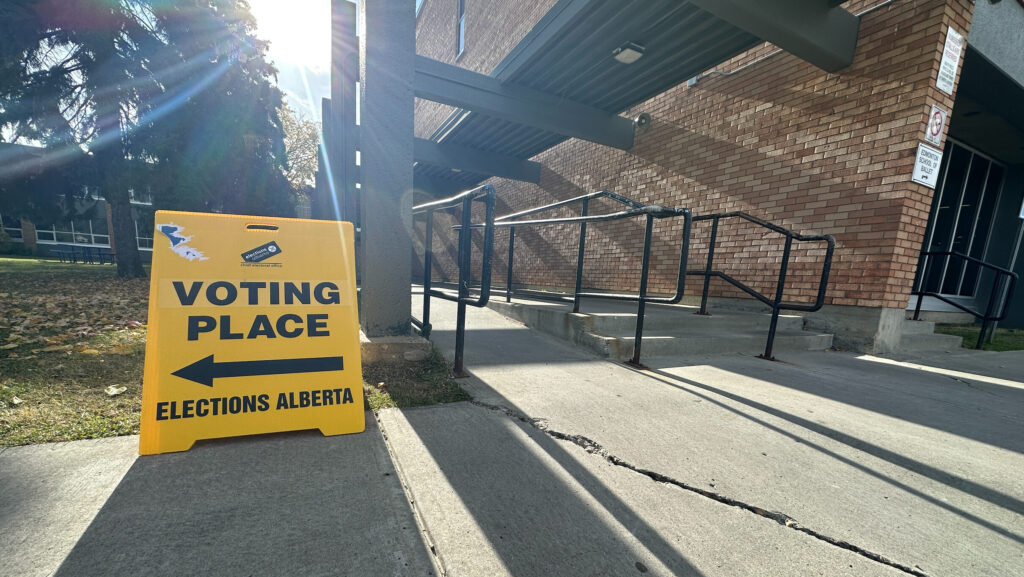
On Monday, October 19, 2026, Albertans participated in a significant referendum consisting of ten questions, prominently featuring whether the province should explore a separation from Canada. The separation question, identified as Question 10, drew considerable attention and was reported first, with preliminary results highlighting the general sentiment among residents.
The preliminary results showed that a substantial majority, 76.3%, of voters expressed their desire for Alberta to remain a province of Canada, with 807,960 votes in favor. Conversely, 23.7%, or 251,146 votes, supported the notion of the Alberta government initiating the legal process for a binding provincial referendum on separation from the country. The counting began with Question 10, while results for Questions 1 through 9, focused on immigration and constitutional issues, followed in numerical order.
Voting day did not go as smoothly as anticipated, as some Albertans faced delays in receiving results. A polling station in Edmonton encountered issues that necessitated remaining open until 10 p.m., two hours later than initially scheduled. By 10:50 p.m., Elections Alberta reported that people were still in line at at least one location, adding to the extended wait for official results.
Question 1: Immigration Control
The first question asked voters if they supported the Alberta government taking more control over immigration to lower the overall numbers and prioritize economic migrants while giving locals first access to new job opportunities. The majority, 248,006 voters, responded with a "Yes," while 185,387 voted "No."
Question 2: Eligibility for Funded Programs
Voters were questioned on whether the government should mandate that only Canadian citizens, permanent residents, and those with Alberta-approved immigration status would access provincial programs, including healthcare and education. The "Yes" votes totaled 164,558, whereas "No" votes amounted to 132,448.
Question 3: Residency for Social Support
This inquiry proposed that non-permanent residents must live in Alberta for at least 12 months before qualifying for social support programs. A total of 90,356 respondents voted "Yes," while 68,504 voted "No."
Question 4: Fees for Non-Permanent Residents
The fourth question examined whether non-permanent residents should pay a fee for accessing healthcare and education services. The results showed 50,126 in favor, and 44,879 against.
Question 5: Proof of Citizenship for Voting
Voters were also asked if proof of citizenship, such as a passport or birth certificate, should be required to vote in provincial elections. Support was indicated by 31,387 voters, while 23,572 opposed the measure.
Question 6: Selection of Provincial Justices
This question sought voters' opinions on whether Alberta should collaborate with other provinces to amend the Canadian Constitution so that provincial governments would select justices for provincial courts. The response was mixed, with 18,153 voting "Yes" and 23,440 voting "No."
Question 7: Abolishing the Federal Senate
When asked about amending the Constitution to abolish the unelected federal Senate, 27,090 responded with "Yes," while 26,012 said "No."
Question 8: Opting Out of Federal Programs
Voters addressed a proposal concerning the ability of provinces to opt out of federal programs that conflict with provincial jurisdiction. The outcome showed that 28,945 supported this change, whereas 38,147 opposed it.
Question 9: Provincial Rights Protection
Finally, the last question inquired about amending the Constitution to prioritize provincial laws over federal laws when there is a conflict. This question drew mixed responses, with 42,957 voting "Yes" and 48,874 "No."
This historic referendum reflects the diverse opinions of Albertans on critical issues concerning separation, immigration, and the powers of provincial versus federal government, showcasing the complexity of regional governance in Canada.