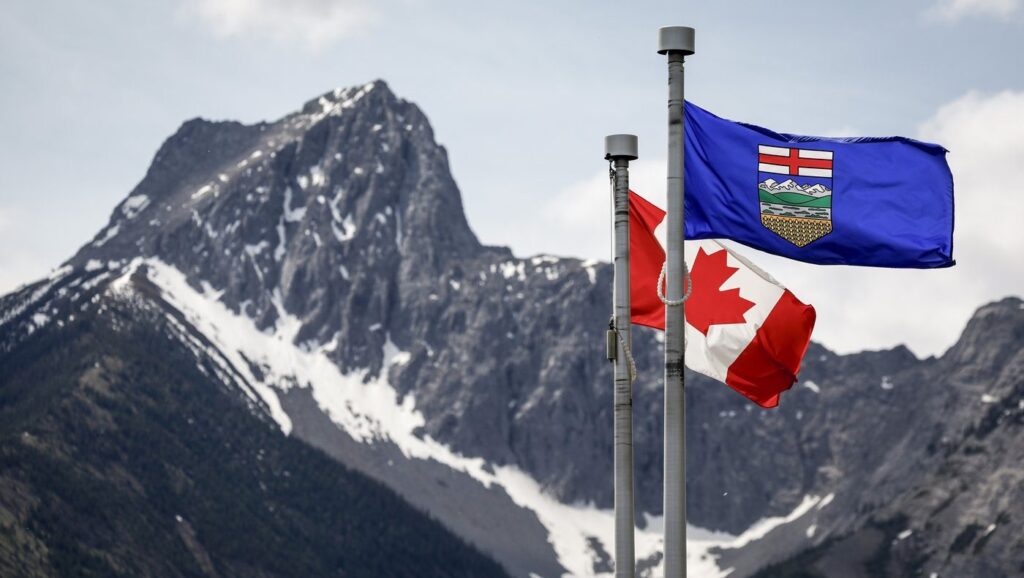
Albertans have participated in a referendum that overwhelmingly favored remaining a part of Canada, with early results indicating that more than 75 percent of voters opted against pursuing a future binding vote on independence. The referendum took place on Monday, with Question 10 on the ballot specifically addressing whether Alberta should remain in Canada or advance towards a second referendum regarding separation from Confederation.
The separation question was introduced earlier this year by Premier Danielle Smith, who acted following the submission of petitions that garnered hundreds of thousands of signatures both advocating for and opposing Alberta's status within Canada. Notably, Premier Smith has publicly stated her personal choice to remain within the country.
In her statement released late Monday night, Smith expressed her pleasure with the outcome, emphasizing that "Albertans have voted for a stronger Alberta in a united Canada." She also announced plans to address the province on Tuesday evening, reflecting on the implications of the referendum's results.
The campaign for the referendum drew significant national attention, with key figures like Prime Minister Mark Carney traveling to Alberta the previous week to participate in rallies advocating for the province's continued union with Canada.
Proponents of independence argued that separating from Canada would relieve the province from federal taxation and regulation, promote economic growth, and grant Albertans more control over local governance. In contrast, opponents highlighted the potential economic uncertainties that might arise, suggesting that independence could lead to Alberta assuming responsibility for various services currently managed by the federal government, along with encountering significant financial obligations.
On the day of the referendum, Jeff Rath, a lawyer and advocate for Alberta independence, noted that some voters might perceive the referendum as an opportunity to convey a message to the federal government. Rath further stated that regardless of the outcome, supporters of separation intend to persist in their efforts. He suggested that if support for independence surpassed 40 percent, it may necessitate Premier Smith's resignation. However, as of late Monday, the backing for leaving Canada remained below 25 percent.
Thomas Lukaszuk, who spearheaded the Forever Canadian campaign, expressed that many Albertans questioned the necessity of the referendum. According to Lukaszuk, "the vast majority of Albertans never asked for this referendum," pointing out that the process could ultimately impose a financial burden of over $300 million on taxpayers. Despite his opposition, Lukaszuk recognized that the campaign had sparked vital discussions regarding Canadian identity.
Lukaszuk acknowledged, "No matter what the outcome of this tonight, we will have a lot of work ahead of us to heal the wounds that have been caused." This sentiment highlights the emotional and political ramifications of the referendum process for Alberta and its residents.
Elections Alberta confirmed that their first priority would be to tally the votes for Question 10 before proceeding to count ballots on the remaining nine referendum questions, which address various constitutional and immigration issues. Prior to referendum day, over 1.3 million Albertans participated through advance voting and mail-in ballots, reflecting a high level of engagement in the democratic process.