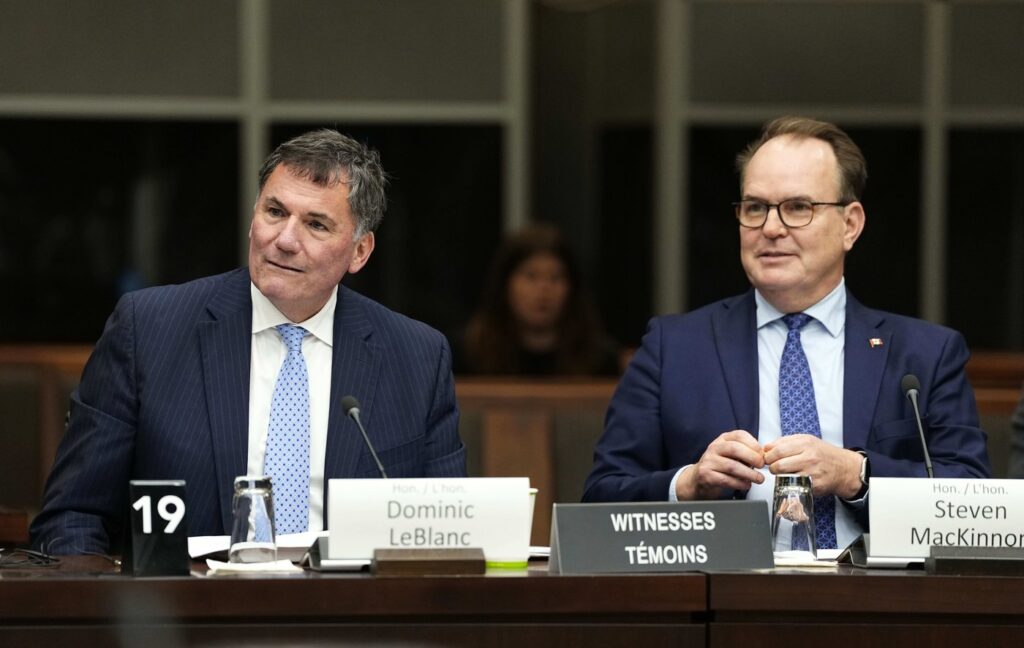
OTTAWA – Four federal ministers defended the government's controversial legislation aimed at expediting major projects during a session in the House of Commons on Monday. This move comes amid growing criticism from various groups, including Indigenous communities, environmental advocates, and labor organizations.
The proposed bill, known as Bill C-39, spans 243 pages and seeks to fast-track the approval processes for significant projects, reduce review times, and establish zones of "national interest" that could pre-approve certain types of projects. The legislation aims to extend the government's "one-project, one-review, within one-year" strategy beyond major infrastructure initiatives to encompass a broader range of projects nationwide.
Last week, labor leaders and union members across Canada voiced their objections to Bill C-39, contending that it threatens workers' rights to strike. The legislation proposes amendments to the Canada Labour Code, with significant changes to Section 107, allowing a minister to mandate a business under federal jurisdiction to resume operations or impose binding arbitration on involved parties. In recent years, the Liberals have utilized this contentious legal framework to halt strikes in federally regulated sectors, including rail, ports, and air transportation.
Under the proposed amendments, the federal government would need to fulfill specific conditions before invoking Section 107, including the consideration of a special mediator's report and the determination of whether a work stoppage adversely affects the "national interest." Labor experts have suggested that the new wording would likely grant the minister additional powers, which could face challenges regarding their constitutionality under the Charter.
Jobs Minister Patty Hajdu asserted that the bill enhances workers' rights by prohibiting the use of Section 107 before a labor disruption occurs. She emphasized that the government must intervene when a significant dispute remains unresolved and lacks a clear resolution path, stating, "Protecting workers and protecting the national interest go hand in hand."
Indigenous groups, including a coalition of First Nations, have condemned the legislation, arguing it would weaken environmental oversight and diminish their ability to influence decisions affecting their territories. Organizations such as the Chiefs of Ontario, Assembly of First Nations Quebec-Labrador, Nishnawbe Aski Nation, and the British Columbia Assembly of First Nations asserted that their "free, prior, and informed consent cannot be squeezed into a predetermined federal project timeline."
Canada-U.S. Trade Minister Dominic LeBlanc defended the bill, asserting that it does not lessen the federal government's obligation to consult with Indigenous rights holders and reinforcing that "a more efficient process does not mean a less rigorous one." Meanwhile, Transport Minister Steven MacKinnon highlighted that the legislation is intended to alleviate administrative burdens while still upholding stringent safety and environmental standards.
Members of Parliament have supported a motion to commence clause-by-clause review of Bill C-39 by mid-November. This legislation is central to the Liberal government's strategy to shift the economy away from dependence on the United States and establish Canada as a reliable trading partner for international markets.
Conservative Leader Pierre Poilievre expressed support for advancing the bill to committee study, where his party intends to propose amendments to what he characterized as a "weak, watered-down, long-delayed" piece of legislation. Poilievre indicated a desire for the government to expedite decision timelines for projects to between six months and one year, as well as to include measures safeguarding workers' rights. He also suggested eliminating the industrial carbon price and establishing shovel-ready zones with pre-permitting for various developments.