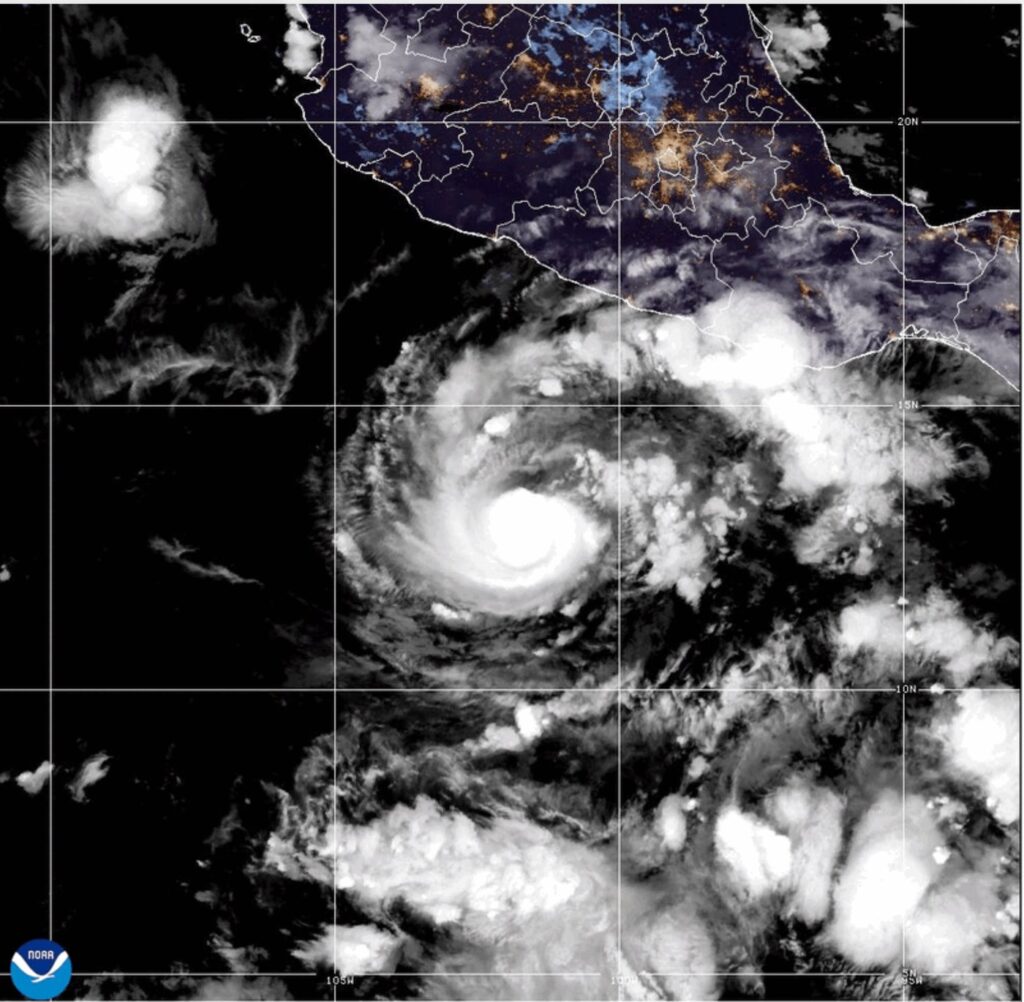
MIAMI (AP) – Hurricane Trudy has experienced a significant decrease in intensity as of Sunday, following its impact on various regions along Mexico's Pacific coast, where it brought substantial rain and strong winds.
The storm, classified as a Category 1 hurricane, was reported to have maximum sustained winds reaching 80 mph (130 kph) and was progressing northwest at a speed of 7 mph (11 kph), as per the information provided by the U.S. National Hurricane Center based in Miami.
As Hurricane Trudy continued on its path, forecasts indicated that the storm's center was expected to pass south of the Baja California Peninsula on both Monday and Tuesday. Despite its weakening status, there remains a possibility of additional rainfall in areas that have already been saturated due to consecutive storms.
In a related development, Typhoon Champi has transitioned from the western Pacific Ocean into the Philippine Sea. By midday Monday, Asia time, Champi was reported to have maximum sustained winds measuring 175 kph (109 mph) and was not threatening any land areas.
Previously, Typhoon Champi made a close passage near Guam, prompting the governors of Guam and the Northern Mariana Islands to seek emergency disaster declarations on Friday. In response, U.S. President Donald Trump authorized an emergency declaration for Guam, allowing federal support for local disaster response efforts through the Federal Emergency Management Agency (FEMA).
FEMA noted that federal assistance would be made available to aid the territory’s local response efforts. Subsequently, operations at airports, harbors, and several health facilities within the territories were suspended. Relief supplies are anticipated to take three to five days before they can arrive at the islands, according to FEMA’s announcements made on Saturday.
The recent developments regarding both Hurricane Trudy and Typhoon Champi underscore the ongoing impact of severe weather events in the Pacific region, affecting both land and the local communities who are in need of support. As such weather patterns continue, residents and authorities are urged to remain vigilant and prepared for any further consequences.