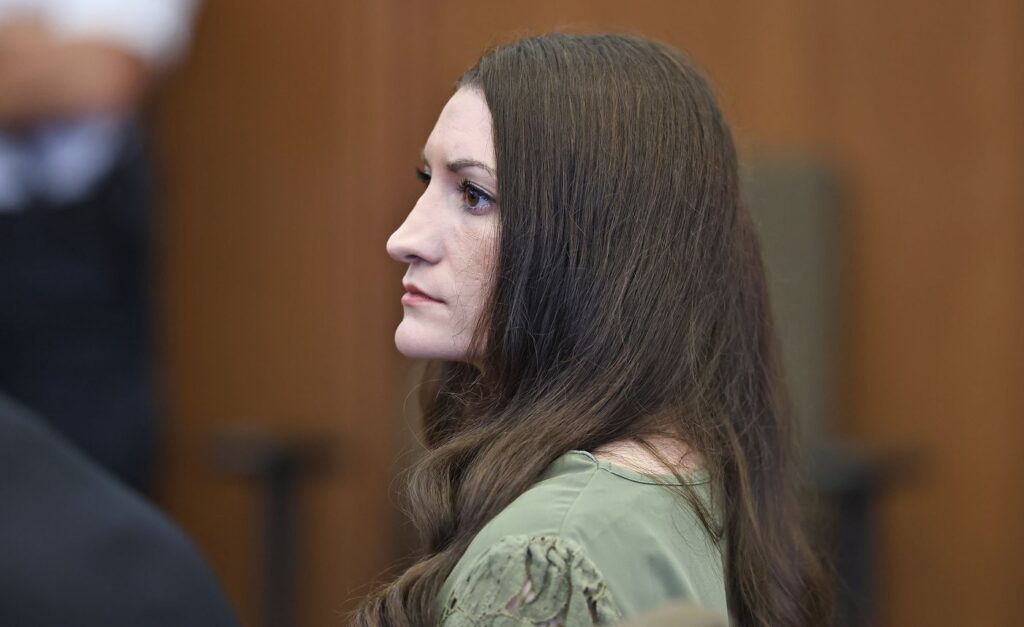
BOSTON (AP) – A recent interview revealed that a lone juror impeded the acquittal of Lindsay Clancy, despite expressing doubts about her guilt. The foreperson of the jury disclosed this information during a segment aired on NBC10, just four days after a judge declared a mistrial. The mistrial occurred when the jurors could not reach a unanimous decision on whether Clancy was criminally responsible for the tragic murder of her three young children in 2023.
Lindsay Clancy, 36, is a former labor and delivery nurse who admitted to the killings but maintained through her defense that she had suffered from a rare condition known as postpartum psychosis. This mental illness arises in the wake of childbirth, characterized by severe stress, sleep deprivation, and hormonal fluctuations, leading to a loss of control over one’s mental state.
During the trial, prosecutors argued that Clancy acted with deliberate intent when she strangled her three children: 5-year-old Cora, 3-year-old Dawson, and 8-month-old Callan, using exercise bands. They claimed that she had manipulated her husband into leaving the house under the pretext of picking up medicine and dinner for the family, facilitating her actions.
In a televised interview following the mistrial, Ronni Carlson, the jury's foreperson, recounted the internal struggle within the jury room. At one point, she believed they had successfully convinced the holdout juror to acquit Clancy, noting that he even acknowledged having reasonable doubt. She described a moment of excitement as she began to fill out the necessary forms for acquittal but was ultimately disappointed when the juror reiterated his refusal to accept a not guilty by reason of insanity verdict.
According to Carlson, evidence presented during the trial indicated Clancy's love for her children, referencing her journals and testimonies from family members. She expressed a conviction that Clancy must have experienced a psychological break, asserting that this was indicative of Clancy’s inability to comprehend her actions at the time of the incident.
The identities of the jurors remain sealed by the presiding judge, and the holdout juror has yet to make any public comments regarding the deliberation process. Throughout the trial, spanning 21 days, jurors were exposed to testimonies and clinical evaluations illustrating Clancy's deteriorating mental health following the birth of her youngest child. Family members recounted her decline, emphasizing the impacts of her mental illness.
Throughout the jury's deliberation, they communicated with the judge on three occasions, indicating their struggle to reach a unanimous verdict. Foreperson Carlson conveyed how one juror was resistant to adhering to the legal standards related to reasonable doubt. Judge William Sullivan intervened, reiterating the jury’s instructions and encouraging them to continue deliberating.
Kevin Reddington, Clancy's attorney, expressed a belief that had it not been for the inflexibility of one juror, Clancy might have been acquitted. He remarked on how the other jurors were "robbed" of a fair trial experience due to this individual's steadfastness, suggesting that their time and efforts were compromised by one person's agenda.
If convicted, Clancy could have faced life imprisonment for her actions. Conversely, an acquittal might have resulted in her being confined to a mental health facility until it was deemed safe for her to be released back into society.