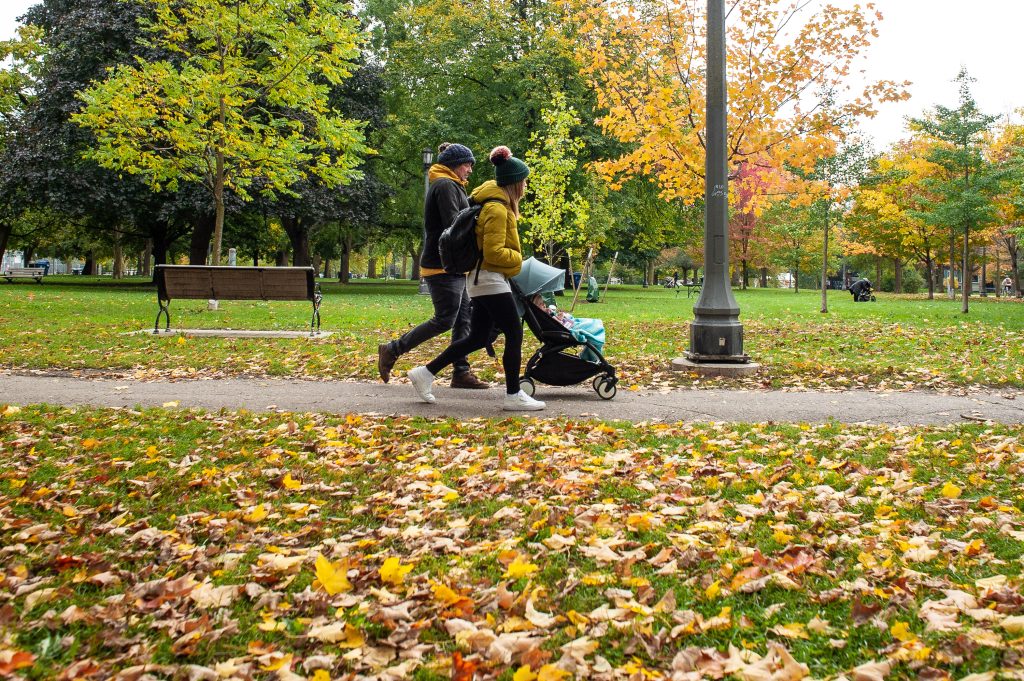
As fall arrives on Tuesday, meteorological forecasts indicate that much of Canada is expected to experience a warmer and drier season than average. While parts of Atlantic Canada, the lower Great Lakes, and coastal British Columbia may see temperature patterns closer to the norm, the majority of the country, particularly Northern Canada, is anticipated to exhibit notable temperature anomalies.
In Southern Ontario, there will be some moisture, but it appears that much of the wet weather this fall will stay in the United States. According to CityNews Chief Meteorologist Natasha Ramsahai, a significant portion of Canada is likely to experience below-average precipitation this season, which raises concerns for the upcoming months. Ramsahai states that if dry conditions prevail now, it could lead to sustained dryness into the winter, thereby impacting spring and summer conditions.
Ramsahai elaborates on the potential consequences of dry weather, including insufficient snowmelt, lower snow coverage for ground insulation, and increasing soil dryness. These factors may lead to an elevated risk of wildfires in the subsequent year. For Southern Ontario specifically, the fall outlook also predicts that the region will lean towards warmer and drier conditions overall, except for areas around Lake Erie and southwestern Ontario, which may receive slightly more moisture.
The super El Niño phenomenon is playing a significant role in these weather patterns. With an increase of 3.05°C above average in the Niño 3.4 region, the current event has surpassed "super El Niño" status and is expected to strengthen through November and December. Ramsahai explains that this climatic event has a substantial impact on weather conditions across various regions, resulting in less cold air being funneled over the Great Lakes, which contributes to warmer temperatures in Southern Ontario and beyond.
Beyond El Niño, other phenomena such as the North Atlantic Oscillation (NAO) and the Pacific Decadal Oscillation (PDO) impact seasonal weather dynamics. The NAO is currently in a neutral phase, which suggests that typical cold air patterns may not materialize, resulting in warmth spreading throughout Canada. Meanwhile, the PDO can affect how El Niño’s warming influences the climate, although it remains uncertain how much of an effect it will have given the unprecedented nature of this El Niño event.
Regarding immediate seasonal forecasts, Ramsahai expresses caution, noting that predictions are inherently uncertain and depend on atmospheric patterns that cannot be reliably forecast weeks or months in advance. The potential risk for a white Christmas is also explored, with Ramsahai indicating that climate change has significantly reduced these chances over the decades. For instance, the likelihood of a white Christmas in Toronto has decreased by 30%, and in Montreal, it has declined by 16% when comparing data from 1960-1984 to 1997-2023.
This shift in weather patterns could have several implications, including potential impacts on ice wine and maple syrup production, decreased snowfall affecting winter sports like skiing, and worries about flooding due to heavy rain on already frozen ground. Furthermore, prolonged warmer temperatures may mean less ice on the Great Lakes, which could extend the shipping season while negatively affecting local ecosystems reliant on ice cover during winter months.
Overall, with views of a significantly warmer and drier fall forecast for Canada, particularly in Southern Ontario, the upcoming months could present challenges across various sectors, prompting conversations about environmental impacts and necessary adaptations in response to changing climate patterns.