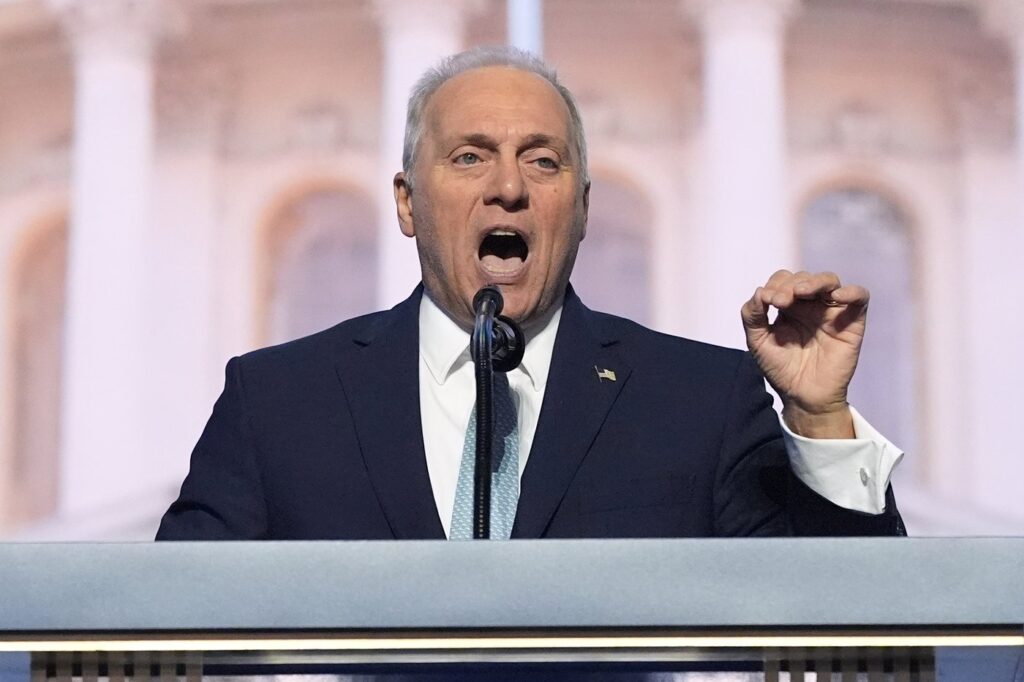
Rep. Jim Jordan of Ohio has been elected as the House Republican leader, securing his position as the party braces for its new role in the minority in Congress. The election comes amid anticipated Democratic investigations targeting key areas of Republican leadership as they navigate the final two years of President Donald Trump's term.
In a secret-ballot election among House Republicans, Jordan triumphed over Rep. Steve Scalise of Louisiana with a vote count of 106-73. Jordan, who is 62 years old, co-founded the ultra-conservative House Freedom Caucus and was its first chairman. His leadership bid garnered support from members seeking a change following what they termed an election debacle. His combative political style resonated with several Republican colleagues, reinforcing a preference for a more aggressive approach towards the upcoming challenges.
Following his electoral victory, Jordan indicated that the Republican agenda would prioritize fighting for American families over the next two years. He stated, “When Democrats offer more government, we’ll offer more freedom,” signaling a commitment to contrast the party's platform with that of the Democrats during committee discussions, on the House floor, and in campaign settings.
Jordan faced off against Scalise, 61, who has held significant GOP leadership roles since 2014, including party whip and majority leader. Notably, Scalise survived a shooting incident in 2017 and was diagnosed with multiple myeloma, a blood cancer, in 2023. Despite his extensive experience and fundraising capabilities, which included raising $67.9 million for the midterms, Jordan's focus on his formidable experience in committee settings proved decisive in the election.
The Republican conference in the House has contracted significantly, characterized by a lack of moderates, as many moderate and swing-district lawmakers either retired or were voted out. Members of the conference expressed a desire for new leadership, with Rep. Brian Mast, R-Fla., pointing out that the conference has become considerably more conservative following the recent elections. This shift has led to Democratic criticisms that the choice of Jordan, a well-known figure among conservatives, indicates a misunderstanding of the recent electoral loss and a tendency toward extreme candidates.
Democrats responded to Jordan's election by asserting that it reflects a broader misunderstanding among Republicans about their electoral position—arguing that they should seek leaders who moderate their approach to align with voter expectations. Rep. Pramila Jayapal, D-Wash., expressed concern that Republicans failed to learn the lesson from losing support among moderate voters. Similarly, Rep. Ted Lieu of California emphasized that Jordan’s election reveals the party's inclination toward extremism rather than collaboration with Democrats.
In additional leadership elections, Rep. Tom Emmer of Minnesota was chosen as the GOP whip, defeating Rep. August Pfluger of Texas, while Rep. Lisa McClain of Michigan was re-elected as conference chair. Looking ahead to the Democratic side, Rep. Hakeem Jeffries of New York is expected to assume the role of House speaker, marking a historic moment as he would be the first African American in that position. Additionally, Rep. Katherine Clark of Massachusetts is poised to become the majority leader, advancing toward her own milestone as the first woman to hold that title.