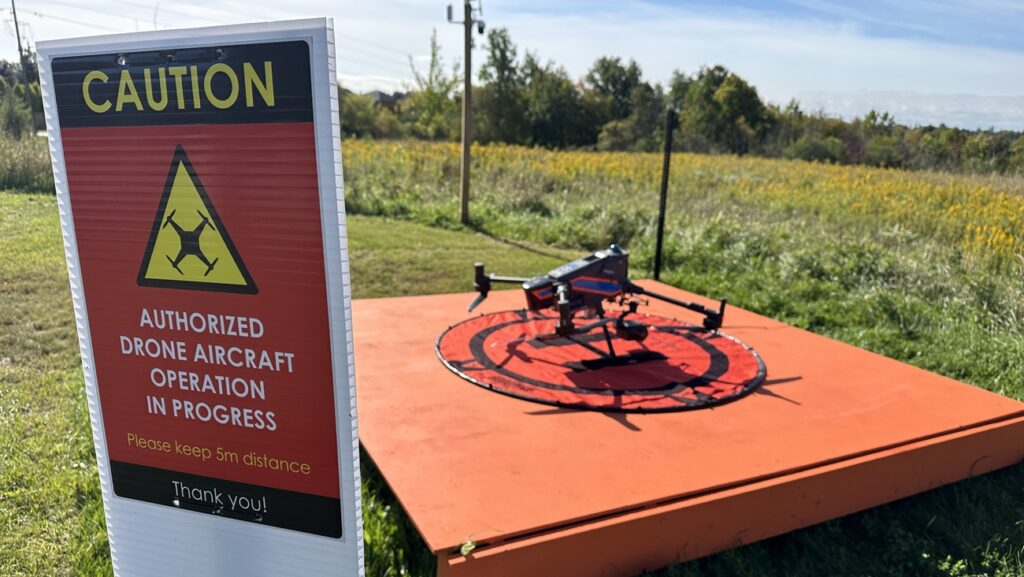
Peel Regional Paramedic Services has launched a groundbreaking medical drone response pilot project in Bolton, aiming to enhance their emergency response capabilities. This innovative initiative comes in response to a high volume of medical calls in the regions of Caledon, Brampton, and Mississauga. The program was unveiled on Tuesday, reflecting the service's commitment to utilizing technology to improve outcomes for patients in critical situations.
The pilot program involves deploying drones equipped with essential medical supplies, such as defibrillators, EpiPens, naloxone, and trauma kits. These supplies are intended to address life-threatening conditions including cardiac arrest, anaphylaxis, overdoses, and severe trauma. By providing immediate access to these crucial items, paramedics aim to bridge the gap in emergency care while on route to the scene.
Based at a paramedic and fire station located off Highway 50, Peel paramedics can deploy drones within a four-kilometer radius. Paul Snobelen, a community programs specialist with Peel paramedics, emphasized the mission-specific nature of the drone's deployment, noting that it allows for time-sensitive medical supplies to reach patients before traditional paramedic units arrive.
The operational process involves carefully plotting a flight path and sending the drone to the designated address. Once the drone arrives at the location, it hovers 10 feet above the ground, at which point a specialized bag containing medical supplies is dropped. The drone operator then communicates with 911 dispatchers to confirm the delivery of the package, allowing residents to retrieve the supplies and administer them under instructions provided either via phone or a video call.
Preliminary data indicates that drones can arrive at the scene three to eight minutes quicker than ambulances, which could significantly impact patient outcomes in critical emergencies. "Minutes matter in this scenario, so the sooner we have an intervention, the better the outcome can be," said Snobelen, underscoring the urgency of timely medical intervention.
Additionally, the drone can reach speeds of up to 100 km/h, although operators usually maintain a speed closer to 40 km/h for safety. While the drones can operate in some adverse weather conditions, visibility and high winds pose challenges that could affect flight operations. Snobelen pointed out that drones do not contend with road traffic or geographical barriers, making them a highly efficient alternative in emergency situations.
Alison Crossby, the community programs unit commander, characterized this pilot project as a progressive and "cutting-edge" service innovation. She clarified that the drone program does not aim to replace traditional ambulances and paramedics, but rather to complement existing emergency services. "This is the future of technology, the future of innovation, and the future of healthcare," she remarked, highlighting the necessity for such advancements in response to the increasing demand for emergency medical services.
Crossby noted that success in this pilot project would be defined simply: "Saving a life." The total cost of launching the project was approximately $250,000, which covered equipment, software, training, and initial operational expenses. Funding was partially provided by a grant and research money from Sunnybrook Health Sciences Centre.
As the pilot program progresses, the Peel Regional Paramedic Services will collect and analyze data to evaluate its effectiveness and potential for continuation. There is also a planned period of winter maintenance to ensure the drones remain operationally effective throughout varying seasonal conditions. While it remains uncertain when a final report will be released, the team is committed to a thorough assessment of the project's impact and viability for future applications.