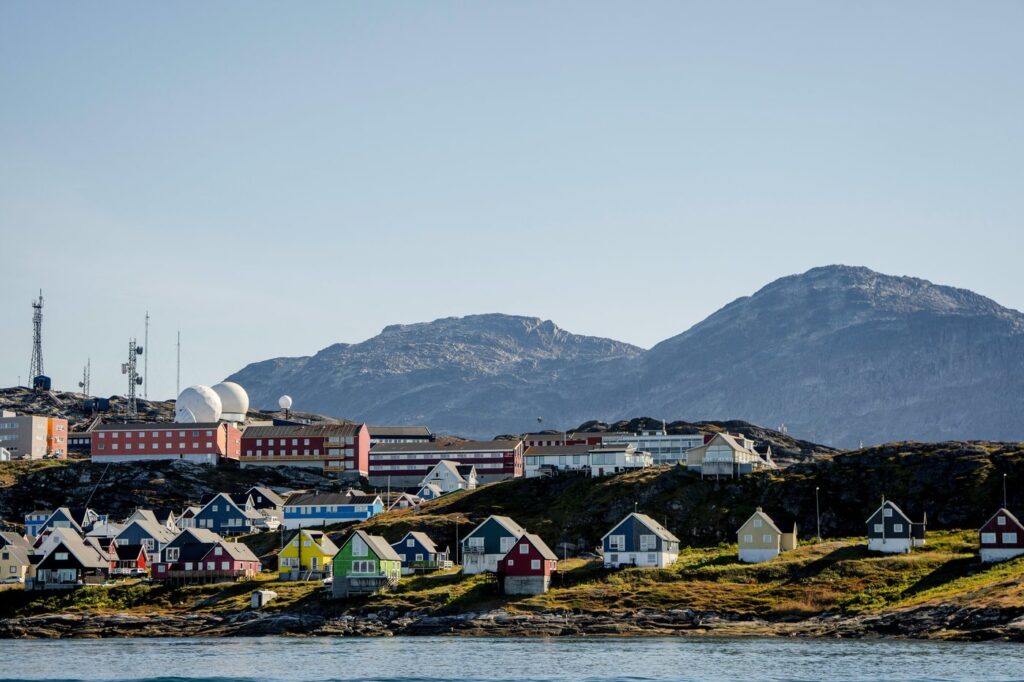
President Donald Trump's interest in acquiring Greenland, a semiautonomous territory of NATO ally Denmark, surfaced publicly in 2019. The timeline of events that followed reflects a growing diplomatic crisis between Washington and its European allies, particularly Denmark and Greenland.
In August 2019, during his first term, Trump expressed interest in purchasing Greenland but noted that it wasn’t his top priority. Danish Prime Minister Mette Frederiksen quickly dismissed the idea as "an absurd discussion." Following this, Trump canceled a scheduled trip to Denmark, citing Frederiksen's "nasty" comments in response to his proposal.
As Trump's second term loomed, interest in Greenland reinvigorated. On December 22, 2024, President-elect Trump declared that "the ownership and control of Greenland is an absolute necessity." In reaction, Greenland’s Prime Minister Múte Bourup Egede firmly stated that "we are not for sale and will never be for sale." This marked the beginning of escalating tensions between the U.S. and Greenland.
On January 7, 2025, Trump's son, Donald Trump Jr., visited Greenland, and his father suggested he might not rule out military force to gain control of the island. By March 2025, Greenland held an election where the Demokraatit party, led by Jens-Frederik Nielsen, took power. Shortly thereafter, all five parties in Greenland's parliament rejected U.S. discussion about taking control of the territory.
On March 27, a coalition government was formed among four of the five parties in Greenland. This coalition, under Prime Minister Nielsen, emphasized the need for autonomy and rejected U.S. overtures. On March 28, Vice President JD Vance visited the U.S. military base in Pituffik, Greenland. He criticized Denmark for what he called underinvestment in Greenland's national security, prompting a strong rebuke from Denmark's foreign minister a day later, asserting the inappropriateness of the U.S. stance.
In August 2025, tensions escalated further as Denmark's Foreign Ministry summoned the top U.S. diplomat after reports surfaced regarding covert influence operations allegedly connected to Trump associates in Greenland. Later, on December 21, Trump appointed Louisiana Governor Jeff Landry as the U.S. special envoy to Greenland, asserting that he aimed to make Greenland a part of the U.S.
On December 22, leaders from both Denmark and Greenland reinforced that the U.S. would not be taking control of Greenland. Danish officials summoned the U.S. ambassador, illustrating their discontent with the continuing discussions. The beginning of Trump's second term in January 2026 reignited speculation about U.S. intentions regarding Larsena's sovereignty, coinciding with a significant political shift in Latin America with the removal of Nicolás Maduro in Venezuela.
By January 5, Danish Prime Minister Frederiksen stated that any attempt at an American military takeover would equate to the end of NATO. Major European leaders joined her in defending Greenland's sovereignty, increasing pressure on the U.S. By January 8, Trump claimed he needed full control over Greenland and not just the rights endowed by existing defense treaties.
Following a flurry of diplomatic communications, Trump hinted at penalizing European nations opposed to U.S. control of Greenland with tariffs, initially threatening a 10% import tax on goods from several European countries. On January 21, after a conversation with Norway's Prime Minister, Trump announced he had decided against imposing tariffs amid hints at a potential compromise regarding Arctic security.
As discussions evolved, the U.S., Denmark, and Greenland began technical talks on February 28, 2026, aiming to formalize Arctic security arrangements. Despite Trump's declaration of sending a hospital ship to Greenland for medical purposes in February, Greenland's Prime Minister Nielsen declined the offer, illustrating their rejection of U.S. intervention.
Further discussions intensified throughout the summer, culminating in a series of announcements from both U.S. and Danish officials about potential military expansions in Greenland. By September 2026, Trump signed an agreement to enhance the U.S. military presence on the island, leading to cautious optimism among Danish officials about recognizing Greenlandic sovereignty amidst U.S. strategic interests.
The saga surrounding Greenland's fate continues to highlight the complex interplay of international diplomacy, national sovereignty, and geopolitical strategy, illustrating a noteworthy tension between Europe and America as interests in the Arctic region grow.