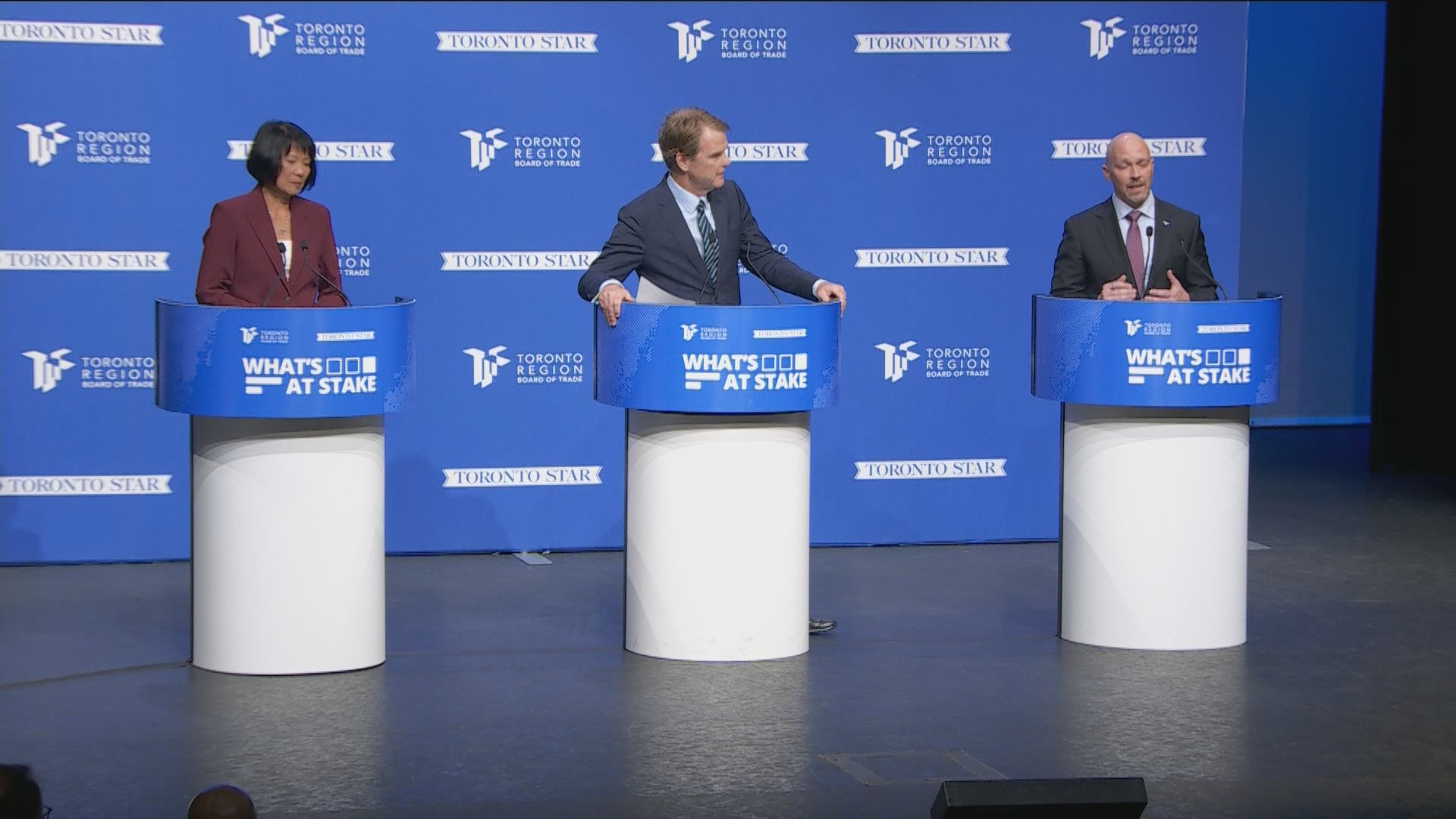
During the first candidates’ debate for the Toronto mayoral election, candidate Brad Bradford pledged to implement a property tax freeze in his first year if he is elected. This promise came as incumbent mayor Olivia Chow spoke about her efforts to rectify a significant budget deficit left by the previous city council.
The debate was hosted by the Toronto Board of Trade and featured Chow, Bradford, and Chris Alexander. It was streamed live on CityNews 24/7, allowing voters to closely follow the candidates' positions on crucial issues such as affordability, transit, and congestion. In discussing affordability, Bradford emphasized the need for financial relief for families who are struggling with rising costs under Chow's administration. He stated, "Families need relief. They can't afford more of Olivia Chow's tax increases," while committing to a detailed review of Toronto's budget.
Chow responded by highlighting Bradford’s previous role as vice-chair of the Budget Committee, asserting that he contributed to a nearly $2 billion deficit that she now seeks to manage. She mentioned her intention to keep property taxes at or near the rate of inflation if she is reelected in the upcoming municipal election. Chow has already enacted substantial property tax increases during her tenure, including a record 9.5 percent hike for 2024 and a 2.2 percent increase projected for 2026.
Chris Alexander critiqued Bradford’s approach, suggesting that promising tax cuts to fund expensive initiatives would not attract business investments to the city. Each candidate shared their strategies for alleviating traffic congestion and improving transit. Chow proposed measures such as implementing more signal priorities for the Toronto Transit Commission (TTC) and capping fares at ten rides per week. In contrast, Alexander asserted that such fare structures could exacerbate the TTC’s budget shortfall of $390 million, arguing for a focus on revenue-generating strategies to enhance service levels.
Bradford's approach included a commitment to avoid major road closures during significant events and to adopt a 24/7 construction schedule. He emphasized improving transit safety and reliability, stating that riders are more concerned about the service's dependability than the cost of fares.
The issue of affordability also dominated the debate, with all candidates highlighting the need for affordable housing solutions. Alexander proposed collaborating with the federal government to build numerous co-op housing units and aimed at stimulating business investment in Toronto to increase local incomes. Bradford reiterated his property tax freeze and suggested creating favorable conditions for housing development. Meanwhile, Chow focused on measures taken to protect renters and incentivize affordable housing development without imposing additional charges on developers providing a minimum percentage of affordable units.
As the election approaches, voters will soon receive their voting cards by mail. Early voting will take place from October 6 to October 11, with polling stations open from 10 a.m. to 7 p.m. On election day, October 26, polls will operate from 10 a.m. to 8 p.m.
In a recent poll conducted by Liaison Strategies, it was reported that Chow leads Bradford by seven points among decided and leaning voters. However, this lead has shrunk compared to previous surveys, indicating a tightening race as the election date draws nearer.