On Monday, Iran’s state media reported that a newly developed ballistic missile, referred to as the Qassem Basir, demonstrates Tehran's evolving military doctrine by indicating that Iran will proactively respond to threats even prior to their execution. This assertion was backed by Mohsen Rezaei, the head of Iran’s Supreme National Security Council, who claimed the missile has been tested against a U.S. warship, although the specifics on whether the Qassem Basir was involved in any testing remain unclear.
Over the weekend, the United States confirmed that ballistic missiles had been launched from Iran targeting U.S. warships and retaliated by striking three Iranian oil tankers. This escalation in hostilities marks a significant shift since Iran had previously focused its military operations at sea on commercial vessels. As a result of the attacks, U.S. warships reportedly evaded the Iranian missile strikes.
Iran’s state news agency highlighted that the Qassem Basir missile represents a pivotal change in the country's defense strategy, touting improved range, accuracy, and a warhead weighing half a ton. The missile was unveiled last year, with an estimated range of at least 1,200 kilometers (745 miles), raising concerns internationally about Iran’s ballistic missile capabilities.
Concerns over Iran’s missile program were among the primary reasons cited by the U.S. and Israel for their military interventions against Iran earlier this year, igniting the current conflict. The U.S. administration also responded critically to Rezaei’s recent announcement regarding plans to establish an "exclusion zone" in the Strait of Hormuz, asserting that the strait remains open and under U.S. control.
The White House noted that the U.S. Navy has successfully cleared the strait of mines, and there are indications that tanker traffic to non-Iranian ports is increasing. Nonetheless, a U.S. blockade targeting Iranian ports persists, aimed at inflicting economic distress by curtailing Iran’s oil exports. Reports indicate that, as of Monday, 94 commercial vessels had been redirected, and three vessels had been disabled in the process.
Tehran's desire for vessels to adhere to a course it designates through the Strait of Hormuz, which has traditionally been recognized as an international waterway, persists. Rezaei acknowledged that the U.S. has assisted a limited number of vessels in transiting an alternate route off the coast of Oman. He also noted that Iran refrains from engaging these vessels in combat due to environmental considerations, particularly since they are transporting oil.
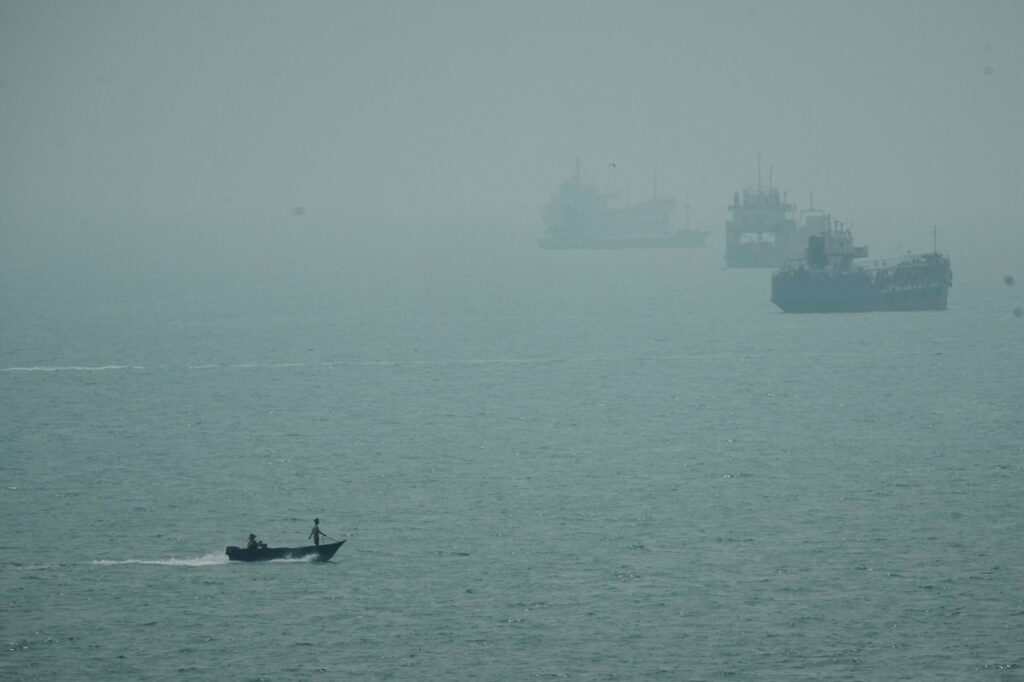
In the midst of rising tensions, a sharp decline in maritime traffic through the Strait of Hormuz has been reported, affecting the flow of shipping crucial for global oil and natural gas supplies. A recent maritime attack on a Saudi-owned tanker resulted in the deaths of two crew members, with seven more unaccounted for, marking it as the most lethal strike on a commercial vessel since the conflict began on February 28 with U.S. and Israeli actions.
Regional leaders have expressed growing frustration regarding the unstable situation in the Gulf, underscoring the importance of the Strait of Hormuz for global energy supplies. Anwar Gargash, a diplomatic advisor to the President of the United Arab Emirates (UAE), emphasized that no single nation should exert control over the strait, insisting that energy exports and trade should not become tools for geopolitical leverage. The UAE has been subject to Iranian missile and drone attacks during the ongoing conflict and suspended trade with Iran last month due to increasing hostilities.
Gargash highlighted the long road ahead in rebuilding trust between Iran and the Gulf nations, a sentiment echoed by Nabil Fahmy, the secretary-general of the Arab League, who condemned Iran's aggressive actions towards Gulf states. He emphasized that the maritime corridors should not be compromised in the broader geopolitical calculations involving Iran.