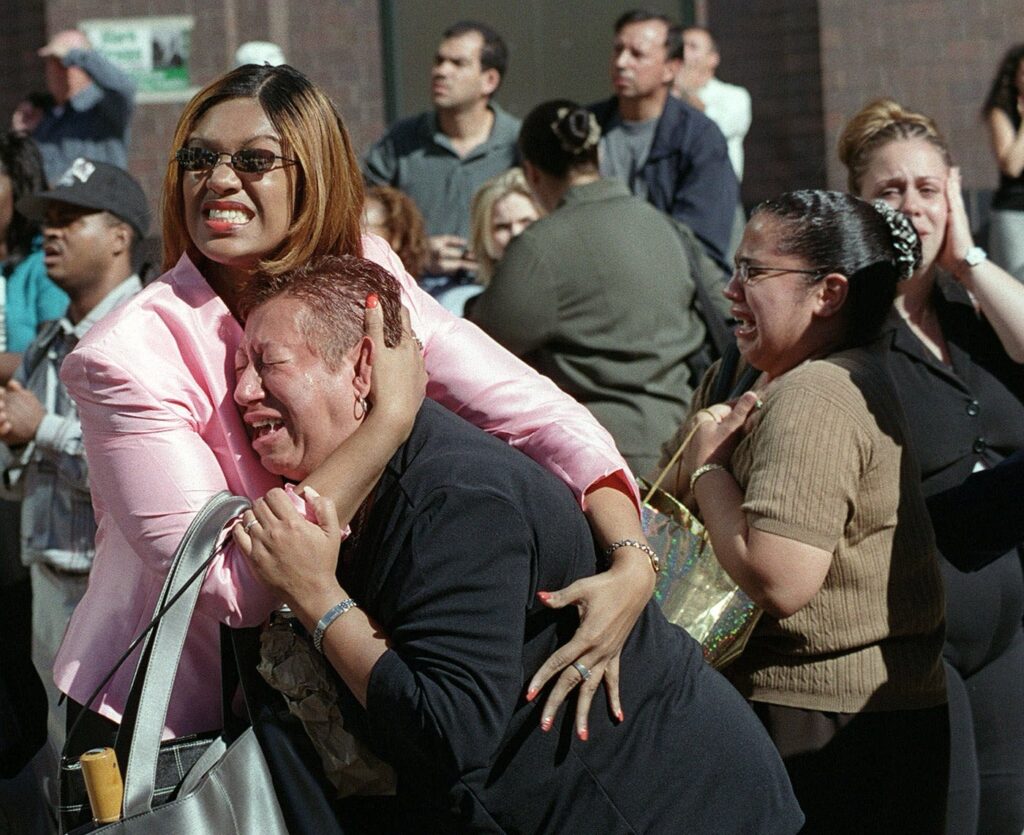
NEW YORK (AP) The tragic events of September 11, 2001, which led to planes crashing into the World Trade Center and the Pentagon, and a subsequent catastrophe in Pennsylvania, reverberated across the United States. The shock and grief extended well beyond the immediate locales of New York City, rural Pennsylvania, and Washington, D.C., impacting communities large and small nationwide. The attacks irrevocably altered the American perception of safety and unity, creating a wave of shared sorrow among a populace that had not experienced such collective trauma in recent history.
As the nation marks the 25th anniversary of these harrowing events, the lingering effects are evident. The post-9/11 world has been characterized by heightened security measures and pervasive surveillance. However, Americans do not share a uniform experience of this new reality; rather, the meaning of 9/11 has become a complex tapestry influenced by individual timelines, political views, and personal narratives.
The passage of time has been an integral factor in shaping perspectives. Millions of young Americans born since 2001 view 9/11 purely through the lens of history, learning about it in schools without the emotional weight experienced by those who lived through it. Additionally, the government’s actions in the wake of 9/11—such as restructuring agencies and launching military operations—have significantly impacted public sentiment and understanding of the events. The United States was already grappling with internal tensions, which escalated due to the attacks, affecting how different communities interpret the event's significance and aftermath.
According to Daniel Aldrich, a professor at Northeastern University, perceptions of 9/11 differ dramatically based on personal and social networks. These networks encompass a wide array of experiences: individuals who lost family members, first responders, military personnel, people who suffered job losses in devastated sectors, and those from communities unfairly targeted following the attacks.
One poignant example is Jenna McPartland, whose husband, Ariel Jacobs, perished in the attacks. Pregnant at the time, she gave birth to their son, Gabriel, just days later. As she rebuilt her life through multiple marriages and additional children, McPartland prioritized integrating Gabriel with his father’s family history, ensuring that the impact of September 11th was acknowledged within their family narrative.
Government decisions post-9/11 have had profound implications as well. Policies, including those establishing the Department of Homeland Security and the controversial implementation of the National Security Entry-Exit Registration System, fostered an environment of fear and scrutiny, particularly for Muslim Americans and individuals from Muslim-majority countries. Criticism arose regarding such profiling practices, but the lingering effects of these policies have continued to frame discussions around immigration and national security. As Jayesh Rathod from Georgetown Law notes, the perception of external threats has led to the normalization of extensive security measures throughout society.
The attacks also highlighted vulnerabilities faced by various minority communities. For instance, the murder of Balbir Singh Sodhi, a Sikh man mistakenly targeted shortly after 9/11, underscored the risks of racial and religious profiling that emerged during this period. The repercussions have been deeply felt within Middle Eastern, Sikh, and broader minority communities, resulting in heightened awareness and anxiety about personal safety and societal acceptance.
Today’s younger generation, such as Vida Lashgari, reflect on the legacy of 9/11 through the prism of their own experiences and historical context. Born after the attacks, Lashgari has learned how their effects shaped her community and altered the lives of those around her. The subsequent global events, including the COVID-19 pandemic, have created comparative frameworks for understanding the profound shifts that can occur in society. The pandemic has offered a relatable experience of sudden, uncontrollable change, echoing sentiments felt during 9/11.
The transition of historical memory reveals how new events can overshadow previous ones, shifting collective focus and personal interpretations. Sociologist Amy Sodaro observes that while 9/11 once dominated the societal landscape, later geopolitical shifts and domestic transformations have altered its historical significance and collective memory.