WASHINGTON (AP) – President Donald Trump is implementing new double-digit tariffs on imports from 60 countries as a deadline approaches for temporary levies he imposed following a Supreme Court ruling. The new tariffs, ranging from 10% to 12.5%, target nations that are accused of inadequately enforcing prohibitions on goods produced by forced labor, affecting 99% of U.S. imports.
U.S. Trade Representative Jamieson Greer stated, “The United States has had a forced labor import ban for nearly a century, and rigorously enforces it; it’s well past time for our trading partners to do the same.” He emphasized that the tariffs aim to address human rights abuses and level the playing field for workers globally.
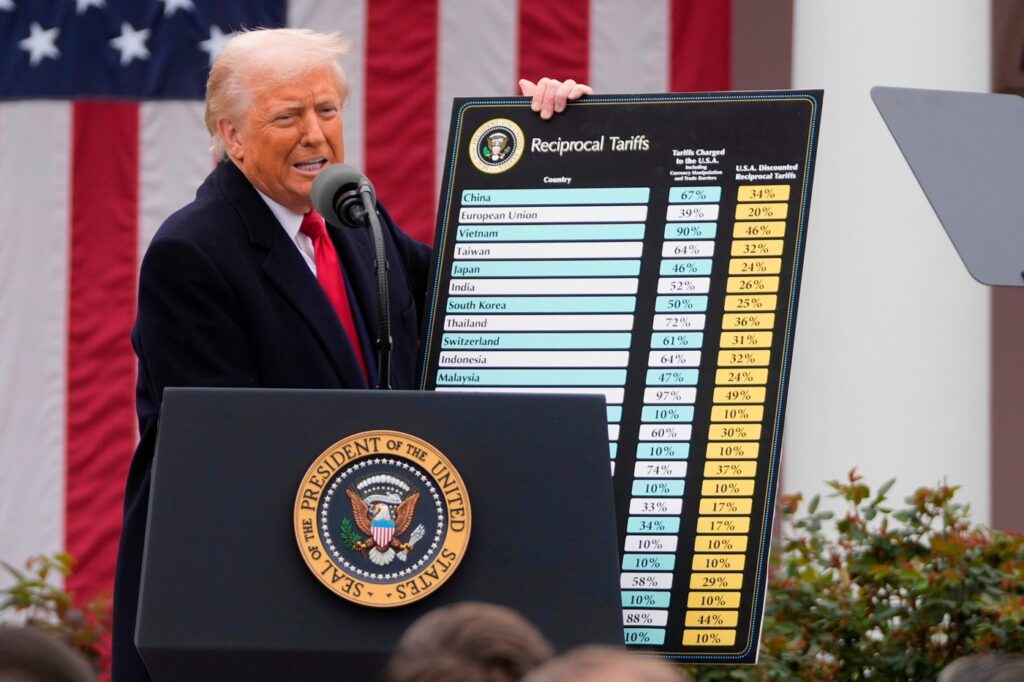
The tariffs will take effect as the temporary 10% worldwide tariffs expire at 12:01 a.m. Friday. This action follows the Supreme Court’s decision that invalidated Trump's previous, more extensive tariffs imposed in February. To circumvent this setback, the administration is now utilizing the Trade Act of 1974's Section 301, which allows the president to impose tariffs on countries that engage in “unjustifiable,” “unreasonable,” or “discriminatory” trade practices. Trump had previously used this section to impose substantial tariffs on China during his first term.
The administration has also initiated an investigation under Section 301 into whether 16 additional countries, which comprise 70% of U.S. imports, are engaging in overproduction of goods that undercut U.S. businesses. The outcome of this investigation remains pending.
Having shifted U.S. trade policy towards higher tariffs, Trump argues that these measures are essential for revitalizing American manufacturing. He invoked the 1977 International Emergency Economic Powers Act (IEEPA) to impose tariffs on a broad range of goods, citing the national emergency posed by the trade deficit. However, the Supreme Court ruled that IEEPA does not authorize such tariffs, necessitating refunds to affected importers.
Following this decision, Trump enacted temporary 10% tariffs under Section 122 of the Trade Act, but these can only remain in effect for 150 days, which brings the deadline to Friday. The forced labor tariffs were proposed last month, and since then, some nations have enhanced their enforcement of labor bans, resulting in adjusted tariff rates.
Exemptions from the new tariff regime include oil, gas, and fertilizer, as well as goods eligible for duty-free status under the US-Mexico-Canada Agreement. Tariffs are ultimately borne by U.S. companies who import foreign products, which can lead to increased consumer costs. This raises concerns given the current high cost of living, particularly with the Nov. 3 midterm elections approaching.
Human rights advocates express skepticism about the motives behind the new tariffs but recognize that these actions may drive progress concerning forced labor issues. According to the International Labor Organization, around 27.6 million people were subjected to forced labor globally in 2021. Martina Vandenberg, founder of The Human Trafficking Legal Center, advocates for import bans as a tool against forced labor while cautioning about the need for phased implementation to allow countries to establish effective enforcement mechanisms. She advocates for meaningful and enforceable import bans.
Kenya Davis, a partner at Boies Schiller Flexner, highlighted the significance of the Uyghur Forced Labor Prevention Act of 2021, which prohibits imports from China’s Xinjiang region, drawing attention to labor trafficking and forced labor issues. Davis emphasizes the necessity for comprehensive strategies that ensure transparency and aid countries in implementing enforceable bans.
Isabelle Glimcher from the NYU Stern Center for Human Rights pointed out that the tariffs primarily target foreign goods and do not address products made domestically. Nevertheless, the threat of tariffs has prompted countries like India to amend their foreign trade policies to include forced labor import bans. In addition, new European Union regulations on forced labor are expected to be enacted next year, further pushing toward reform in trade practices globally.