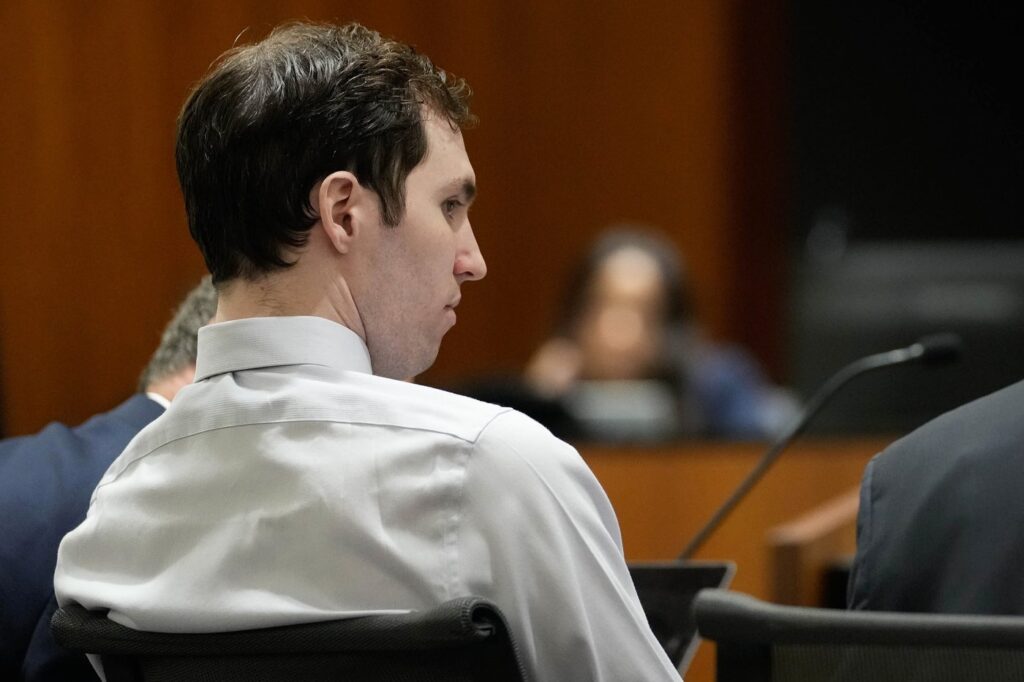
The man charged with killing Charlie Kirk argues that he should not face the death penalty. His lawyers contend that Tyler Robinson, the defendant, successfully “hit the intended target” without endangering others during the shooting incident at an event in Utah Valley University on September 10, 2022. According to the defense, the bullet fired from a rooftop traversed above a crowd of several thousand attendees, thus distancing Robinson’s actions from viable threats to others.
The prosecution highlights the risk that a stray or ricocheting bullet could have endangered the people surrounding Kirk, asserting this poses an aggravated factor under state law, categorizing Kirk's killing as a capital offense. The defense maintains that evidence exhibits the bullet's trajectory and argues that there was no direct threat posed to the crowd. Their legal documents, submitted last Tuesday, emphasize that the only evidence suggests the bullet traveled above the attendees rather than through them.
Additionally, the defense refutes implications that Robinson's motivations were politically charged. Prosecutors allege that he expressed intentions to kill Kirk due to his extreme political views, stating that Robinson relayed to a roommate that he “had enough of his hatred.” However, the defense argues that this singular statement does not sufficiently substantiate any political motive, emphasizing that investigations of Robinson's apartment, computer, and phone yielded no substantial evidence beyond this claim.
In a preliminary hearing spanning a week, prosecutors presented what they describe as “overwhelming” evidence, which includes DNA tests connecting Robinson to the suspected weapon, alongside apparent confessions made by him. Defense attorneys, however, challenged the reliability of DNA testing and other pieces of evidence, stating they did not propose alternative theories regarding Kirk's assassination nor referenced DNA in their latest filings.
Robinson, who has been charged with aggravated murder, has yet to enter a plea; he surrendered to law enforcement a day after Kirk's death. His legal team previously petitioned to remove the death penalty from consideration subsequent to the prosecution's admonishment for discussing the case publicly, a motion that State District Judge Tony Graf denied.
Prosecutors have pointed out that Robinson's decision to load four bullets into his rifle suggests he was aware of the possibility of missing Kirk and thus endangering surrounding individuals. The defense countered this notion, stating that it could just as plausibly be interpreted that Robinson believed he would accurately hit his target.
Robinson could face heightened sentencing if the prosecution successfully establishes that he targeted Kirk specifically for his political beliefs. Prosecutors draw connections between Kirk's vocal opposition to same-sex marriage and gender transitioning and Robinson's personal circumstances, which include a romantic relationship with a man, Lance Twiggs. Twiggs was reported to have been contemplating transition around the time of Kirk’s death. While Twiggs acknowledged that Robinson discussed politics and President Donald Trump on occasion, he emphasized that he had not heard Robinson mention Kirk before the incident and that Robinson did not often engage in discussions concerning gender issues or LGBTQ+ rights.
Closing arguments in the preliminary hearing are slated for September 1, 2023. Judge Graf is expected to determine if the case will proceed to trial and on which charges following the arguments. Attorneys representing Kirk’s family have requested a decision by or on the same date to expedite the case's advancement. Prosecutors are required to respond to the defense's latest arguments by August 18, 2023.
The prolonged duration of the preliminary hearings is notable, as they typically conclude more swiftly. Legal experts suggest this drawn-out process reflects Graf's careful approach, the substantial volume of evidence presented, and a desire by prosecutors to address and disprove prevailing conspiracy theories surrounding the case.