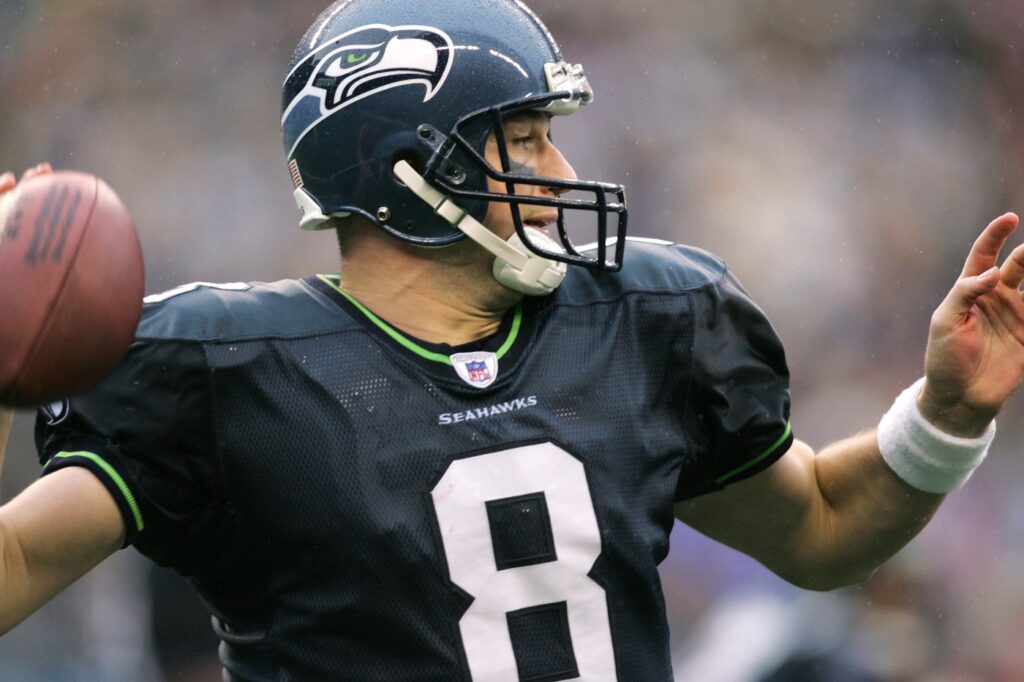
PHOENIX (AP) — Matt Hasselbeck, a former NFL quarterback and three-time Pro Bowl selection, is taking proactive steps to understand the impact of head injuries sustained throughout his extensive sports career. At 50 years old, Hasselbeck reflects on the challenging experiences of his past, having endured multiple concussions during his 17 years in the NFL and his time at Boston College. Although he considers himself fortunate to have emerged relatively unscathed, he acknowledges that many of his friends and former teammates were not as lucky.
Recently, Hasselbeck dedicated two days at Boston University to undergo a series of scans and tests aimed at examining the long-term effects of his football career on his brain. This initiative contributes toward a larger research goal of diagnosing chronic traumatic encephalopathy (CTE) in living individuals, a goal that has remained elusive for the medical community thus far. CTE is a degenerative brain disease linked to concussions and head trauma common in contact sports and military combat, and it has been diagnosed posthumously in over 100 former NFL players, including notable figures such as Hall of Famer Junior Seau and Aaron Hernandez.
Hasselbeck, who understands the value of participating in such studies, stated, “They need guys like me — they need people who are feeling good to step up to the plate and volunteer.” His perspective as a quarterback, where he faced fewer hits compared to players in more physically demanding positions, motivates him to support those who have sustained greater injuries. He hopes that his involvement can assist those who risked their health for the sport.
The CTE study at Boston University, co-directed by Michael Alosco, aims to include a wide demographic of participants, from professional and college football players to individuals diagnosed with Alzheimer’s disease who have never engaged in collision sports. Alosco highlighted that understanding the distinctions between Alzheimer’s and CTE is essential for proper diagnosis, as both diseases share degenerative properties. CTE’s symptoms—including memory loss, depression, and behavioral issues—often overlap with Alzheimer’s, making accurate identification a complex challenge.
While Hasselbeck's participation is notable, he is not the only athlete engaged in this vital research. Bryan Savage, a former NCAA Division III linebacker, also took part, traveling from Maryland to Boston for the study. Savage, who has been diagnosed with depression and ADHD, expressed interest in determining whether his mental state is related to past injuries on the field. His commitment to supporting the study, including his decision to donate his brain after death, reflects a growing awareness among former players regarding the potential long-term effects of football-related injuries.
Hasselbeck described the cognitive tests, brain scan, and blood sample he underwent as ‘eye-opening,’ expressing a newfound respect for individuals dealing with severe brain trauma. This sentiment is echoed in the broader goal of the study to advance research on CTE, ultimately aiming for accurate diagnosis and the development of treatment protocols. Current CTE diagnoses are mostly speculative, and researchers emphasize that increased participation and data collection are pivotal for future breakthroughs.
Furthermore, Hasselbeck discussed the cultural shift surrounding head injuries in the NFL. He recalled that during the early stages of his career, players often minimized the seriousness of head impacts, but attitudes have shifted significantly. By the mid-2010s, greater honesty around concussion symptoms emerged, leading to improved protocols for player safety. The former quarterback indicated his pride in contributing to the dialogue around safer gameplay, emphasizing his ongoing commitment to supporting the health of athletes.
Overall, both Hasselbeck and Savage’s participation in the study signifies a crucial step in addressing the unknowns surrounding CTE while fostering a culture of awareness and advocacy for player safety in all levels of football.