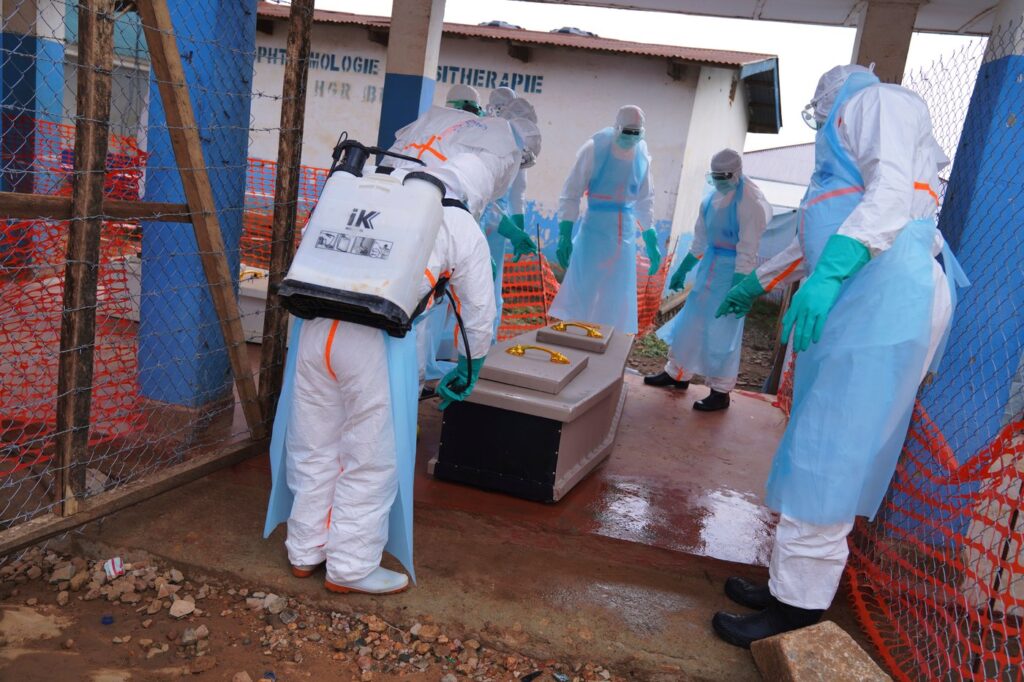
The ongoing Ebola outbreak in the Democratic Republic of Congo has reached a staggering total of 5,021 confirmed cases and 2,378 deaths, according to data released by the Ministry of Health. Observers are noting that the outbreak is spreading at an "unprecedented speed," significantly outpacing containment efforts in one of the country's most remote regions. The current situation is exacerbated by factors such as insecurity, forced displacement of populations, and intense movement of people, all of which are complicating the response to the crisis.
This outbreak has become an alarming precedent in the history of Ebola virus disease, as it is infecting and killing individuals faster than any previous outbreak. The World Health Organization (WHO) has warned that it could potentially surpass the catastrophic 2014-2016 West African outbreak, which reported over 11,000 deaths. From the first detected case, the current outbreak has spread three times faster than the previously deadliest epidemic.
WHO Director-General Tedros Adhanom Ghebreyesus emphasized the urgency of the situation during a Tuesday meeting, stating, "We must be frank: the epidemic is far from being under control." Responders on the ground are finding it increasingly difficult to manage the crisis as health workers face exhaustion from the demanding conditions. Some healthcare professionals have even gone on strike due to delayed payments, highlighting the inadequacies in response management.
A significant challenge in controlling the outbreak is the lack of approved vaccines and treatments for the rare Bundibugyo virus, which is responsible for the current epidemic. Most new infections are occurring in individuals not under surveillance, indicating a rapid spread of the virus and reflecting poorly on the existing monitoring systems.
Violence Against Health Workers in Ituri
The province of Ituri, severely affected by the outbreak, has witnessed increased violence against health workers, limiting the response capacity. On Monday, residents attacked a health team in the Aru territory following a suspected case, resulting in a mob setting fire to an ambulance and damaging other vehicles. Michael Wani, president of the Union of Cultural Associations for the Development of Ituri, reported these incidents, highlighting the hostility towards medical teams.
Dr. Martin Cwinyay, involved in the response efforts, stressed the importance of bringing healthcare solutions closer to affected communities, particularly in rural and mining areas. Trish Newport, the emergency coordinator for Doctors Without Borders (MSF), emphasized the need for better community awareness regarding the Ebola outbreak. She stated, "The community needs to be aware of the outbreak. They need to be involved in the response." Educational efforts must focus on informing residents about the signs, symptoms, and proper steps if they fall ill.
Consequences of Limited Care
Experts suggest that the virus began spreading in the mining town of Mongbwalu as early as February, well before the outbreak was officially declared on May 15. The response teams, racing to address the fast-evolving situation, are also contending with threats from rebel groups and widespread anger from communities that have faced years of trauma. The road conditions in affected territories further complicate efforts, restricting timely access to care.
While the 2014-2016 outbreak is acknowledged as the deadliest, this current Bundibugyo outbreak exhibits an alarming case fatality rate of 47.4%. In certain areas, the situation is even graver; for instance, in North Kivu province, the fatality rate reaches a stark 70%, underscoring the uneven impact of the epidemic across the six affected provinces.