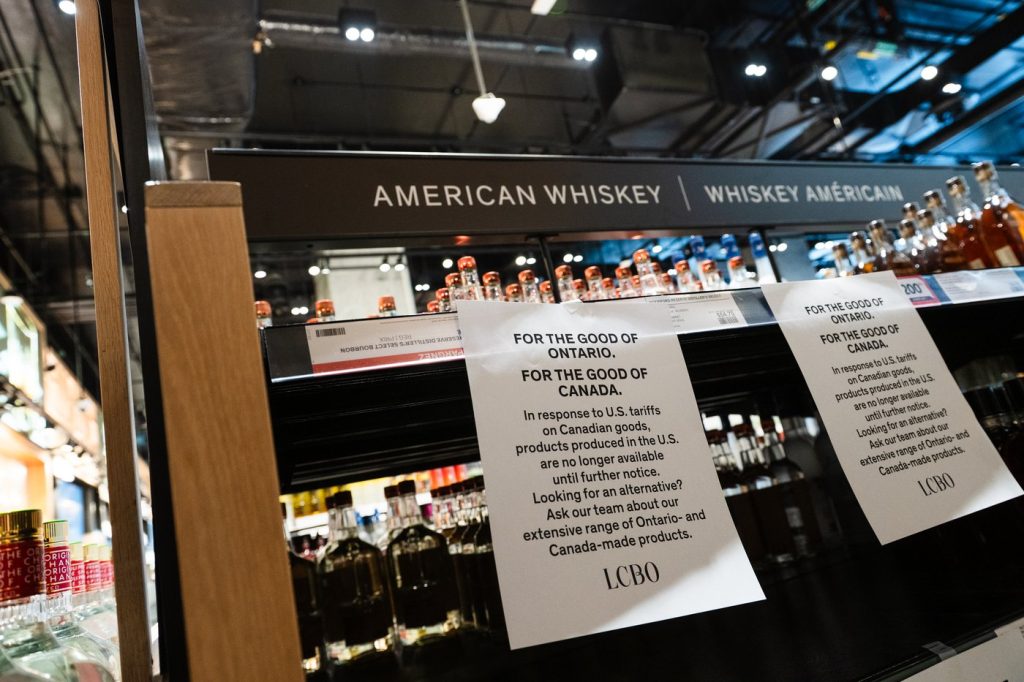
Nova Scotia Premier Tim Houston has revealed that Prime Minister Mark Carney has urged provincial premiers across Canada to reconsider the ban on U.S. alcohol sales as discussions regarding trade agreements progress. This request comes amid ongoing negotiations intended to bolster trade relations between Canada and the United States.
At a press conference, Houston elaborated on the discussions he had shortly after Carney briefed the premiers on a new deal achieved with the U.S. He confirmed that Carney's request to lift the ban on U.S. alcohol would be dependent on the successful conclusion of the final agreement. Houston characterized the ban on U.S. alcohol as a perennial irritant that has caused frustration for the U.S. government, stating, "It’s been an irritant something that has really bothered the United States for so many reasons."
The current situation reveals that almost all Canadian provinces have imposed a ban on the sale of U.S. alcohol, with Alberta and Saskatchewan being the notable exceptions. Despite the request from Carney, it remains uncertain whether Canadians will actually purchase American alcohol if it is reinstated on liquor store shelves, as Houston aptly pointed out, raising a critical question about consumer behavior.
Ontario Premier Doug Ford has yet to issue a response regarding the Prime Minister's request. Ford has been vocal about his discontent with U.S. trade relations, specifically targeting former President Donald Trump's aggressive tactics. Just last month, Ford described Trump as "nothing but a bully," emphasizing the necessity for Canada to stand firm against such strong-arm tactics to protect its interests.
In light of the recent developments, Carney issued a statement asserting that the new trade arrangement aims to reinforce and expand upon Canada's existing trade advantages with the U.S. Key figures, such as Ministers LeBlanc and Greer, held consequential meetings the day after Trump temporarily suspended proposed 50% tariffs which threatened various Canadian goods. These tariffs were set to take effect shortly after midnight on Wednesday, creating a sense of urgency in the negotiations.
While LeBlanc refrained from disclosing many details regarding the specifics of the draft agreement reached with Greer during intensive negotiations, he did confirm that Canada's dairy supply management system would remain untouched, indicating a protective stance towards certain domestic industries amid the trade discussions.
This evolving story sheds light on the complexities of trade relations between Canada and the U.S., demonstrating the delicate balance politicians must maintain when addressing both international pressure and domestic consumer preferences.