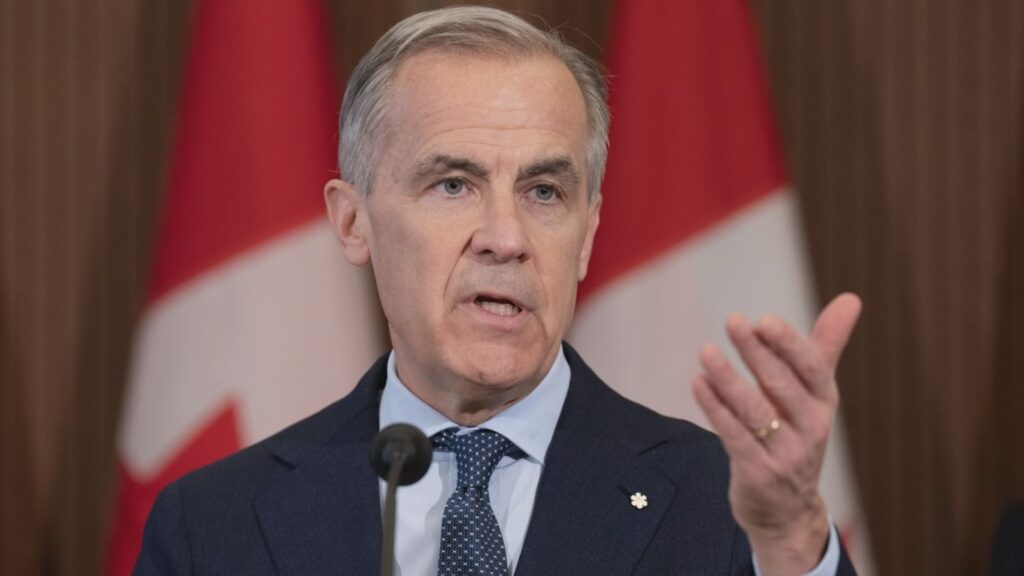
Prime Minister Mark Carney announced that Canada will impose retaliatory tariffs against the United States starting September 8, following the breakdown of trade negotiations. Carney described the offer made by the U.S. as a "bad deal" and emphasized that Canada cannot accept the terms proposed by Washington.
The U.S. implemented new tariffs of 50 percent on billions of Canadian goods after trade discussions faltered, prompting a swift response from the Canadian government. "We got attacked," Carney stated during a press conference on Parliament Hill, where he confirmed that he had suspended negotiations and called back Canadian negotiators to Ottawa.
“We cannot accept what they’ve offered and we will not give what they’ve asked,”
Carney, accompanied by Canada-U.S. Trade Minister Dominic LeBlanc and chief trade negotiator Janice Charette, stated that Canada plans to match the U.S. tariffs dollar-for-dollar. The tariffs will specifically target sectors such as steel, dairy, appliances, agricultural equipment, pulp and paper, and electronics. Detailed information regarding these retaliatory measures and support for affected industries will be released in the coming days.
Despite the potential for increased costs and reduced choice for Canadians, Carney reiterated that this step is taken reluctantly but is necessary to safeguard Canadian interests. He acknowledged that some American businesses may be adversely affected by the trade dispute but affirmed that rejecting a bad deal was essential for Canada’s long-term strength.
Carney highlighted that the U.S. made last-minute attempts to limit Canada’s ability to negotiate other trade agreements, which he described as a "power play" that undermines Canadian sovereignty. He insisted that Canada must have the freedom to engage in free trade with other nations without U.S. restrictions.
Additionally, Carney addressed a reporter's inquiry regarding whether the U.S. had urged Canada to impose tariffs on other countries alongside them, confirming that certain sectors indeed contained elements of such requests. He noted that while some terms offered by the U.S. could have been beneficial in the context of a comprehensive deal, they fell short of what Canada could accept.
The fallout from the failed negotiations includes the targeting of $28 billion worth of Canadian goods under new U.S. tariffs, affecting items ranging from hockey sticks to dairy products. U.S. Trade Representative Jamieson Greer blamed Canada for the breakdown in talks, claiming that new demands and retractions from previous commitments complicated the negotiation process.
As negotiations continue to stall, U.S. President Donald Trump previously stated that a deal was "moving along" but has since remained silent on social media following the collapse of talks. Ontario Premier Doug Ford expressed his full support for Carney’s decision to respond firmly to U.S. tariffs, advocating that all Canadian provinces should stand united against American economic pressure.
Ford further suggested that Canada should focus on using its energy and critical mineral resources as leverage in negotiations, adding that the federal government should consider targeting imports from states that are politically significant to the Trump administration. He emphasized that retaliatory measures should not be limited and should aim to hold accountable states that would feel the impact of such actions.
In response to the escalating trade tensions, Carney reiterated his commitment to protecting Canadian industries and ensuring that measures are in place to support workers and businesses directly impacted by the U.S. tariffs. The prime minister assured that Canada is prepared to take necessary actions to uphold its economic interests and maintain fair trade practices moving forward.