TORONTO – The Ontario Liberals are requesting the auditor general's investigation into the spending of provincial student financial aid at private career colleges. This request follows reports from The Canadian Press, which indicated a significant surge in funding concentrated among a select few institutions.
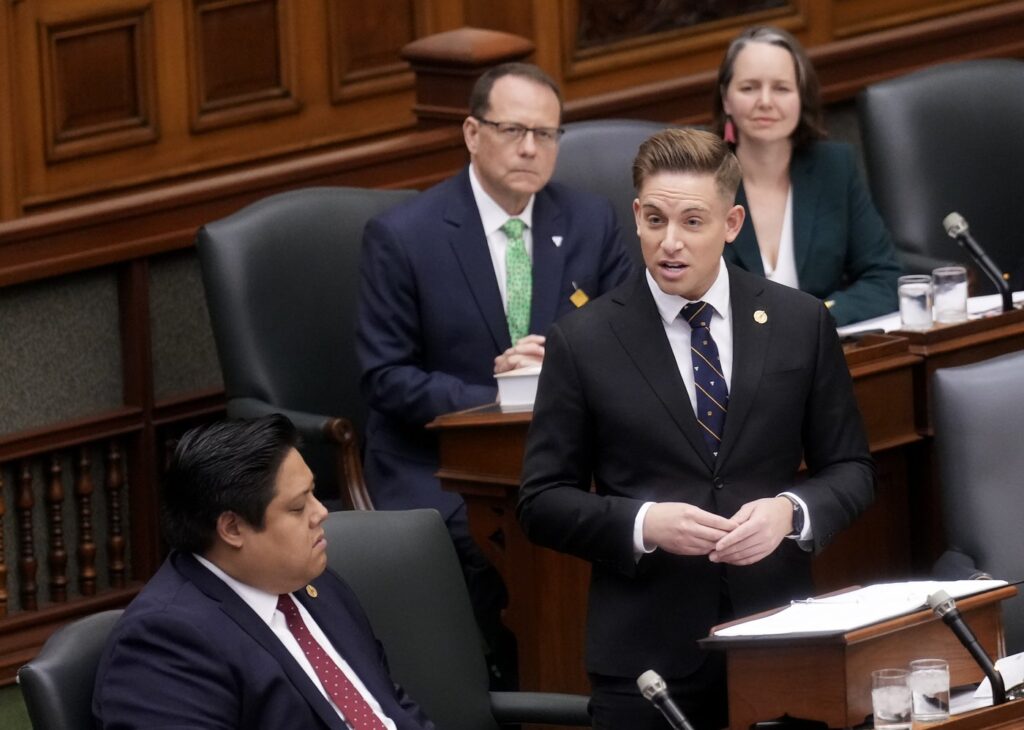
Tyler Watt, the Liberal critic for colleges and universities, has called for a value-for-money audit to assess the sharp rise in spending and to determine if the government is adequately overseeing the Ontario Student Assistance Program (OSAP). During a press conference, Watt expressed concerns, stating, “This has all the makings of Doug Ford's next billion-dollar scandal.”
According to data obtained via a freedom-of-information request, career college students are expected to receive nearly $1 billion in OSAP grants for the 2024-25 academic year. Notably, just seven career colleges are projected to account for $385 million of this funding. This indicates a stark increase from the previous year, as the province’s allocation for OSAP grants rose by $465 million between the 2023-24 and 2024-25 academic years, with an overwhelming 95 percent of this increase going to private career college students.
Auditor General Shelley Spence's office confirmed that while audits for 2026 are currently underway, they would consider Watt's request in future audit planning. This investigation request comes after various reports from The Canadian Press highlighted that applications for OSAP at certain career colleges were growing significantly faster than those at publicly funded colleges and universities. Additionally, Career Colleges Ontario has raised alarms about the situation for several years.
The association representing career colleges previously warned the provincial government in January 2023 about "indicators consistent with suspicious activity" in OSAP applications, as detailed in court documents related to three schools currently under scrutiny.
Nolan Quinn, the Minister of Colleges and Universities, acknowledged earlier this year that the costs associated with OSAP are becoming "unsustainable." As a result, he stated that the government had dramatically reduced the grants available to students at universities and publicly funded colleges, leaving those in private career colleges eligible only for loans. Watt criticized this move, arguing that the government's response was inadequate and unfairly penalized all publicly funded institution students with additional debt or delays in their education.
Watt emphasized that the overwhelming issue of skyrocketing OSAP costs seems confined to a limited number of private career colleges. He argued that instead of focusing on these specific institutions, the government chose to implement broad cuts, adversely affecting students province-wide. "That’s either a government that is grossly incompetent, or one that has something it desperately wants to hide," he stated.
Furthermore, Zain Baig, president of the Toronto Metropolitan Students’ Union, echoed concerns that the government has adversely affected students throughout Ontario. He suggested that instead of slashing OSAP universally, dedicating resources for an independent investigation into the identified issues would have been a more effective approach. This, he argued, would allow for a more tailored response rather than a blanket solution.
Earlier this year, the government made five career colleges ineligible for OSAP loans, a decision now challenged in court by three of the affected schools that argue the decision was procedurally unfair. Ministry inspection reports introduced as evidence in the court case indicate that inspectors found signs suggesting misconduct, such as third parties completing coursework and students finishing all course quizzes and exams in a single day.
The three Academy of Learning locations involved in the controversy have contested many of the ministerial allegations, asserting that they have taken the concerns raised seriously. They stated that the findings and allegations have not been legally proven. In response, the Academy has implemented numerous corrective measures, including stricter admission and identity verification protocols. Among these measures are the introduction of two-factor authentication and enhanced scrutiny of unusual login activity.
Despite acknowledging the instances of rapid course completion warranting further review, the Academy of Learning asserts its commitment to reinforcing controls to address any identified problems.