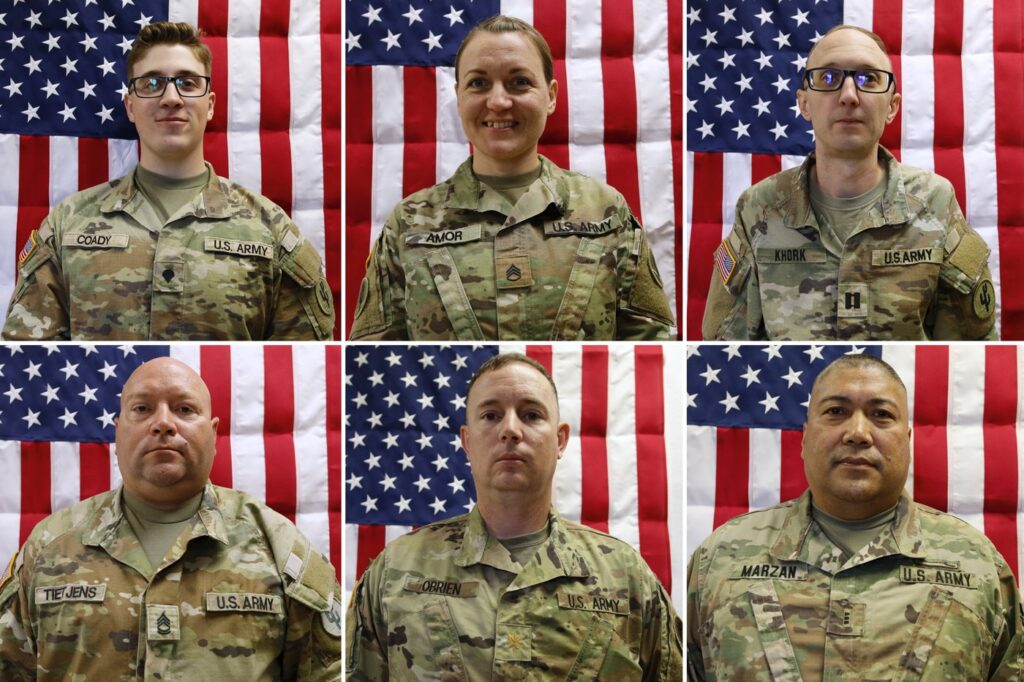
Michelle Tietjens experiences profound grief each morning, when she is reminded that she is facing life without her husband, Sgt. 1st Class Noah Tietjens, an Army reservist from Bellevue, Nebraska. Deployed for the third time to the Middle East in summer 2025, her unease grew after the United States and Israel bombed Iranian nuclear sites prior to his departure. Despite her worries, Noah downplayed the risks to ease his family's concerns.
As Valentine’s Day 2025 approached, Noah shifted from weekend phone calls to texting, aware that his voice would reveal too much about the dangers he faced. On February 28, after the U.S. and Israel commenced airstrikes marking the war's start, he checked in with Michelle through text messages. However, the next day, following Iranian attacks on bases housing U.S. troops, Noah stopped responding altogether, leaving Michelle anxious and uncertain.
Tragically, Michelle soon learned that Noah was one of six U.S. soldiers killed by an Iranian drone strike at Port Shuaiba, Kuwait, marking one of the deadliest attacks on U.S. troops in Operation Epic Fury. Seven months later, she, alongside other bereaved families, grapples with their loss as they await answers regarding the attack, expressing frustration over the lack of responses from military officials.
Michelle, who took five weeks off her job after Noah’s death, sought work to regain normalcy. However, her daily life is filled with reminders of Noah, who shared passions with their 13-year-old son, such as teaching martial arts and enjoying fishing and Japanese animation. Noah was due to retire from the Army Reserve in November but was posthumously promoted to master sergeant.
Now a solo parent, Michelle reflects on the unexpected challenge of raising her son alone. Although he is excelling academically and participating in soccer, she worries about his emotional well-being. In August, she received a Bronze Star awarded to Noah, but the ceremony was tainted by the general’s inability to meet her gaze, underscoring her deep sense of loss.
Another family affected by the same tragedy is that of Tina Marzan, whose husband, Chief Warrant Officer 3 Robert Marzan, also perished in the drone attack on Port Shuaiba. Tina met Robert in Germany in 1991, and their relationship spanned decades. She expressed bitterness toward the remarks made by former President Donald Trump, who downplayed the conflict, conveying that such statements lack respect for the sacrifices made by soldiers like her late husband.
Meanwhile, families of the wounded face different challenges. Holly Halbur anticipated the return of her husband, Lt. Col. Tim Halbur, from his second deployment in two years, only to face a new reality after he was injured in the Port Shuaiba strike. Initially told he wasn’t seriously hurt, Holly later discovered the extent of his injuries would hinder his full mobility in his dominant arm, as the blast had shattered his forearm.
Tim's recovery has involved extensive rehabilitation at Walter Reed Medical Center, where he has regained some functionality but faces delays in further treatments for his post-traumatic stress. Home again with Holly and their young children, the couple encounters the challenge of reconnecting after being largely apart for years. Despite his willingness to assist around the house, Tim’s limitations require Holly's help for certain tasks, adding complexity to their relationship.
Both Holly and Michelle, along with their respective families, navigate the difficult terrain of grief and adjustment, each coping with the realities unleashed by the recent conflict. Their stories underscore the personal toll of war, the sacrifices made by service members, and the enduring impact of loss on families left behind.