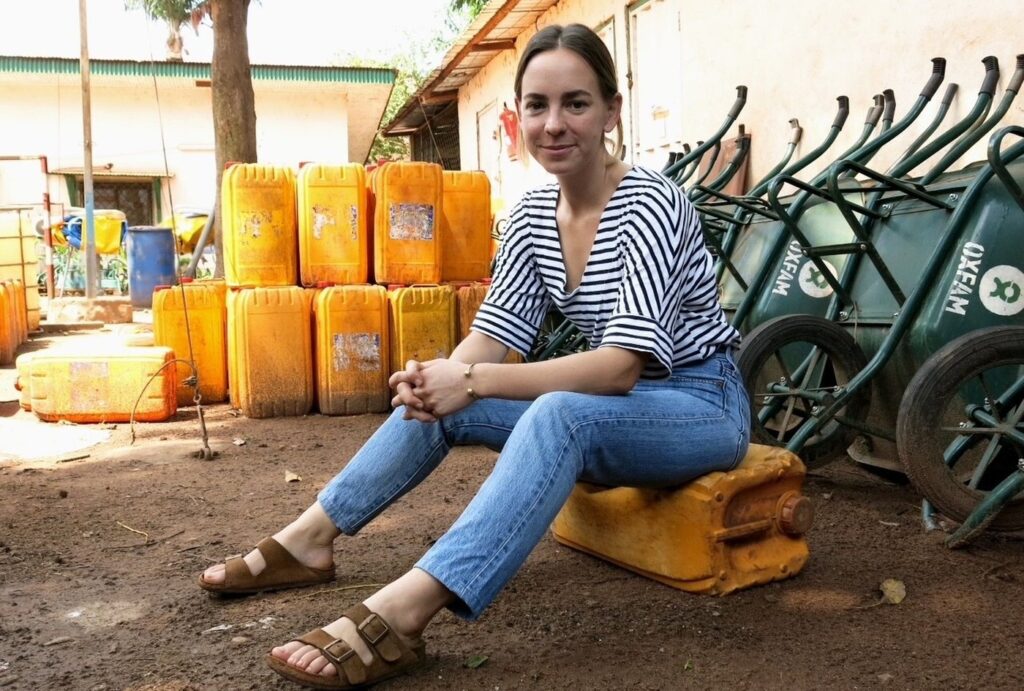
TORONTO In late May, just before Lily-Madeleine Seguin was about to book her flight to the Democratic Republic of Congo (DRC) for a humanitarian mission, the Canadian government announced a mandatory three-week quarantine for travelers returning from the Ebola-affected country. Having previously conducted Ebola outbreak responses in the DRC, Seguin was shocked by the announcement, as she had already received her booster shots and had all necessary approvals for her two-month deployment.
Ultimately, Seguin decided against traveling due to the timing of the quarantine coinciding with her planned sabbatical. As the outbreak continues to escalate, Seguin is calling on Canadian officials to reconsider the quarantine measures, emphasizing that Canada has the capacity to provide support in a meaningful way. She noted, "To me, we’re not stepping up in the way that we should be as a country."
Seguin is not alone in her concerns. Many Canadian humanitarian aid workers argue that the lengthy quarantine period has severely limited their ability to respond effectively to the ongoing Ebola outbreak. They fear that an extension of the quarantine could significantly hinder efforts not only related to Ebola, but for various humanitarian missions within the region. The World Health Organization (WHO) has labeled the current outbreak as the fastest-growing in history, with more than 2,500 deaths reported from over 5,000 infections.
Canada's health officials stated that they are reviewing the restrictions in line with international partners and will announce their next steps before the August 29 expiration date. The initial quarantine measures were reportedly influenced by upcoming events, including the FIFA World Cup, with health officials expressing the need to protect public health in light of past outbreaks.
According to Médecins Sans Frontières (MSF), at least 11 Canadians have been forced to cancel their assignments due to the quarantine measures, with 23 Canadians having previously participated in their Ebola response efforts in the DRC. Adam Houston, a medical policy advisor at MSF Canada, expressed that these restrictions are impacting the broader humanitarian response, as many Canadians would normally engage in various humanitarian initiatives besides the Ebola outbreak.
Mylene Ratelle, a health promotion manager at MSF, voiced disappointment over how Canada implemented its public health measures, saying she was compelled to return home to quarantine just before the start of the academic semester. She criticized the lack of scientific rationale behind Canada’s strict border policies, as Ebola is primarily spread through direct contact with bodily fluids. Experts have noted that individuals are usually not contagious before showing symptoms, which can take anywhere from two to 21 days post-infection.
Roojin Habibi, a research director in global health law, condemned Canada's travel restrictions, stating they appear to be based more on public fear than scientific evidence. She remarked on the government's messaging that downplays the likelihood of Ebola spreading within Canada while implementing measures that may be more politically motivated than protective.
Karine LeBlanc, a senior communications advisor at Health Canada, explained that the temporary measures aim to reduce the possibility of Ebola entering Canada and that they are continually being reviewed. The quarantine is also extended to Canadians returning from South Sudan and Uganda, though no new cases have been reported from South Sudan in this outbreak, and Uganda declared its outbreak over on July 28, 2023.
Health experts, including those from the European Centre for Disease Prevention and Control, suggest that travelers returning from the DRC or Uganda should self-monitor for symptoms and quarantine only if they had significant exposure to infected individuals. Seguin reiterated that while she does not believe her personal presence would necessarily quell the outbreak, her disappointment lies in the message Canada is sending to the international community regarding its commitment to global health challenges.
Despite the Canadian government committing $8 million to support the outbreak response, Seguin pointed out this is considerably less than the $110 million aid during the Ebola crisis in West Africa in 2014. She emphasized that the decisions made by the Canadian government over recent months have not adequately reflected the gravity of the global health situation.