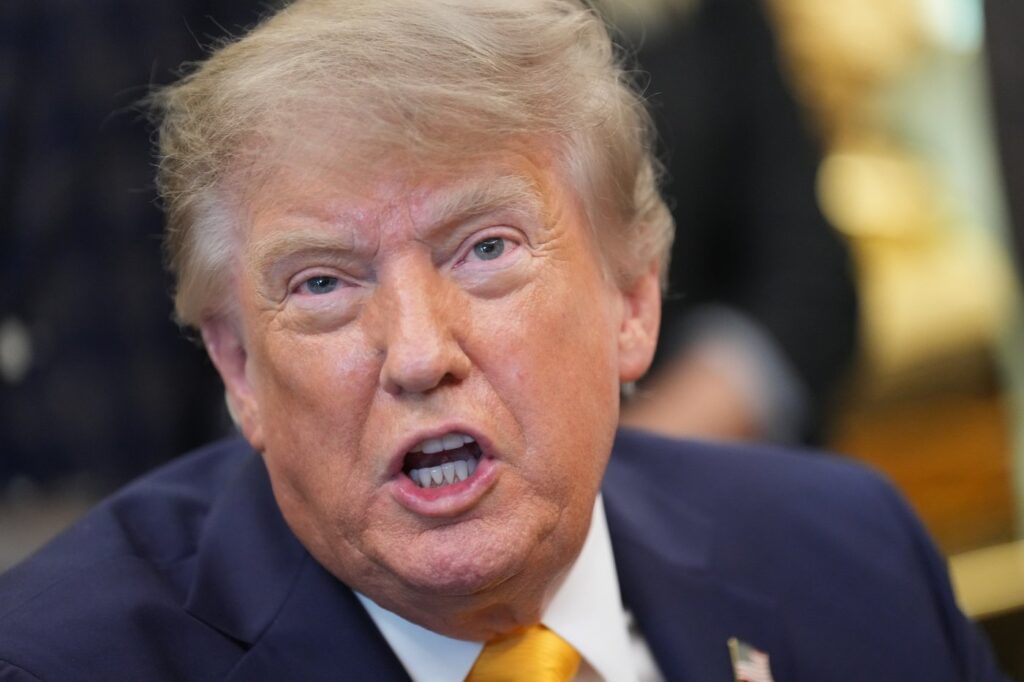
The United States has announced a complete ban on importing certain Canadian goods, notably motorcycles and alcohol, following a series of executive orders signed by President Donald Trump on Tuesday evening. This ban is set to take effect later this month and comes in direct response to retaliatory tariffs imposed by Canada at midnight, which had sparked escalating tensions between the two nations.
Earlier that day, Trump expressed dissatisfaction with Canada's trade policies, threatening to remove Canadian products from various government contracts. In a social media statement, he indicated his intention to instruct trade representatives and the federal agency overseeing government procurement to take all necessary measures to eliminate Canadian-origin products. This action, according to Trump, would remain in place unless Canada reinstates "full and fair reciprocity" for American farmers and companies.
In his social media post, Trump criticized previous administrations, claiming that the measures he had enacted years ago were undermined by the current administration under President Joe Biden. He asserted that the restrictions should have never been reinstated, labeling Biden as "Sleepy Joe" and emphasizing his discontent with Canada’s trade practices.
Throughout his remarks, Trump claimed that the Canadian government, including its provinces, has effectively barred American small businesses and companies from accessing Canadian government procurement markets. He characterized this situation as unjust, stating that it does not reflect true reciprocity but rather constitutes a "Canadian trade scam."
Trump's comments reference Canada’s “Buy Canadian Policy,” which has been enacted in the wake of tariffs and other aggressive trade measures taken by the Trump administration. This policy aims to support Canadian businesses by prioritizing domestic products for government contracts. In a similar vein, the United States has its own "Buy America" policy that emphasizes domestic purchasing, particularly in critical sectors.
The growing rift between the two countries could have significant implications for bilateral trade relations. With import bans and tariffs in effect, American and Canadian businesses may face challenges as they navigate the evolving trade landscape, leading to increased tensions and economic uncertainty for both nations.
As these developments unfold, the potential for further retaliatory measures looms, leaving policymakers and businesses in both the U.S. and Canada on high alert regarding the future of trade relations between the two countries.