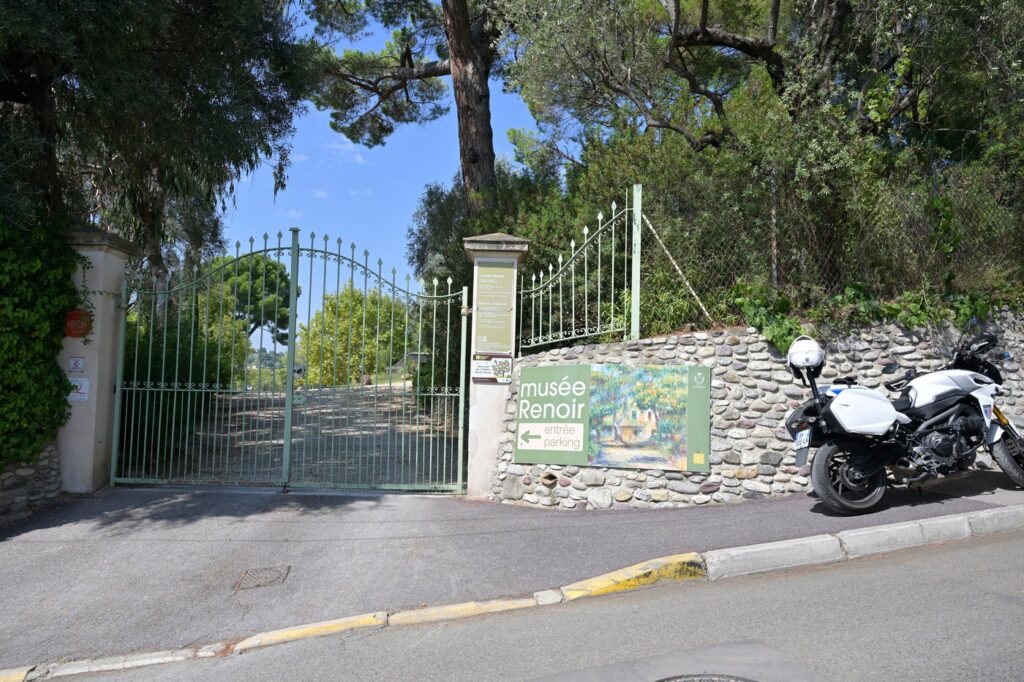
Thieves targeted the Renoir Museum in Cagnes-sur-Mer on the French Riviera, successfully stealing four valuable paintings by the renowned impressionist Pierre-Auguste Renoir. However, in a dramatic turn during their escape, they abandoned two of the artworks in the museum’s garden. Among the stolen pieces are "Portrait of Madame Colonna Romano" and "Young Woman at the Well." The museum's collection comprised a total of 12 Renoir works.
As authorities intensify their search for the criminals, this incident brings to mind a history of notorious art heists. One notable case occurred in March when thieves stole three paintings by leading French artists Renoir, Paul Cézanne, and Henri Matisse from the Magnani Rocca Foundation, a private museum located near Parma, Italy. The artworks included "Fish" by Renoir, "Still Life with Cherries" by Cézanne, and "Odalisque on the Terrace" by Matisse. Although these pieces were deemed minor, they were valued at millions of euros. Fortunately, they were recovered in August by Italy's Carabinieri art recovery team, leading to the arrest of five individuals linked to organized crime.
Another infamous theft occurred at the Louvre in October, where nine pieces from the jewelry collection of Napoleon Bonaparte were snatched during a bold daytime robbery. The thieves utilized a basket lift to navigate the exterior of the museum, shattering display cases and absconding with jewels valued at approximately 88 million euros ($102 million). Despite the arrest of the four-member gang responsible for the heist, most of the jewels remain missing; notably, the damaged crown of Empress Eugénie was discarded outside the museum.
The Mona Lisa's theft in 1911 by Vincenzo Peruggia is perhaps the most famous art heist in history. Peruggia, a former museum worker, concealed himself within the Louvre overnight and walked out with the iconic painting hidden under his coat. It took two years before the masterpiece was recovered, an episode that significantly contributed to the painting's fame and global recognition.
The Isabella Stewart Gardner Museum heist in Boston is described as the largest art theft in U.S. history, with the crime remaining unsolved 35 years later. On March 18, 1990, two men masquerading as police officers gained entry to the museum by claiming to respond to an emergency call. They overpowered the security guards, bound them with duct tape, and spent over an hour stealing 13 works of art, including pieces by Rembrandt, Vermeer, Degas, and Manet. The value of the stolen pieces is estimated at around half a billion dollars, a loss deemed priceless since the artworks cannot be replaced. The empty frames for some of the stolen works still hang in the museum.
In Germany, museum burglaries have also made headlines. In 2017, intruders at Berlin’s Bode Museum stole a 100-kilogram (220-pound) solid gold Canadian coin, known as the "Big Maple Leaf," valued at approximately 3.75 million euros ($4.33 million). The thieves smashed a protective case, escaping with their loot in a wheelbarrow. Three individuals, including a security guard from the museum, faced conviction for their involvement.
Furthermore, in 2019, thieves raided Dresden’s Green Vault, one of the world’s oldest museums, making off with diamond-encrusted royal jewels valued in the hundreds of millions. A portion of the stolen items was later recovered, and several suspects were brought to justice in connection with the crime.
On a rather peculiar note, a golden toilet named "America" by Italian artist Maurizio Cattelan was stolen from Blenheim Palace, the birthplace of Winston Churchill, in 2019. The 18-carat toilet, insured for nearly 5 million pounds (over $6 million), was taken in a brazen early morning heist that left a flood behind as the thieves dismantled its plumbing. The unique bathroom fixture has never been found, and it is suspected to have been melted down.
These high-profile thefts across various museums and galleries highlight the ongoing challenges in art security and the lengths to which criminals will go to capture cultural treasures.