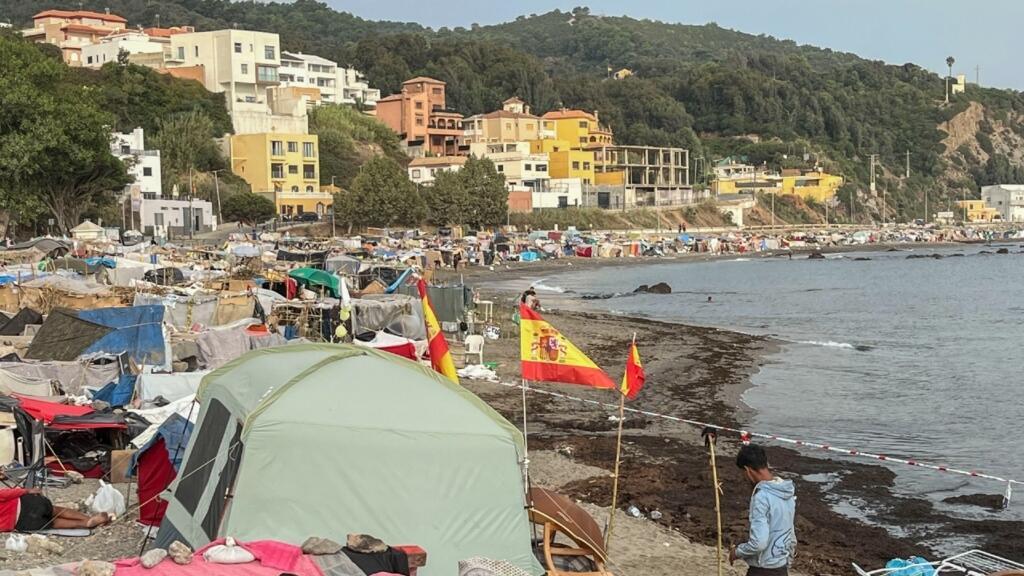
The European Union (EU) announced on Wednesday that it would provide Spain with 115 million euros (approximately $130 million) in emergency aid. This financial support is aimed at enhancing border security measures and facilitating the return of migrants following a significant influx into the Spanish exclave of Ceuta and Melilla from Morocco. The decision comes in light of the unprecedented migrant rush that occurred on July 30 and 31, when more than 70,000 individuals crossed the border into Spanish territory, seeking refuge and better living conditions.
This surge in migration has raised serious concerns regarding safety and security, as many migrants attempted perilous journeys across treacherous waters, leading to tragic outcomes. Reports indicate that dozens of migrants lost their lives during the attempt to swim around breakwaters, with the majority succumbing to drowning. The humanitarian crisis has prompted urgent calls for action from both Spanish authorities and EU officials in order to ensure the safety and well-being of both migrants and local populations.
The substantial financial aid from the EU is expected to bolster Spain's capabilities in managing its borders more effectively. This support not only aims to improve security infrastructure but also to assist in the re-integration and return of migrants who are not eligible for asylum. The EU's commitment reflects a broader strategy to address the ongoing challenges posed by irregular migration and to support member states facing substantial pressures on their borders.
Spain has been at the forefront of the migration crisis due to its geographic location, serving as a key entry point for many migrants attempting to reach Europe. The situation in Ceuta and Melilla, in particular, has drawn significant attention, as these regions are separated from Morocco by a mere few meters of water. In light of the recent surge, the Spanish government has called for enhanced cooperation with Moroccan authorities to control the flow of migrants and address the root causes of migration.
The EU's decision to allocate emergency funds highlights the urgent need for collaborative efforts among European nations to manage migration effectively. The financial assistance is part of a broader EU response to the challenges posed by migration, an issue that has been a point of contention and debate within the union. Countries like Spain, Italy, and Greece have experienced significant influxes of migrants, prompting discussions about the need for a more cohesive and humane approach to asylum and border management across the EU.
As the EU prepares to implement the emergency aid, the focus will be on providing immediate relief and resources to support the increased border security measures. This includes improving surveillance technology and increasing the number of personnel deployed to monitor and manage border crossings. Furthermore, the aid is intended to streamline processes for returning migrants to their home countries, alleviating some of the strain on Spain's resources and infrastructure.
In summary, the EU's provision of 115 million euros in emergency aid to Spain underscores the urgency of addressing the ongoing migration crisis and enhancing border security in the wake of the unprecedented migrant rush from Morocco. The tragic loss of life during this event has galvanized both local and EU authorities to take decisive action in hopes of preventing similar incidents in the future.