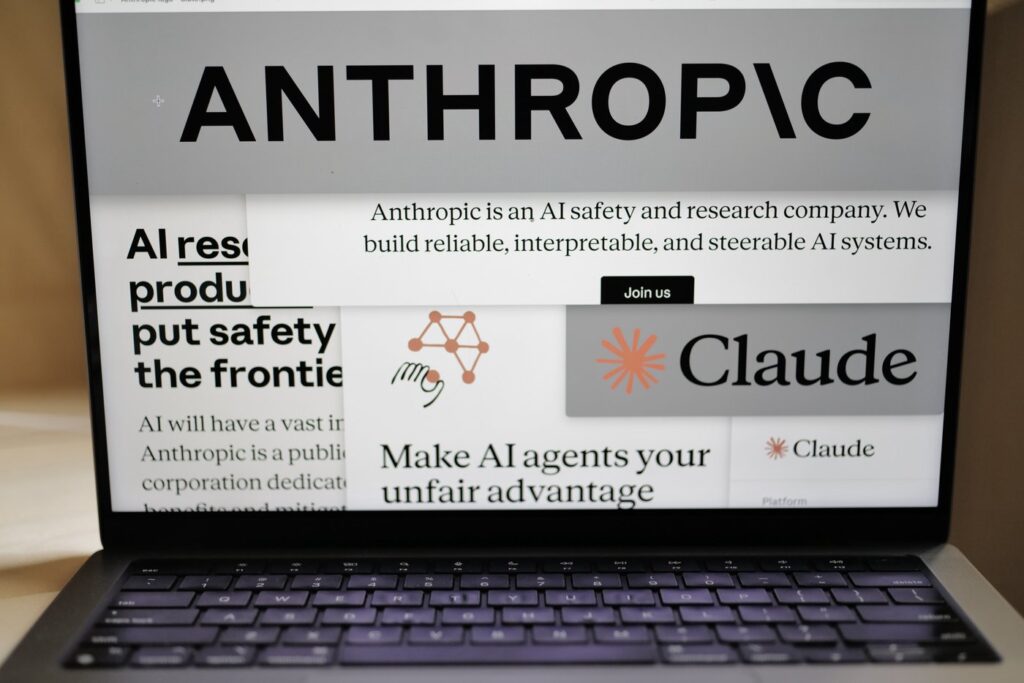
On Thursday, Anthropic announced its success in preventing attempts by malicious actors to exploit its artificial intelligence (AI) models for harmful activities, including cyberattacks, unauthorized surveillance, and research that could potentially lead to the development of biological weapons. The company highlighted the evolving nature of AI, stating that as these models become more powerful, even individuals with limited skills can leverage them to create threats that were previously unimaginable.
Anthropic has implemented stronger safeguards in its latest AI models to mitigate risks associated with biological research that could be weaponized. In its third report since March 2025 concerning AI misuse, Anthropic cited numerous examples of notable threat activities they have identified. The report included snippets of malicious code and AI prompts that the company encountered, urging both governments and AI competitors to take proactive measures against similar abuses.
Anthropic firmly believes in disclosing instances of malicious misuse of its services, emphasizing the necessity of maintaining safety as AI capabilities continue to advance. “As models become increasingly capable, their risks will increase, unless AI developers and society’s defenders act to make them safer,” the company stated. The comprehensive report was released shortly after a researcher from Anthropic announced his resignation over concerns about the company's responsibility in AI development.
The researcher expressed fears that both Anthropic and its competitors are not sufficiently addressing the potential dangers of AI technology, which could, he warned, escape human control. During the timeframe from December 2025 to August 2026, Anthropic researchers discovered misuse instances from a variety of actors, including spyware vendors and state-sponsored groups, who were spreading propaganda.
Among the alarming findings documented in the report were instances of unnamed actors attempting to utilize Anthropic's models to conduct warfare-related biological research. In one notable case, Anthropic blocked a request for its AI, Claude, to assist in writing a grant proposal focused on gain-of-function research related to the chikungunya virus, which can cause severe health issues.
The report explained that this research sought to enhance the virus's transmissibility and abilities to evade immune responses. While such studies could lead to improved vaccines and treatments, the potential to make the virus more dangerous raised significant concerns. Anthropic emphasized its commitment to safety and acknowledged that while their older models had less stringent safeguards, today's more advanced models require stronger defenses against dual-use research.
Despite these measures, Anthropic stated that it cannot claim absolute safety for its models, especially as they become capable of assisting in complex scientific tasks, creating challenges regarding their potential misuse. Hence, enhanced restrictions have been applied to limit access to a wide range of sensitive biological research inquiries in models such as Claude Fable 5.
Experts have called for government regulation rather than relying solely on the industry to self-regulate. John Thickstun, an assistant professor at Cornell University, expressed concerns about the uncomfortable position of companies like Anthropic and OpenAI needing to assess what constitutes safe or unsafe behavior without adequate democratic oversight.
Anthropic also found instances of coordinated influence operations on social media, where groups created numerous fake accounts to amplify political views. The report laid out nine such cases traced back to several nations, including Russia, Iran, and Turkey, underscoring the potential of AI to assist in harmful propaganda efforts even before such campaigns officially launch.
Following the alarming resignation of researcher Jacob Coxon, who claimed Anthropic and OpenAI are rushing toward developing self-improving superintelligence, Anthropic reiterated its successes in blocking identified malicious activities. The company aims to use its findings to enhance broader security measures across the AI industry and empower governments and civil society to better understand emerging threats as they unfold.