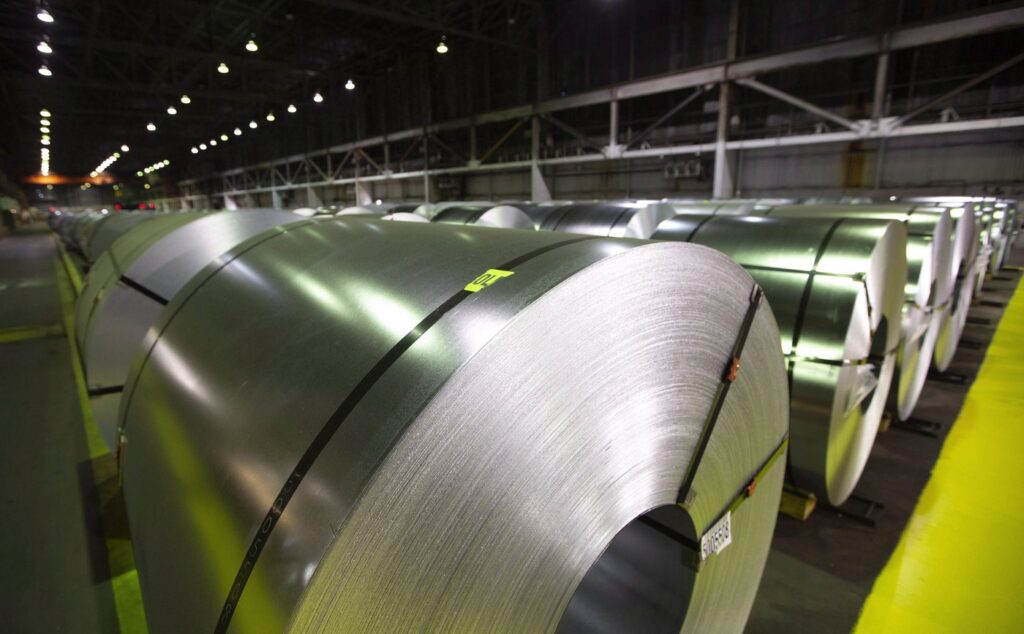
The recent layoffs in Ontario's steel belt underscore the widespread impact of U.S. tariffs on Canada’s manufacturing supply chain. Stelco Holdings Inc. announced on Monday that it would be laying off up to 500 workers across its Hamilton and Lake Erie facilities, attributing the decision to ongoing trade crises, weak demand, and persistent import pressures.
These job cuts add to a growing list of tariff-related layoffs in the province, following substantial layoffs of over 1,000 jobs at Algoma Steel in Sault Ste. Marie and the closure of ArcelorMittal's wire-drawing mill in Hamilton. Prime Minister Mark Carney conveyed his disappointment over Stelco’s decision during a news conference, labeling it a betrayal of the workers. He emphasized that there were financial resources available from the federal government and the company had legal obligations to maintain employment levels, vowing to pursue all legal avenues to address the issue.
Last year, both Ottawa and the Ontario government provided loan assistance to Algoma Steel Group Inc. to help navigate the challenges posed by U.S. tariffs. Carney pointed out that the current situation is directly tied to these tariffs, noting that the CEO of Cleveland-Cliffs, the company that owns Stelco, had previously praised these tariffs. Alan Arcand, chief economist at Canadian Manufacturers and Exporters, explained that the decline in Canadian steel demand is symptomatic of how tariffs disrupt integrated manufacturing supply chains. Companies that utilize steel in their production are experiencing plummeting U.S. sales, prompting them to scale back production and consequently reduce steel orders from Canadian suppliers.
According to Arcand, supply chains had previously functioned under the assumption of free trade with the U.S., and the abrupt imposition of tariffs without prior warning has led to significant consequences. Stelco characterized the layoffs as “unfortunate but necessary” for the company’s survival, stating that U.S. tariffs have drastically diminished the market for its cold-rolled and galvanized steel products that serve various sectors such as automotive manufacturing, machinery, appliance production, and construction.
Manufacturers in these sectors are grappling with U.S. tariffs that see duties levied as high as 50 percent on steel-intensive and derivative products, along with separate trade barriers affecting automakers, which have a ripple effect on their exports and production. Ron Wells, president of the United Steelworkers Local 1005, representing Stelco workers, expressed disappointment over the layoffs and the desire for a resolution to the ongoing tariff issues. Wells highlighted comments made by Cleveland-Cliffs CEO Lourenco Goncalves during a recent earnings call, where Goncalves mentioned low coated steel prices in Canada compared to the U.S., blaming it on Canada’s lack of tariffs on imported steel that suppresses domestic prices.
Arcand further elaborated on the condition of the steel market, indicating a significant overproduction of steel globally, predominantly linked to persistent issues from China. He called for continued governmental vigilance in monitoring steel imports and adjustment of policies as needed. Meanwhile, Brendan Sweeney, president and CEO of the Pacific Manufacturing Association of Canada, noted that companies like Honda and Toyota are continuing stable production levels in Canada and maintain significant purchases of Canadian steel, suggesting that the slump in Stelco's domestic demand may stem from other manufacturers or particular segments of the auto industry.
Sweeney remarked on the stability in production levels despite the tariffs, underscoring the significance of having operational steel mills. Despite anticipating that some affected workers from Stelco’s Hamilton operation may be offered positions at the Lake Erie Works, the indefinite idling of the Hamilton facility represents a critical adjustment for the company. Stelco indicated that demand for its products had fallen nearly 25 percent in the second quarter compared to the 2024 quarterly average, with Canadian demand declining by 10 percent due to the pressures of trade relations. While federal measures have helped to reduce imports, the company stated that the volumes are still too high to compensate for the market gap resulting from ongoing trade tensions.