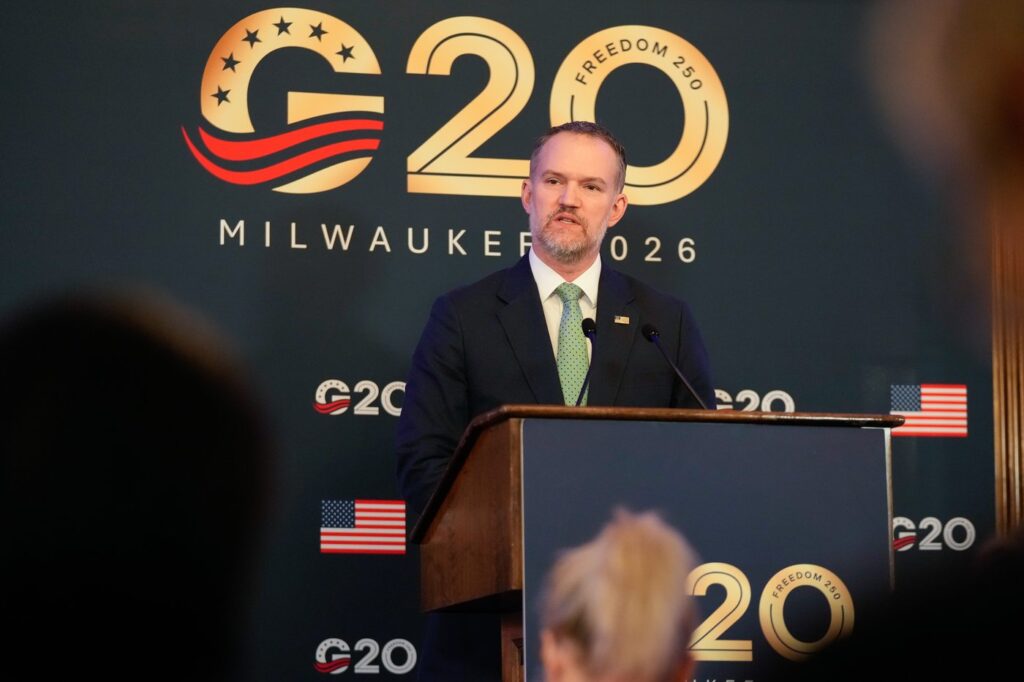
MILWAUKEE (AP) – A meeting of G20 trade ministers held in Milwaukee concluded without reaching an agreement to address the issue of excess capacity in global markets. This problem, characterized by the flooding of markets with overproduced and underpriced goods, has been highlighted by the Trump administration as a significant factor undermining American manufacturers.
U.S. Trade Representative Jamieson Greer described the discussions as constructive, despite the lack of consensus. He noted that nearly all participating nations recognized the need for action to tackle the challenges posed by excess capacity and acknowledged that current trade remedies are inadequate. Greer remarked, “Nearly all countries agreed that this is an issue that required action.”
The Trump administration has voiced concerns regarding various trading partners, particularly China, accusing them of producing goods in quantities that exceed demand. This practice reportedly drives prices down and distorts competition. Additionally, investigations have been opened against countries ranging from Norway to Bangladesh for similar practices. Key industries affected by overproduction assertions include Chinese-made steel, automobiles, batteries, paper, and semiconductors.
The G20 meeting, which gathered representatives from major industrialized nations and emerging markets, showed no progress on one of the most significant trade disputes currently: the trade tensions between the U.S. and Canada. Relations have soured since the summer, following President Donald Trump’s imposition of 50% tariffs on about $20 billion worth of Canadian imports, to which Canada responded with retaliatory tariffs. Further escalation occurred recently when Trump banned nearly $1 billion worth of Canadian imports, including alcoholic beverages, dairy products, and motorcycles.
Canada's Trade Minister Maninder Sidhu appealed for collaboration among nations, expressing a sentiment of shared challenges. He stated, “You’re facing some of the same challenges that we’re facing. Let’s help each other and let’s work through something.” This plea underlines the complex dynamics of trade relations between the neighboring allies.
Moreover, the meeting did not yield progress on another critical issue regarding forced labor. The Trump administration has utilized forced labor allegations as a rationale for imposing significant tariffs on more than 60 countries. Greer pointed out that some G20 members were unwilling to commit to prohibiting the import of goods produced with forced labor, emphasizing the need for collective action against practices that distort market fairness. He remarked, “Believe it or not, we have countries in the G20 that do not want to commit to having a prohibition on the import of goods made with forced labor.”
The outcomes of this G20 gathering highlight the ongoing complexities and challenges facing international trade negotiations. The participants’ inability to resolve pressing issues, such as excess capacity and forced labor, underlines a broad spectrum of disagreements, emphasizing the urgent need for effective solutions to foster fairer trade practices globally.
With the lack of consensus on these critical issues, the path toward resolving trade disputes and implementing meaningful agreements remains fraught with obstacles, reflecting the contentious and multifaceted nature of global trade relations today.