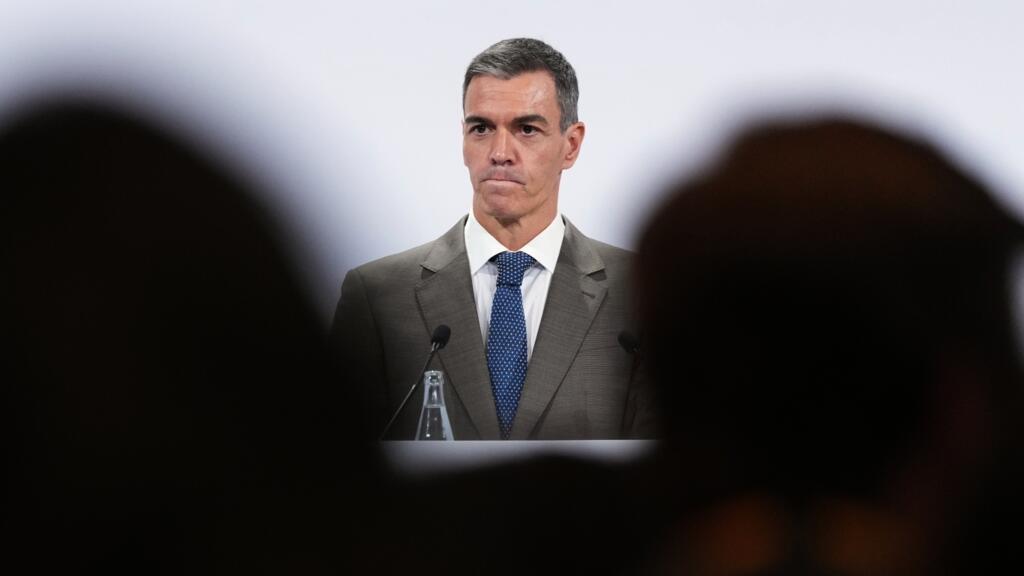
As Spain approaches its general election set for November 2023, the political landscape reveals a competitive atmosphere between the ruling Socialist Party and the conservative People's Party (PP). Recent polling data indicates that while the Socialists have made gains in closing the gap, they remain behind the PP, which is posing a significant challenge as the election date draws closer.
The People's Party, under the leadership of Alberto Núñez Feijóo, is currently positioned to secure a substantial number of seats in parliament. However, in order to achieve a governing majority, the PP would likely need to form a coalition with the far-right Vox party, led by Santiago Abascal. This potential alliance reflects broader trends in Spanish politics, where traditional parties are often compelled to collaborate with smaller, more extreme factions to ensure a stable government.
Polls suggest that the PP may garner around 33% of the vote, enough to maintain a lead over the Socialists, who are projected to receive about 30%. The rise of Vox as a significant player cannot be understated, as they have consistently attracted support from a portion of the electorate disillusioned with the mainstream parties. Currently, Vox is polling around 13%, positioning them as a crucial player in any coalition discussions.
The political situation has been influenced by various factors, including public sentiment surrounding key issues such as the economy, immigration, and national unity. The Socialists, led by Prime Minister Pedro Sánchez, have focused on highlighting their governance achievements, including recovery efforts post-COVID-19 and social reforms. However, concerns about inflation and cost of living continue to resonate widely among voters, which could impact the electoral turnout and results.
Moreover, the upcoming election is a pivotal moment for the future of Spanish politics, as it will not only decide the composition of the parliament but also the direction of national policy. Discussions about the potential coalition between the PP and Vox have raised questions regarding the implications for Spain's democratic landscape and social cohesion. Many observers are closely monitoring voter sentiments regarding this potential alliance, which could drastically reshape Spanish governance.
In light of these developments, political analysts are keenly observing the strategies employed by each party leading up to the election. The Socialist Party is working diligently to rally its base, emphasizing progressive values and social justice to attract undecided voters. Conversely, the People's Party is focused on solidifying its conservative platform and appealing to those who prioritize stability and security amidst growing political polarization.
This election cycle is noteworthy not just for its immediate outcomes but also for the broader implications on Spain's political framework. If the People's Party and Vox succeed in forming a coalition government, it may signal a shift towards more right-leaning policies and a reconfiguration of alliances in Spain’s political arena. Alternatively, a victory for the Socialists could bolster progressive initiatives and reinforce a government that prioritizes inclusivity and social welfare.
As the election draws near, the stakes remain high for all parties involved. With only three weeks left until the voters head to the polls, the final moments of campaigning are expected to intensify as each party seeks to sway public opinion and secure their political future in Spain.