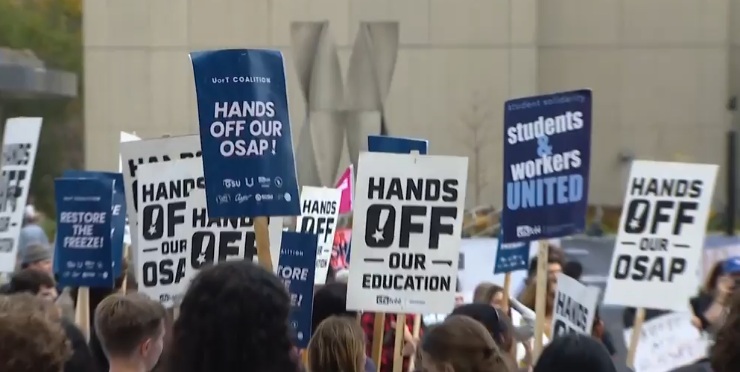
Ontario Premier Doug Ford addressed university and college students participating in walkouts protesting changes to the Ontario Student Assistance Program (OSAP), urging them to return to their studies rather than engaging with social media. During a press conference in Peterborough, he criticized the students for following "a bunch of loony tunes" on social media, suggesting they acted like "sheep" in response to protests. Ford stressed the importance of education for securing good-paying jobs after graduation, advising students to stay focused on their studies.
Specifically, Premier Ford voiced his discontent about the protests emanating from Trent University. In October, the Ontario government announced a investment of $100 million to develop new student residences and academic spaces at Trent University, which would accommodate 1,400 students. He expressed that rather than protesting, students should be thankful for the government’s financial contributions towards their education.
"They should be thanking the government," Ford asserted, emphasizing that the government is investing millions into projects benefiting students. He labeled the protesting students as "naive" and encouraged them to understand the benefits they receive while focusing on securing future employment opportunities, particularly in science, technology, engineering, and health care fields.
OSAP Changes Spark Anger and Concern
The ongoing discontent among students largely stems from the changes to OSAP announced in February, which saw a significant reduction in grants from 85 percent to 25 percent, favoring a loan-heavy model. This policy shift coincided with Ontario’s multi-billion-dollar funding increase for colleges and universities and the lifting of a seven-year tuition freeze, allowing institutions to raise tuition fees by up to two percent each year over the next three years.
Premier Ford defended the necessity of this change, claiming that the previous OSAP system was unsustainable and hinting at possible abuses of the system. He mentioned hearing stories of students misusing funds, which did not sit well with taxpayers. Concerns regarding the integrity of OSAP were further fueled by a letter from Career Colleges Ontario to Colleges and Universities Minister Nolan Quinn, requesting an investigation into 14 campuses for potential suspicious activities related to OSAP.
As a result, the Ministry of Colleges and Universities engaged KPMG to audit OSAP usage at private post-secondary institutions. The preliminary findings from this audit were serious enough to be referred to the Ontario Provincial Police (OPP). Following these developments, the government announced a pause on OSAP payments to all private post-secondary institutions, consequently leaving thousands of students in a precarious situation, with some institutions facing closure.
Recent reports highlighted concerning patterns, revealing that many OSAP applications originated from a single IP address, raising suspicions about fraudulent activities. Between the fiscal years 2023-24 and 2024-25, provincial OSAP grants to career colleges nearly doubled to around $1 billion, driven primarily by the actions of a few institutions.
When questioned about the adverse effects on legitimate colleges due to the mismanagement observed at certain institutions, Ford acknowledged the presence of both responsible and fraudulent actors in the system. He affirmed that efforts to catch those committing fraud are underway, stating, “We’ve called in the OPP, we’ve called in the auditors, and we told the auditor general as well, we’re gonna catch these bad actors, and they need to go to jail—simple as that.”
Ford also hinted at impending legislative changes, indicating that the government plans to reform the delivery of OSAP very soon, possibly within the following week, through an announcement from the Colleges and Universities Minister.