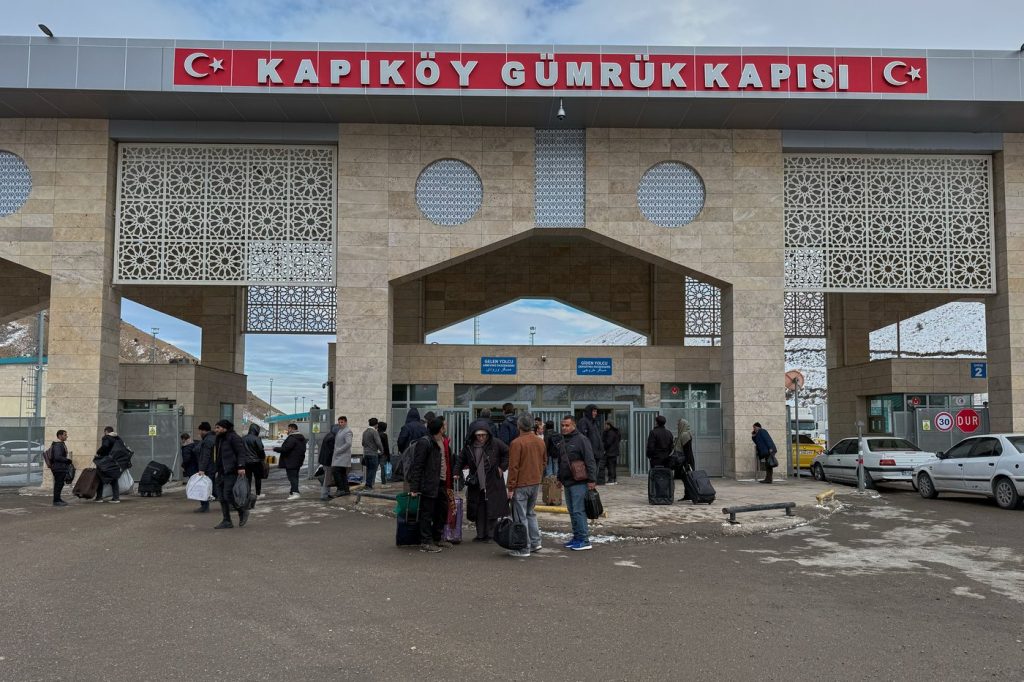
The Kapikoy border crossing between Turkey and Iran in Van province has not experienced a significant influx of Iranians seeking asylum from the ongoing unrest in Iran. However, many Iranians are making short trips across the border to bypass the communication blackouts that have plagued their country. Since January 8, internet services have been largely blocked in Iran due to mass protests and a severe government crackdown, causing significant challenges, especially for those dependent on the internet for their work.
Over the weekend, witnesses reported that limited text messaging and internet services briefly resumed in parts of Iran. While protests have calmed and an uneasy peace has settled, the persistent communication blackouts continue to pose problems for many, particularly those involved in e-commerce and other online activities. Iranians can cross into Turkey without a visa, allowing those in northern Iran or those with the means to travel to make quick trips abroad to access the internet.
To fund their trips, some Iranians are selling goods such as cigarettes and tea, which are inexpensive in Iran but sell for a higher price in Turkey. Sami Ranjbar from Tehran, who was returning to Iran after spending four days in Van, emphasized the importance of internet access for his e-commerce business. He expressed frustration at the need to leave his country to maintain his work and indicated that if the internet were restored, they would consider staying in Iran.
Ali, 37, who asked not to use his full name due to security concerns, shared his experience of staying in Turkey for four days to assist his brother with university applications. He highlighted the fear surrounding the ongoing political situation in Iran, noting that many friends have faced arrest and some have been killed amid the protests. Despite these fears, Ali and his brother feel compelled to return to Iran due to family and job obligations.
The protests, which began on December 28 over Iran's deteriorating economy, have resulted in significant casualties. The U.S.-based Human Rights Activists News Agency reported that at least 3,095 individuals have died during these unrests. Ali expressed his conflicted sentiments regarding the situation, indicating his dissatisfaction with both the Iranian government and the potential for external military intervention from other countries.
In northeastern Iran, residents near the border have experienced a return to normalcy following minimal unrest. This region is predominantly conservative and home to many ethnic Turks and Azeris, who often view the protests in more central areas like Tehran as distant from their own realities. Some travelers attribute Iran's struggles primarily to external influences from nations like the U.S. and Israel rather than domestic governance issues.
Milad Soleimani, a 28-year-old from the Iranian town of Qatur, expressed a sentiment held by many, claiming that financial struggles are exacerbated by actions taken by America and Israel. He asserted that a majority of the population supports the Iranian state, regardless of the dissent expressed by a smaller faction. Additionally, there is widespread skepticism toward exiled figures like Crown Prince Reza Pahlavi, whose father was overthrown in the 1979 Islamic Revolution. Many ethnic minorities, including Iranian Turks and Azeris, harbor lingering distrust of any leaders associated with past repression.
Afshin, a 24-year-old Kurdish traveler from Khoy, echoed this sentiment, emphasizing the stability he perceives under the current regime. He warned that any civil strife could lead to fragmentation within the country, fearing the consequences of violence and political chaos.