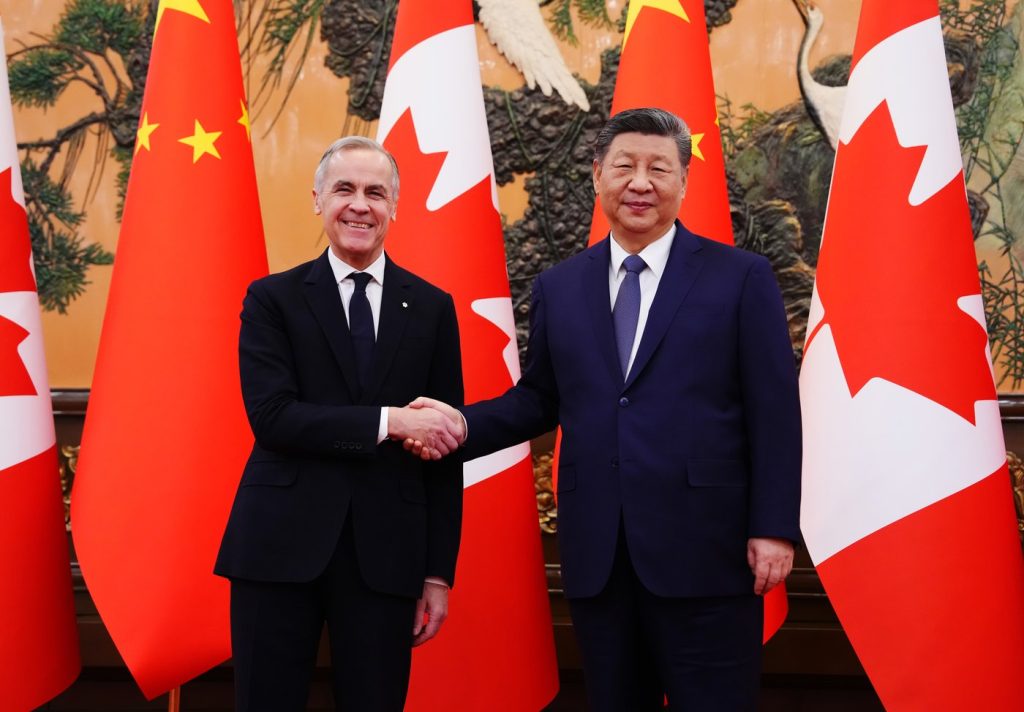
Ontario Premier Doug Ford has openly criticized Prime Minister Mark Carney's recent agreement with Beijing that allows a limited number of Chinese electric vehicles (EVs) to enter the Canadian market at reduced tariff rates. Ford warns that this deal could harm the Canadian auto industry, worsen already strained relations with the United States, and potentially enable Chinese espionage.
During a speech at the Rural Ontario Municipal Association (ROMA) Conference in Toronto on Monday morning, Ford expressed his "extreme disappointment" with the decision, stating that it would directly affect Canadian auto workers and their supporting supply chains. He also raised concerns about the security implications of Chinese vehicles, asserting that they could be used for spying on Canadians.
Ford remarked, "When you get on your cellphone, it’s the Chinese that are going to be listening to your telephone conversation." He pointed out the irony in Prime Minister Carney's actions, suggesting that while Carney reportedly uses a burner phone when communicating with Chinese officials, he is simultaneously making a deal that he believes resembles a "Huawei 2.0," referring to Canada's past decision to ban the Chinese tech giant from the nation's 5G networks due to national security concerns.
Ford further questioned how the entry of Chinese vehicles would be accepted by the U.S., mentioning potential security issues. "Eighty to ninety percent of those vehicles go south of the border," he claimed, and expressed skepticism about whether U.S. President Trump would approve of Chinese vehicles entering the country. Despite Ford's concerns, Trump's reaction to the deal was surprisingly casual, stating, "That’s OK," and suggesting that signing a trade agreement with China is a positive move.
Carney Attempts to Alleviate Concerns
The recently announced tariff-quota agreement allows up to 49,000 Chinese EVs into Canada at significantly reduced tariffs, which is in exchange for China lowering duties on Canadian canola and eliminating tariffs on other agricultural products. Prime Minister Carney characterized the deal as a "landmark" reset in Canada-China relations and dismissed Ford's apprehensions.
Speaking from Qatar, Carney emphasized the importance of remaining relevant in the rapidly evolving auto sector, noting that the agreement with China represents less than three percent of Canada's annual vehicle market. "It's a trial," Carney stated, asserting that this initial step was essential for integrating China into the market.
While Carney acknowledged that the 49,000 vehicles outlined in the deal could eventually increase, he framed this growth as contingent on China's commitment to invest in Canadian-based production.
In response, Ford continued to express doubt about the wisdom of allowing Chinese vehicles into Canada, arguing that the number of vehicles involved, while initially appearing small, represents a significant portion of Canada's EV sales. He warned, "Once the camel gets its head in the tent, his whole body is in the tent and you're not getting rid of him."