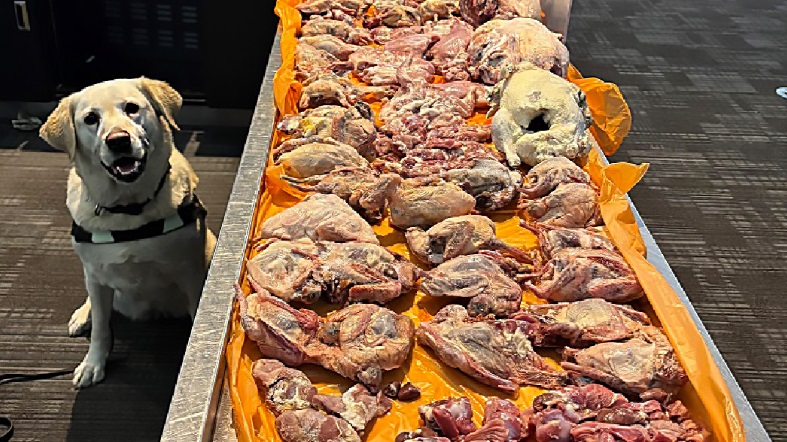
The Canadian Border Services Agency (CBSA) has reported a significant find at Toronto Pearson International Airport, where one of its detector dogs, named Dharla, uncovered a large quantity of prohibited food items. During a routine check on March 8, 2026, Dharla sniffed out a staggering twenty-two kilograms of raw meat concealed in a traveller's luggage. This incident took place as the individual arrived at the airport from Egypt.
The meat haul included various types of raw animal products: specifically, raw duck, pigeon, chicken, and rabbit. This discovery highlights the ongoing efforts of the CBSA to enforce strict regulations regarding the importation of food, plant, and animal products into Canada. Such controls are crucial for protecting Canadian agriculture and ecosystems from potential pests and diseases that can be introduced through uncontrolled imports.
To emphasize the importance of compliance with these regulations, the CBSA shared a photograph of Dharla alongside the seized meat on social media. The agency took the opportunity to remind travellers that it is a legal requirement to declare all food, plant, and animal products upon entering Canada. The reminder was accompanied by relevant information accessible on the CBSA's official website, encouraging travellers to familiarize themselves with the regulations to avoid legal consequences and potential penalties.
The use of detector dogs like Dharla plays a vital role in the CBSA's enforcement strategy. These trained animals are capable of detecting a wide variety of substances, ensuring that travellers adhere to import regulations designed to safeguard the nation's health and safety. The CBSA’s proactive stance not only helps to protect local biodiversity but also reinforces the importance of public awareness surrounding border regulations.
As travel continues to increase globally, it is imperative for travelers to be aware of the restrictions that apply to the goods they carry across borders. The CBSA aims to educate the public on the significance of declaring all items, particularly perishable food products that may pose risks to agriculture. The incident at Toronto Pearson serves as a stark reminder of the consequences of non-compliance, not just for the individual travellers but for the broader community as well.
In summary, the detection of twenty-two kilograms of raw meat by CBSA detector dog Dharla at Toronto Pearson International Airport is a noteworthy example of the agency’s efforts to enforce food safety regulations. This incident, involving various types of raw meats from a traveler arriving from Egypt, underscores the critical importance of declaring all food, plant, and animal products. The CBSA remains committed to educating travelers about their responsibilities, ensuring that Canadian borders remain safe from potential agricultural threats.