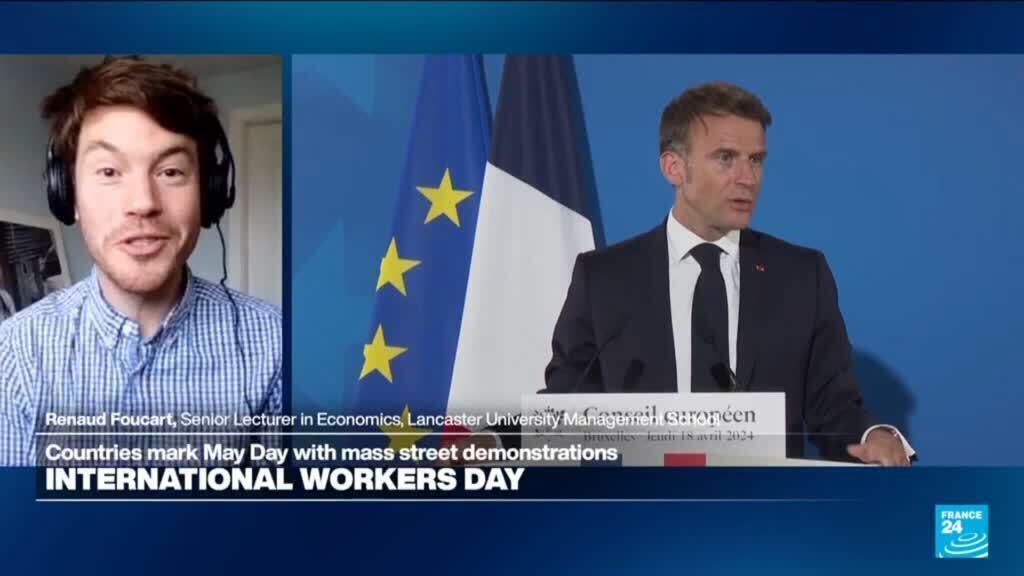
On Labour Day, Dr. Renaud Foucart, a Senior Lecturer in Economics at Lancaster University, provides an insightful analysis of France's complex sociopolitical and economic landscape as the nation moves towards the 2027 elections. With a backdrop of frozen pension reforms, the date of May 1st serves as a "victory lap" for the social democrats amidst ongoing social and economic challenges.
Dr. Foucart highlights that the current political climate in France is characterized by significant fractures not only within the far-right factions but also among left-wing parties. This fragmentation results in a highly unpredictable political environment, complicating the prospects for any party seeking to unite voters and present a coherent alternative to the status quo. The divisions among these political groups are particularly concerning, as they may hinder effective governance and campaign strategies leading up to the next elections.
The question of leadership looms large in the current discourse, with the upcoming leader expected to inherit a myriad of deferred crises. According to Dr. Foucart, whoever assumes control in France will likely face immediate unpopularity due to the high stakes involved in addressing these ongoing issues. The incoming leadership will be tasked with tackling not just the economic pressures faced by citizens but also the widespread discontent that has been simmering in various sectors of society.
Amidst these challenges, Dr. Foucart underscores the importance of addressing the frustrations of the electorate, which have been exacerbated by stagnant economic conditions and rising social inequalities. The focus on pension reform highlights a broader discontent with governmental policies, signaling that there is a considerable amount of work to be done to regain public trust and ensure economic stability.
The upcoming elections represent a critical juncture for France, where public sentiment and political coalitions will likely define the nation’s trajectory. As social democrats take a moment to celebrate their current standing, they must also prepare for the inevitable backlash that new leadership may encounter once the realities of governance set in. Dr. Foucart's assessment serves as a reminder that the next electoral cycle will not only test the resilience of political entities in France but will also challenge their ability to respond effectively to the pressing concerns of the citizenry.
In conclusion, France stands at a crossroads exemplified by a fractured political landscape and an electorate increasingly looking for solutions to their pressing issues. The roadmap to 2027 will be fraught with challenges for any leader who steps into the fray, making the role of effective governance and political unity all the more vital for France's future.