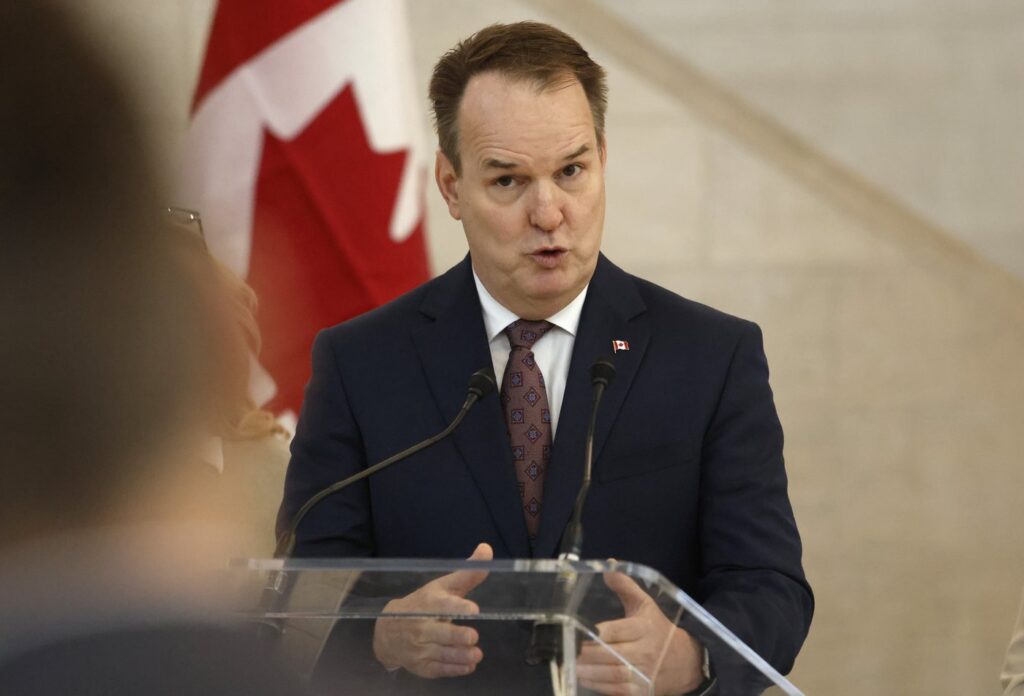
OTTAWA Following the Liberal government's transition to a majority status, significant tensions have arisen between the ruling party and the opposition parties, particularly the Conservative Party. Government House leader Steven MacKinnon defended the Liberals' approach, asserting their commitment to ensuring that parliamentary committee meetings remain "transparent" and "open." However, this assertion is challenged by allegations from the Conservatives, who accuse the Liberals of abusing their newfound majority powers.
Since the Liberals officially gained a majority on Monday, they have been criticized for moving in camera at various committee meetings and unilaterally adjourning discussions that involve critical topics. MacKinnon stated that committees play a crucial role in the parliamentary system and emphasized the government's obligation to maintain accountability and transparency. He expressed a willingness to collaborate with opposition parties to keep committee work public and accessible.
During a press conference on Friday, MacKinnon acknowledged the importance of the opposition's role, suggesting that any delays caused by opposition MPs could result in counter-reactions from the government. "Committees have jobs to do, they have work to do," he said, implying that obstruction from opposition members would necessitate measures to restore order. He also pointed out that the Liberals do not necessarily consider rejection of an opposition MP's request as a lack of transparency, prompting a case-by-case reflection on such matters.
MacKinnon highlighted the adjustments both parties need to make in light of the unprecedented shift from a minority to a majority government. He specifically addressed concerns regarding the Conservatives' approach to committee work and encouraged a fair examination of how the government can uphold transparency in its operations. As an example, he referred to the House of Commons human resources committee, where a motion was proposed by the Bloc Québécois demanding documents related to a controversial $6.6 billion IT project that has exceeded its original budget of $1.7 billion. The project, intended to modernize the systems for delivering benefits to Canadians, has sparked significant concern over its spiraling costs.
Despite these issues, Liberals moved to discuss an unrelated bill during the committee meeting, leading to frustration and accusations from Conservative MP Garnett Genuis, who criticized the Liberals for ending discussions on the IT project abruptly. Furthermore, a controversy arose at the veterans affairs committee, where the chair's unilateral decision to adjourn was deemed by Conservative MPs as an attempt to stifle debate on a Conservative motion regarding the impact of budget cuts on veterans.
In response to the government's maneuvers, Conservative House leader Andrew Scheer accused the Liberals of abusing their majority power. He stated that the first actions taken by the Liberals included stacking committees to stifle investigations and prevent the opposition from effectively performing its duties. "This is not what Canadians voted for," he declared, framing the government's actions as undemocratic and rooted in behind-the-scenes negotiations rather than voter intent.
As majority governments typically hold dominance over committee seats, the Liberals used their new majority to restructure committees accordingly. Following the recent elections, which led to a minority government, the Liberals regained control as more members from opposing parties defected to their ranks. Scheer expressed grave concern over the government's penchant for "in camera" sessions, which effectively silence public scrutiny by shutting down media access and transcription of proceedings. This method, he argued, is not a legitimate approach to governance.
Scheer emphasized that the unexpected shift toward closed meetings appears to have occurred without prior consultation, urging the need for innovation in mobilizing public awareness about these issues. The Conservative leader called on advocates and the media to bring attention to the government's actions, highlighting the necessity of transparency in Canadian democracy.