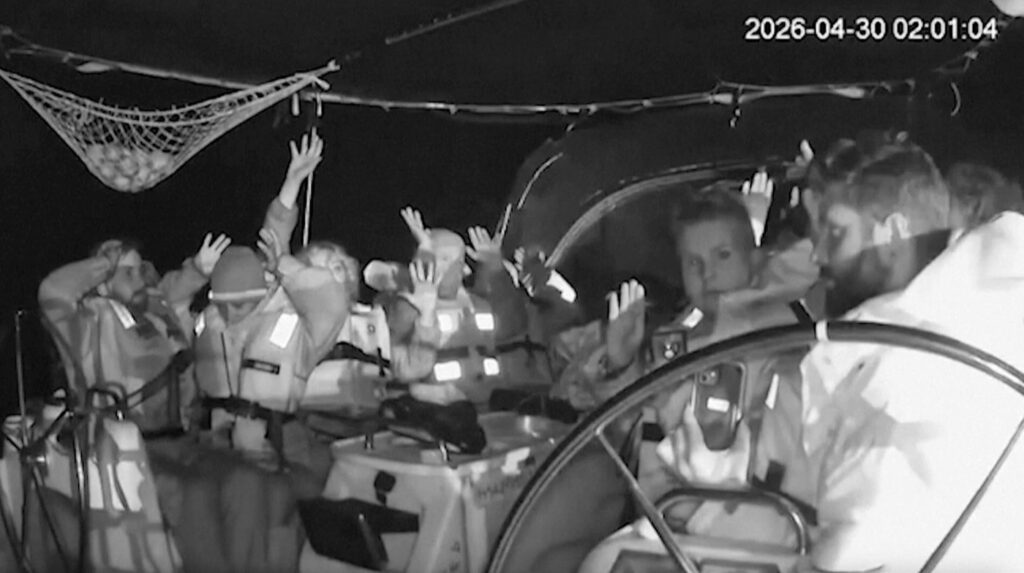
A spokesperson for the Global Sumud Flotilla, a group attempting to break the Israeli naval blockade of Gaza to deliver humanitarian aid, has confirmed the release of two Canadians who were previously detained by Israel in the Mediterranean Sea. Safa Chebbi reported that the Canadians, Marie Tota, a nurse from Ontario, and Umir Tiar, a student from Quebec City, were receiving medical checkups in a hospital after their release.
The Global Sumud Flotilla also mentioned a third Canadian, Luiza Noura, who was rescued by Greenpeace along with the Spanish NGO Open Arms after her boat was destroyed, leaving her adrift at sea. Tota, Tiar, and Noura were among the activists whose boats were intercepted by the Israeli navy this week, an incident that took place in international waters, hundreds of kilometers away from Gaza.
Israel has stated that they released all but two activists: a Spanish-Swedish citizen of Palestinian origin and a Brazilian citizen, both of whom were taken in for questioning. The circumstances surrounding the activists' detention have raised serious concerns, particularly following a video released by Tiar after her release. In the video, she alleged that the captives endured inhumane conditions aboard the Israeli ship, where the floors were deliberately flooded. She described a disturbing scenario where some detainees were beaten, shot at with rubber bullets, and dragged across the floor by their arms and necks.
Despite the allegations of mistreatment, Israeli authorities have yet to respond to these accusations. Israeli Foreign Minister Gideon Saar stated that the activists were removed from the flotilla vessels unharmed, a claim that contradicts the accounts provided by Tiar and other activists. The tensions between the activists and Israeli forces highlight ongoing issues regarding Israel’s maritime blockade of Gaza and the treatment of those attempting to breach it.
This incident and the testimonies of the activists underline the dire situation in the region and the international community’s ongoing debate about the legality and ethics of the naval blockade. The actions of the Global Sumud Flotilla have attracted attention as they seek to deliver aid and support to Gaza amid a complex geopolitical landscape.
As this situation continues to develop, it is clear that the struggle for humanitarian access and rights at sea remains a pressing issue. The experiences of Tota, Tiar, and Noura serve as poignant reminders of the risks faced by those advocating for aid and support in contested regions.