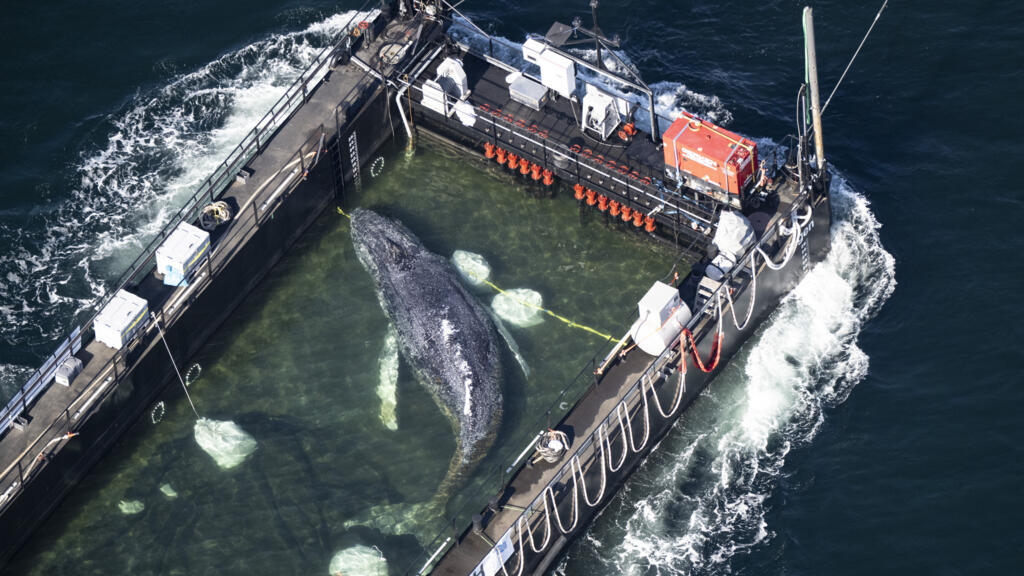
A humpback whale that was repeatedly stranded on the Baltic coast of Germany has been successfully released into the North Sea. This remarkable event took place on a recent Saturday, illustrating the efforts of dedicated individuals to ensure the safety and freedom of marine life. The whale had become a concern for local authorities and wildlife enthusiasts as it beached itself multiple times, prompting urgent action to rescue it.
The rescue operation was made possible through the financial support of two entrepreneurs who financed a barge specifically designed to transport the trapped creature. Their initiative reflects a growing trend among private individuals taking steps to contribute to wildlife conservation efforts. The barge, engineered to handle the logistics of moving such a large animal, played a crucial role in the whale's transport from the shallow waters of the Baltic Sea to the deeper waters of the North Sea.
Efforts to save the humpback whale highlight not only the challenges that marine animals face but also the importance of community involvement in wildlife protection initiatives. Trained marine biologists and rescue teams were on hand during the transfer to ensure the whale's health and safety throughout the process. It was particularly essential to monitor the whale for signs of stress, as beaching can pose serious threats to the animal’s well-being.
The decision to move the whale to the North Sea was based on expert advice, as the open waters would provide a more suitable environment for the animal. Humpback whales are known for their migratory habits, often traveling thousands of miles between feeding and breeding grounds. By assisting this particular whale, the rescuers aimed to increase its chances of survival and reintegration into its natural habitat.
Local authorities, as well as marine conservation groups, praised the efforts made to rescue the whale, underscoring the importance of ongoing collaboration between private citizens and environmental organizations. The incident serves as a reminder of the delicate balance between human activities and marine ecosystems. As more such events highlight the vulnerabilities of marine wildlife, the focus on sustainable practices and rescuing stranded animals will likely intensify.
In addition to the successful transportation of the humpback whale, the event raised awareness about the challenges faced by marine life in coastal areas. Many whales, dolphins, and other marine creatures often find themselves in perilous situations due to pollution, habitat destruction, and changes in ocean temperature and currents. The public’s interest in this case also speaks to a larger movement towards environmental stewardship and the protection of vulnerable species.
The successful relocation of the humpback whale into the North Sea not only marked a significant victory for the rescue teams involved but also served as an inspiring story for the community. It demonstrated how cooperation among individuals, organizations, and authorities can lead to positive outcomes in conservation efforts. Moving forward, this incident may inspire further initiatives to protect marine wildlife and promote awareness regarding the potential threats that such creatures face.
In conclusion, the story of the humpback whale’s rescue serves to remind us of the ongoing efforts needed to protect marine wildlife. It brings attention to the fact that every individual can make a difference in the conservation of our planet's natural resources and wildlife. As we continue to face environmental challenges, the collaboration and commitment shown by those involved in this rescue should inspire future actions aimed at ensuring the safety and survival of marine species.