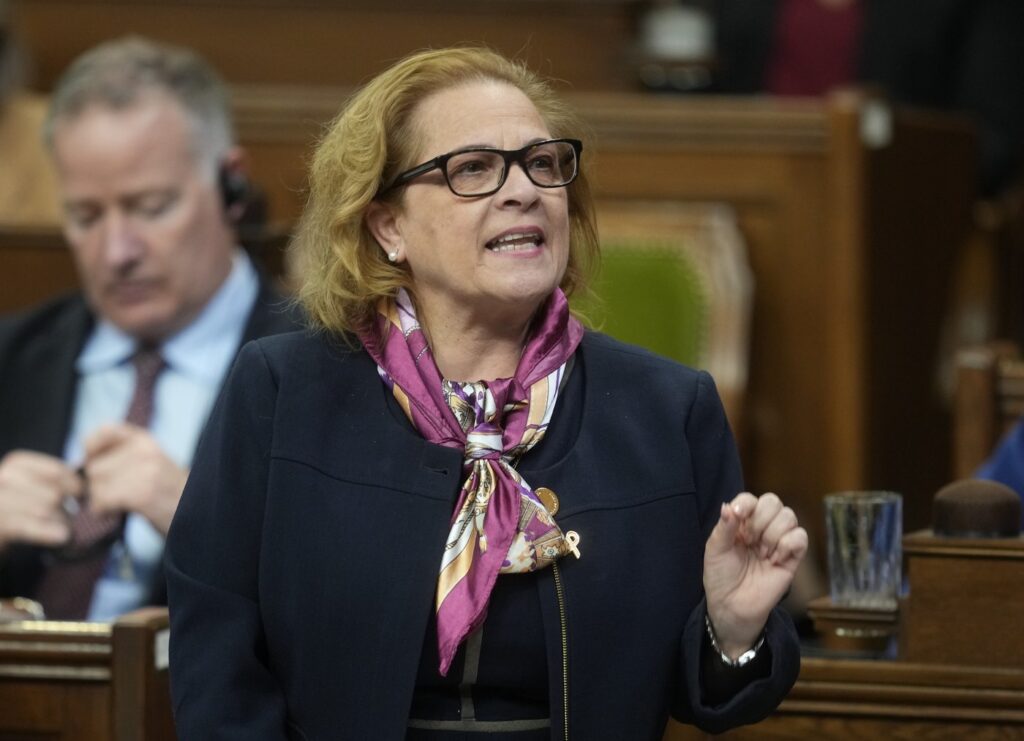
OTTAWA – Immigration Minister Lena Diab announced on Wednesday that the Immigration Department will be closely monitoring the potential negative effects resulting from the recent expiration of a policy that allowed specific refugees to exempt certain undeclared family members from permanent residency sponsorship. This policy, introduced in 2019, aimed to assist certain refugees in sponsoring family members who were not initially declared during their application. However, it expired earlier this month without renewal.
Minister Diab emphasized that the policy's conclusion was not a decision made during her tenure or election. “It predated my election as well as ministry. And when it ended, it simply ended,” she stated while entering a weekly Liberal caucus meeting. The department is currently assessing the situation and will conduct briefings to determine if any adverse consequences have arisen from the policy's termination, prompting the need for corrective measures.
The Immigration Department indicated that the policy was dropped due to "potential integrity concerns," although specifics regarding these concerns were not disclosed, nor was it confirmed if any applicants had exploited the policy. Diab acknowledged the department's findings and expressed the commitment to ensure that vulnerable individuals are not adversely impacted by the policy's end. “I respect the department’s findings that there are integrity concerns, and they are looking to ensure that we did not and we will not affect or people that we should be helping the wrong way. So we will be looking at it,” she remarked.
Advocates and academics have highlighted that the policy primarily benefited children and LGBTQ+ partners of refugees. Previous departmental assessments noted legitimate reasons some refugees may have for not declaring family members. This includes scenarios where a child was born in a refugee camp after initial paperwork was submitted or cases where families discovered that a child previously thought dead was, in fact, alive.
Under the existing regulations, all permanent residency applicants are mandated to list all family members, and those who fail to do so are permanently barred from subsequently sponsoring any undeclared family members. The Immigration Department has stated it will consider application exemptions on a case-by-case basis through humanitarian and compassionate grounds. However, refugee lawyers and advocates have pointed out that the current wait time for such humanitarian and compassionate applications can exceed ten years, creating additional challenges for families seeking reunification.
The Canadian Council for Refugees has urged Minister Diab to reconsider the decision not to extend the policy. In a letter sent earlier this month, the council characterized the reversion to the previous harsh conditions as "inexplicable," calling for immediate action to restore the policy that had been providing crucial support to refugee families.
A department memo issued ahead of the proposed 2023 extension of the policy had described the program's integrity risks as “minimal,” further complicating the rationale behind its expiration. As discussions continue, the implications of this decision on vulnerable refugee families remain a significant concern for advocates and community leaders alike.