OTTAWA — NDP Leader Avi Lewis has accused the federal government of violating its own labor laws as the head of the Bank of Canada admitted to using replacement workers amid an ongoing strike by security officers. This strike is considered the first significant test of the newly enacted legislation, which bans federally regulated workplaces from employing replacement workers during legal strikes. The law, passed in 2024, went into effect the previous year.
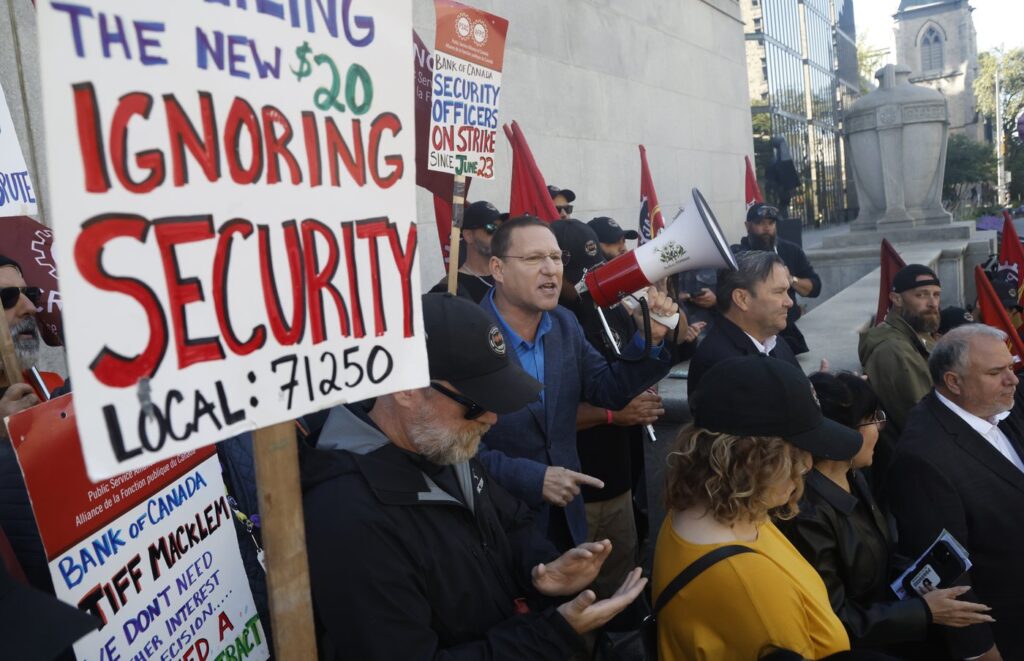
Lewis voiced his concerns at a rally outside the Bank of Canada, emphasizing the government and the employer’s apparent willingness to disregard the law. He stated, “This government and this employer have made it absolutely clear that they are prepared to defy the law of this country.” The strike, initiated in June, came after unsuccessful negotiations for a new collective agreement between the central bank and the union representing the security officers.
The Canada Industrial Relations Board (CIRB) has issued two rulings indicating that the Bank of Canada violated the Canada Labour Code by employing contractors and union members to perform security duties during the strike. Bank of Canada Governor Tiff Macklem defended the actions taken by the bank, citing exceptions in the law that allow the use of replacement workers when there are threats to life, health, or safety, or to prevent significant property damage. Macklem explained, “Ahead of the CIRB's first ruling, the Bank made representations regarding the minimum necessary arrangements to ensure the security of our facilities and people in light of the strike.” He asserted that the bank had complied with both of the CIRB’s rulings.
As the strike reached its 93rd day, dozens of union members rallied in downtown Ottawa, displaying a large inflatable rat adorned with a $20 bill featuring Macklem’s face. Alex Silas, the national executive vice-president of the Public Service Alliance of Canada (PSAC), criticized the Bank of Canada for replacing trained security personnel rather than negotiating a fair deal. Silas expressed concern over the safety implications of employing untrained individuals for security roles, stating, “It’s concerning how little they respect their security officers that they would replace us instead of settling on a fair deal.”
Labour leaders have condemned a proposed economic bill introduced by the Liberal government, which they allege poses a significant threat to the right to strike. Jobs Minister Patty Hajdu has claimed that the bill, identified as Bill C-39, aims to enhance labor relations and reduce conflicts during negotiations. The legislation stipulates that a work stoppage must impact the “national interest” before a minister can invoke measures to halt a strike or lockout under Section 107 of the Canada Labour Code.
The government argues that it is necessary to balance potential threats to the national interest, which may encompass economic or social disruptions, with the protection of workers’ rights to associate freely and strike. Bea Bruske, president of the Canadian Labour Congress, articulated concerns regarding the proposed amendments, suggesting they would empower the government to intervene in strikes more formally. Discussions among labor leaders regarding potential legal responses to these changes are reportedly in preliminary stages.
Unifor National President Lana Payne has also criticized the government, highlighting compromises to workers’ rights within the context of the proposed changes. Lewis reinforced the concerns raised across the labor movement, characterizing the situation as a “direct attack on the fundamental right of workers to withhold their labor.” He remarked, “The right to strike is under attack in Canada by the government, by the prime minister,” referring to the ongoing strike by security officers at the Bank of Canada.
A statement released by the Bank of Canada on Wednesday clarified their respect for the security officers’ right to strike, reiterating the commitment to collective bargaining and a fair resolution. The statement noted, “When the Canadian Industrial Relations Board issued its orders, the Bank stopped using the external security support as directed. The Bank continues to comply with these orders.” Moreover, the bank emphasized its obligation to ensure the security of its personnel and assets, asserting, “The Bank will not, under any circumstances, compromise the safety and security of our employees, our buildings and the assets we protect on behalf of Canadians.”
This report by The Canadian Press was first published on September 23, 2026.