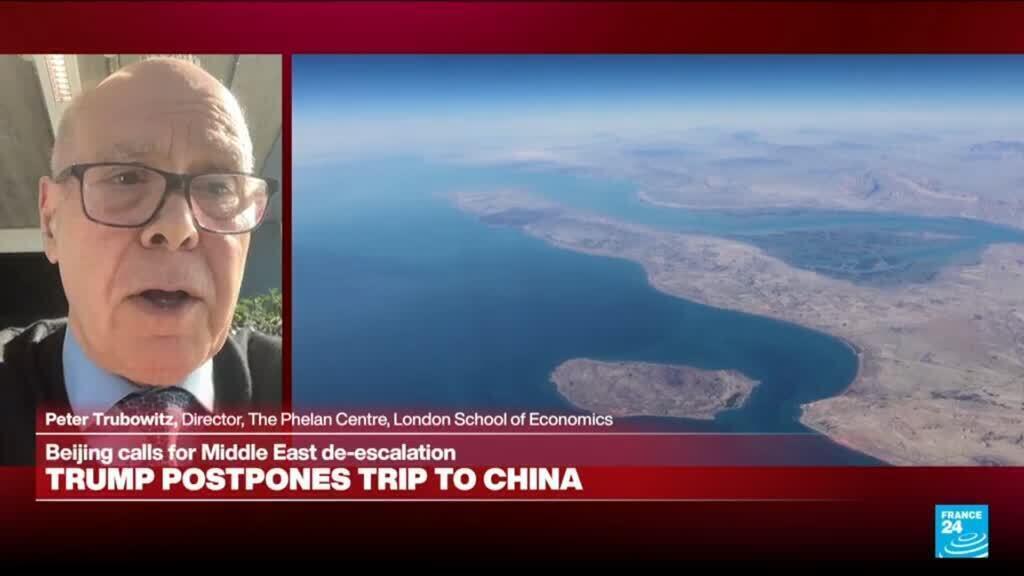
Genie Godula has introduced Peter Trubowitz, a prominent figure in the field of International Relations, serving as a Professor and the Director of the Phelan US Centre at the London School of Economics. In his analysis, Professor Trubowitz emphasizes a significant geopolitical dynamic, wherein both Iran and the United States are engaged in a strategic struggle to enhance their positions by expanding the scope of the ongoing conflict.
According to Professor Trubowitz, Iran has actively broadened the battlefield beyond its borders, targeting regional actors and leveraging its influence to pose threats to crucial maritime chokepoints. This expansion reflects Iran’s strategy to assert its dominance in the region and manipulate the interests of various local players. By escalating tensions with neighboring nations and utilizing proxies, Iran aims to create a multifaceted crisis that complicates the response from the US and its allies.
On the other hand, the United States is currently navigating a challenging landscape, striving to rally support from its Asian and European allies in efforts to secure the Strait of Hormuz. Historically a vital maritime corridor for global oil shipments, the Strait is critical not only for the economies of the region but also for international trade at large. However, the US's endeavors have so far been met with limited success, highlighting the complexities of international diplomacy in the current geopolitical climate.
Professor Trubowitz points out that this struggle to expand conflict dynamics is not merely a regional affair but a reflection of broader global interests. Both sides are attempting to leverage their positions to gain strategic advantages over the other. For Iran, this means consolidating its influence and undermining perceived US dominance. For the United States, the objective is to maintain stability in crucial maritime routes and demonstrate a unified Western stance against Iranian aggression.
The interplay between these two powers is significant, as it not only affects regional stability but also has repercussions for global energy markets and international relations. The tensions in Hormuz reflect broader themes of power rivalry, where both nations are maneuvering within intricate political landscapes. The stakes are heightened by the involvement of global stakeholders, including European and Asian nations that have to balance their economic interests with the geopolitical realities shaped by the US-Iran conflict.
In conclusion, the ongoing situation presents a complex dynamic of power, influence, and strategic calculations. The actions of Iran to widen the conflict by engaging regional actors and threatening key maritime routes pose considerable challenges for the United States as it seeks to build alliances and mitigate potential disruptions in global trade. As this geopolitical contest unfolds, the international community watches closely, understanding that the outcomes could have far-reaching implications beyond the immediate theater of conflict.